


Tragedy in the Skies: Six American Service Members Lost in Iraq Refueling Aircraft Incident
A Devastating Loss During Routine Operations
The American military community is mourning the loss of six service members who tragically died when their KC-135 refueling aircraft went down over western Iraq on Thursday afternoon. The incident occurred around 2 p.m. Eastern Time as the crew was conducting operations as part of Operation Epic Fury. U.S. Central Command confirmed the heartbreaking news on Friday, emphasizing that all six crew members aboard the aircraft have been confirmed deceased. The loss represents one of the most significant single-incident casualties for American forces in the region in recent times, casting a somber shadow over ongoing military operations in the Middle East.
What makes this tragedy particularly poignant is that it occurred over friendly territory, in airspace where these service members should have been safe from enemy threats. The crew was simply doing their job—providing the essential refueling services that keep American air operations running smoothly across the vast expanse of the Middle East. These men and women were the unsung heroes of military aviation, performing a mission that rarely makes headlines but is absolutely critical to maintaining America’s military presence and readiness in the region. Their loss will be deeply felt not only by their families and friends but by the entire military community that depends on the vital services they provided.
Details of the Incident and Ongoing Investigation
According to U.S. Central Command’s initial reports, the incident involved two KC-135 refueling aircraft. While one aircraft tragically went down in western Iraq, the second aircraft involved in the incident managed to land safely, preventing what could have been an even greater catastrophe. The circumstances surrounding exactly what happened between these two aircraft remain under active investigation, with military officials working diligently to piece together the sequence of events that led to this tragic outcome.
Joint Chiefs of Staff Chairman General Dan Caine provided additional context during a Defense Department briefing on Friday, offering crucial information about what did not cause the incident. He explicitly stated that the aircraft went down “over friendly territory in western Iraq while the crew was on a combat mission” and emphasized that it “was not the result of hostile or friendly fire.” This clarification is important because it rules out enemy action or accidental engagement by allied forces, suggesting instead that the cause may have been mechanical failure, pilot error, weather conditions, or some other factor yet to be determined. The investigation will likely take weeks or even months to complete, as military investigators examine every possible factor, from maintenance records to weather conditions to communications between the two aircraft. As is standard military protocol, the identities of the six service members who perished are being withheld until 24 hours after their next of kin have been properly notified, allowing families time to grieve privately before the public learns the names of their loved ones.
Understanding the KC-135 Stratotanker and Its Role
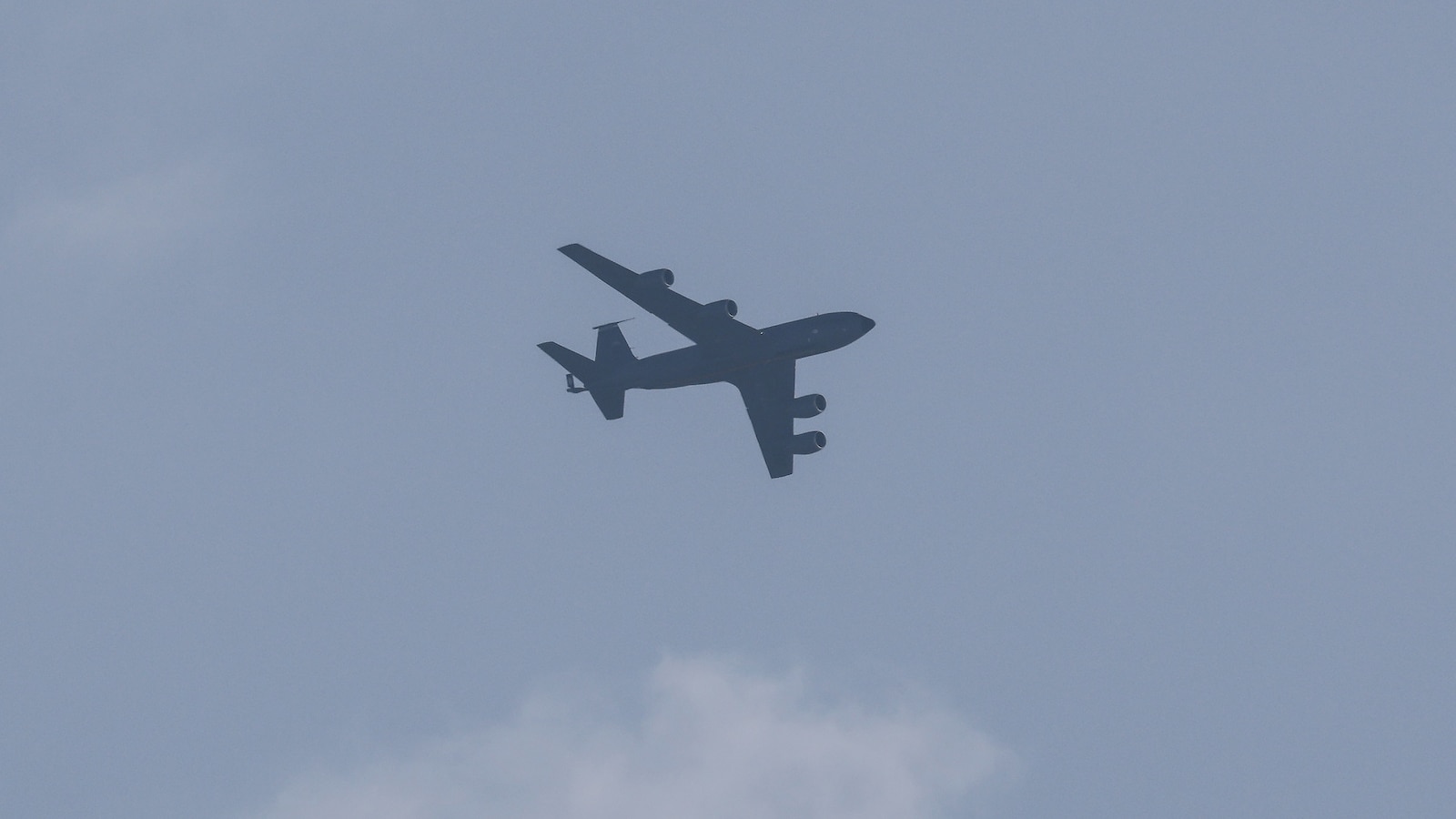
The KC-135 Stratotanker is a workhorse of the United States Air Force, serving as the primary aerial refueling aircraft for American military operations around the world. These flying gas stations enable fighter jets, bombers, and other aircraft to remain airborne for extended periods, dramatically extending their range and operational capabilities. Without aerial refueling, many military missions simply wouldn’t be possible, as aircraft would be limited by the fuel they could carry in their own tanks. The KC-135 has been in service since the 1950s, and while many have been upgraded and modernized over the decades, the basic airframe remains a testament to solid engineering and design.
What many people don’t realize about these aircraft is that they differ significantly from fighter jets in terms of crew safety equipment. Unlike fighter aircraft, KC-135s are not equipped with ejection seats or parachutes for the crew members. This design decision was made deliberately based on the aircraft’s mission profile and safety record. According to a 2008 Air Force profile of tanker crews, the decision to not include parachutes was based on the fact that KC-135s “seldom have mishaps, and the likelihood a KC-135 crew member would ever need to use a parachute is extremely low.” Instead of training on parachute deployment and mid-air ejection, crew members of KC-135s receive specialized training on how to evacuate the aircraft when it’s on the ground or making an emergency water landing. This approach has generally served the Air Force well, as these aircraft have maintained an excellent safety record over decades of service. However, the tragic reality of Thursday’s incident is that when something does go catastrophically wrong with a KC-135 in flight, the crew members have limited options for escape, making incidents like this one particularly devastating.
The Context of Operation Epic Fury
The aircraft was conducting operations as part of Operation Epic Fury, the ongoing American military campaign in the Middle East. This operation represents the continued U.S. commitment to maintaining stability in the region and combating threats to American interests and allies. The operation involves coordination between multiple branches of the military and requires constant aerial refueling support to keep aircraft operational across the vast distances involved. The refueling missions flown by KC-135 crews like the one lost in this incident are essential to maintaining the tempo of operations, allowing fighter jets and surveillance aircraft to remain on station for extended periods without having to return to base to refuel.
The broader geopolitical context adds another layer of complexity to this tragedy. The region remains volatile, with recent reports indicating increased tensions and military activity. Just days before this incident, there were reports of Israel launching fresh strikes on Iran and Lebanon, with Iranian Guards claiming they had sealed off vital shipping routes for energy. This heightened state of alert and increased operational tempo means that refueling crews are flying more missions, often under challenging conditions and with increased pressure to support combat operations. While the investigation has confirmed that this particular incident was not the result of hostile fire, the dangerous environment in which these crews operate cannot be overlooked. Every mission carries inherent risks, and every flight over the region is conducted in an atmosphere of heightened awareness and potential danger.
The Human Cost and Military Community Response
Behind every military incident are real people—sons and daughters, husbands and wives, fathers and mothers—who have made the ultimate sacrifice in service to their country. The six crew members who lost their lives in this incident were experienced professionals who volunteered to serve in one of the military’s most demanding roles. Aerial refueling requires precision, skill, and nerves of steel, as massive aircraft must fly in close formation while transferring thousands of pounds of fuel through connecting hoses. It’s a mission that combines the technical complexity of flying with the added pressure of supporting other crews whose lives depend on receiving that fuel.
The military community is tight-knit, and losses like this reverberate throughout the entire force. These crew members had colleagues who flew with them, maintenance personnel who kept their aircraft running, and countless other service members whose lives they touched during their time in uniform. In the coming days and weeks, memorial services will be held, tributes will be paid, and the military family will come together to mourn and remember. The investigation into what happened will continue, not out of a desire to assign blame, but to understand what went wrong and prevent future tragedies. The findings will be studied, procedures will be reviewed, and if necessary, changes will be implemented to make future operations safer. But no amount of investigation or procedural improvement can bring back the six Americans who died serving their country on Thursday. Their sacrifice will be remembered, their service honored, and their families supported by a grateful nation that understands the true cost of military service. As this story continues to develop and more information becomes available, the American public will learn more about these individuals and the circumstances of their final mission, but the fundamental truth remains unchanged: six heroes gave their lives in service to their country, and their loss diminishes us all.