



Tragic Stabbing Rampage Near Tacoma Claims Five Lives
A Devastating Morning in Pierce County
A peaceful Tuesday morning in a quiet neighborhood near Gig Harbor, Washington, turned into a scene of unimaginable tragedy when a 32-year-old man went on a stabbing rampage that left four people dead before he was fatally shot by law enforcement. The horrific incident unfolded on the Key Peninsula, a scenic area located approximately 30 miles southwest of Seattle, where families and retirees typically enjoy the tranquility of suburban life. What began as a routine law enforcement response to a no-contact order violation quickly escalated into one of the deadliest violent incidents the area has witnessed in recent memory. The Pierce County Sheriff’s Office received the initial call around 8:40 a.m. local time, alerting them that the man was violating a protection order. Little did anyone know that within minutes, this situation would transform into a mass casualty event that would shake the community to its core and leave investigators piecing together the events that led to such devastating violence.
The Timeline of Terror
The sequence of events moved with terrifying speed that morning. Deputies from the Pierce County Sheriff’s Office initially received reports about a man violating a no-contact order and began their response by obtaining a copy of the order itself. However, they discovered that while the protection order had been issued, it technically wasn’t yet valid because it hadn’t been formally served to the suspect—a crucial final step in the legal process. Officer Shelbie Boyd, spokesperson for the Tacoma Police Department, explained that the deputy’s original intention was simply to serve that order that day, treating it as a routine legal procedure. But as deputies were making their way to the location, the situation took a horrifying turn. Additional emergency calls began flooding in, reporting that the same man was actively stabbing people outside a home. The first deputy arrived at the scene within approximately three minutes of these urgent reports, demonstrating the rapid response of law enforcement. Upon arrival, the deputy encountered the suspect still engaged in the attack and made the split-second decision to shoot him. The suspect was pronounced dead at the scene, ending the violence but leaving behind an unthinkable human toll.
The Heartbreaking Aftermath
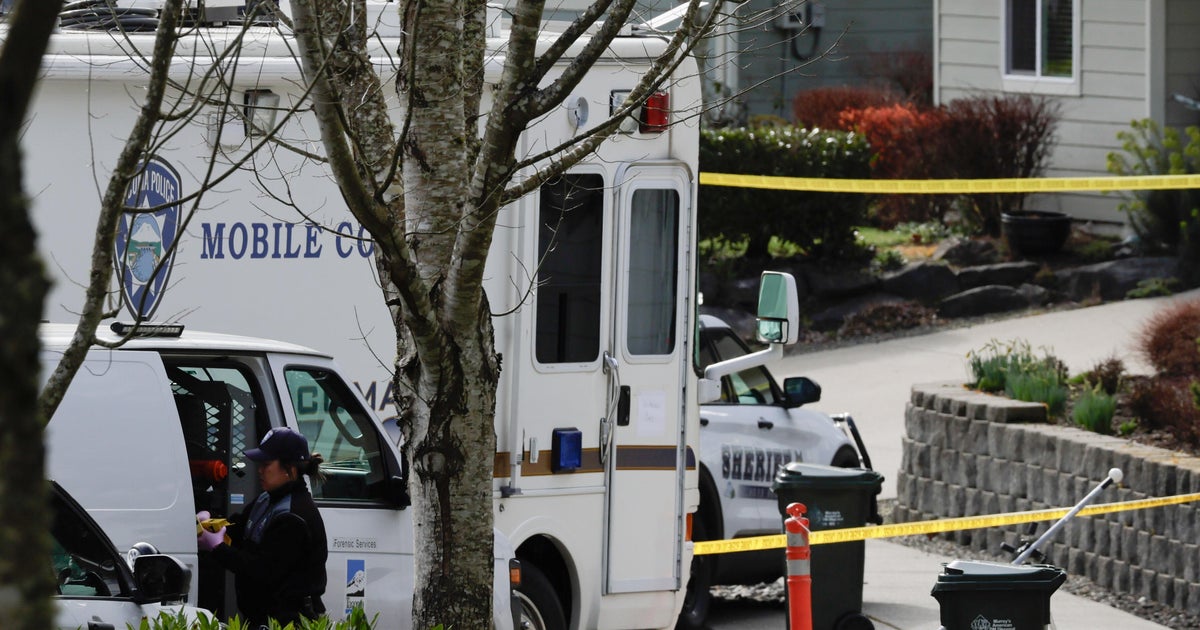
The carnage left behind by the attacker painted a grim picture in what should have been a peaceful residential cul-de-sac. Four people fell victim to the stabbing attack, with three pronounced dead at the scene of the violence. A fourth victim, desperately clinging to life, was rushed to a nearby hospital but tragically succumbed to their injuries during transport. The sheriff’s office has not released the names of any of the victims or confirmed their relationship to the attacker, leaving the community anxiously waiting for more information. Investigators were still working to determine whether all four victims lived at the home where the attack occurred, and Officer Boyd indicated that authorities couldn’t immediately confirm whether any of the stabbings had taken place inside the residence or exclusively outdoors. The location—a quiet cul-de-sac on the Key Peninsula—was transformed from a peaceful neighborhood into a massive crime scene, with forensics teams, ambulances, and dozens of police vehicles descending on the area. The FBI was contacted but deferred all questions to the sheriff’s office, indicating the investigation remained under local jurisdiction despite the severity and scope of the violence.
A Troubled History Emerges
Court records from Pierce County began to paint a disturbing picture of the suspect’s background and the escalating concerns that had prompted legal intervention. Documents revealed that a woman who lived at the address had obtained a one-year protection order against her 32-year-old son just the previous May. In her petition for protection, she described a frightening pattern of behavior that included mental health issues and substance abuse problems. The woman detailed how her son had previously pushed her and had recently made chilling threats, including telling her that her “grave has been already dug up.” The protective order application contained deeply troubling details about the son’s behavior, with the mother writing that he had been “threatening me, abusing me both mentally and emotionally.” She described bizarre and disturbing conduct, stating he was “doing witchcraft/occult behavior and doing rituals in my home” and “damaging personal belongings.” Perhaps most heartbreakingly, she mentioned that he was hurting her cat and taking advantage of her vulnerable state, identifying herself as “an elderly disabled woman” whose health made her particularly susceptible to his abuse. The court records showed that the son had received notice of a hearing before the restraining order was issued but chose not to appear, suggesting either a disregard for the legal process or an inability to engage with it due to his deteriorating mental state.
Legal Gaps and Unanswered Questions
The protection order that had been issued contained specific requirements designed to protect the woman and potentially prevent exactly this type of violent outcome. The order prohibited the son from possessing dangerous weapons, required him to stay at least 1,000 feet away from his mother, her vehicle, and her address (which they had previously shared), and mandated that he comply with a previously prescribed mental health treatment plan, including taking medication. However, a critical question emerged in the aftermath of the tragedy: why had the order never been properly served to the suspect? In Washington state, the process typically allows someone who obtains a protection order to request that law enforcement deliver it to the subject, or alternatively, to hire a private investigator or process server to handle the task. One common obstacle that can delay this crucial step is not knowing the location of the person who is the subject of the restraining order. This administrative gap—the space between an order being issued and it being formally served—may have created a dangerous window during which the protection order existed on paper but carried no legal weight. The tragedy raises important questions about how the system handles protection orders and whether there are ways to close the gaps that might allow dangerous individuals to fall through the cracks before proper legal constraints can be put in place.
A Community in Shock
The peaceful character of the neighborhood made the violence even more shocking for residents who had chosen the area precisely for its tranquility. Chris Cardenas, who lives just a couple of minutes’ drive from where the stabbings occurred, was washing his truck in his driveway when the stillness of the morning was shattered by gunfire. “All of a sudden, I just heard like a series of gunshots,” he recalled, describing how “you could really hear it echoing through the trees” in the wooded area. What followed was an endless stream of sirens that continued for about 40 minutes, an ominous soundtrack that signaled something terrible had happened. Cardenas immediately recognized that something was seriously wrong, telling reporters, “I immediately knew something was up because I’ve never heard gunshots out here.” Driven by concern and curiosity, he made his way to the scene, which by then had been cordoned off by law enforcement. What he witnessed was overwhelming: ambulances, a forensics bus, and dozens of police vehicles crowded the once-quiet street. Despite seeing the massive law enforcement response, Cardenas said he couldn’t have prepared himself “for how tragic the news would be” when the full extent of the violence became known. The incident has left the Key Peninsula community grappling with grief, shock, and the unsettling realization that such horrific violence can erupt anywhere, even in the places we consider safest. As investigators continue their work and the community begins the difficult process of healing, questions remain about what more could have been done to prevent this tragedy and how to better protect vulnerable individuals from family members struggling with mental illness and violent impulses.