

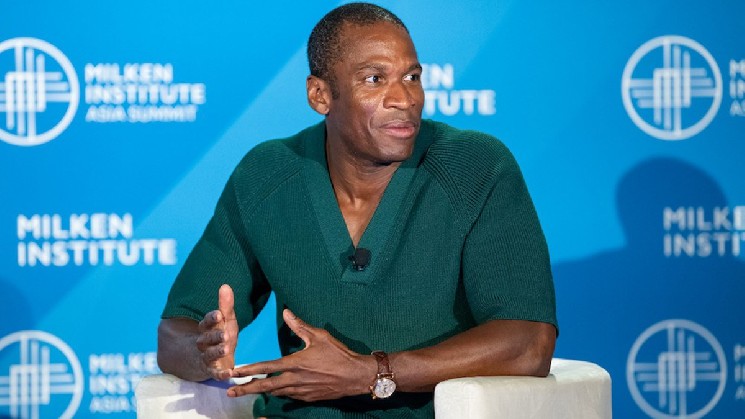

Arthur Hayes’ Timely ETHFI Purchase Sparks Market Speculation
TL;DR: A Controversial Trade That Raised Eyebrows
The cryptocurrency world was recently abuzz when Arthur Hayes, the well-known co-founder of BitMEX and current Chief Investment Officer of Maelstrom, made a strategic purchase of approximately 132,730 ETHFI tokens valued at around $72,800. What caught everyone’s attention wasn’t just the trade itself, but rather its remarkably precise timing—Hayes acquired these tokens roughly five hours before Upbit, South Korea’s largest cryptocurrency exchange, officially announced the listing of ETHFI. This coincidental timing naturally sparked widespread discussion within the crypto community about whether this was simply smart strategic positioning by an experienced trader or potentially something more concerning involving insider knowledge. Meanwhile, South Korea continues to solidify its position as a powerhouse in the altcoin market, with sustained Korean won (KRW)-based demand that has remained strong since 2023, suggesting that ETHFI’s debut on Upbit could benefit from robust liquidity and substantial price support in the coming weeks.
The EthereumFi Token Returns to Center Stage
EthereumFi, trading under the ticker ETHFI, has suddenly found itself back in the cryptocurrency spotlight, thanks largely to this perfectly timed purchase by one of crypto’s most influential figures. The convergence of significant capital inflow from a high-profile investor and the announcement of a major exchange listing created exactly the kind of market conditions that typically generate considerable buzz and attention. Such combinations of events don’t happen in isolation—they tend to create ripple effects throughout the market, often influencing short-term price movements in significant ways. For traders and investors who pay close attention to market signals, this type of scenario represents exactly what they watch for: moments when multiple positive catalysts align simultaneously. The timing was so precise that it immediately became a topic of heated discussion across crypto Twitter, Telegram channels, and Reddit forums, with participants debating the implications and possible explanations for Hayes’ prescient move.
Breaking Down the Controversial Trade
When we dig into the details of this transaction, the picture becomes even more interesting. According to blockchain data, which provides transparent records of all transactions, Arthur Hayes received exactly 132,730 ETHFI tokens from Anchorage Digital approximately five hours before Upbit opened trading for the token. At the time of the transfer, with ETHFI trading around $0.55 per token, the total value of this acquisition came to roughly $72,800—a substantial sum but not necessarily unusual for someone of Hayes’ stature in the cryptocurrency world. The proximity between this acquisition and Upbit’s listing announcement naturally raised questions about whether Hayes might have had advance knowledge of the exchange’s plans. However, it’s crucial to note that speculation and actual evidence are two very different things, and as of now, there’s no concrete proof of any impropriety or insider trading.
What adds additional context to this situation is Hayes’ documented activity throughout 2026, which shows he’s been far from idle in the decentralized finance space. Records indicate he’s allocated more than $3.4 million across various DeFi protocols, demonstrating an active and diversified investment strategy rather than a one-off opportunistic trade. Even more telling is the fact that approximately one month before this particular transaction, blockchain wallets connected to Hayes moved around 2.15 million ETHFI tokens at lower price points. This earlier activity suggests a longer-term accumulation strategy rather than a sudden, possibly information-driven purchase. For experienced crypto observers, this pattern looks more like someone who has been building a position over time, believing in the asset’s potential, rather than someone making a last-minute move based on privileged information.
Upbit’s Listing Procedures and Market Stabilization Efforts
Upbit didn’t simply flip a switch and begin trading ETHFI without precautions. As part of the exchange’s well-established listing procedures, they implemented several temporary restrictions designed to create an orderly market environment. These measures included a brief pause on buy orders during the initial phase and a period of limit-only trading, where market orders were not permitted. These aren’t arbitrary restrictions—they serve important purposes in the cryptocurrency ecosystem. By temporarily limiting certain order types, exchanges can reduce the kind of extreme volatility that often accompanies new listings, particularly in the hyperactive Korean market where retail participation is exceptionally high. These cooling-off periods also help establish more rational price discovery mechanisms, allowing the market to find a reasonable equilibrium price without the wild swings that can occur when speculative frenzy takes over. For ETHFI holders and potential buyers, these measures actually represent a positive development, as they suggest Upbit is taking market stability seriously and working to protect participants from the kind of flash crashes or pump-and-dump schemes that have plagued other exchange listings in the past.
The Korean Market’s Outsized Influence on Altcoins
To truly understand why an Upbit listing matters so much for ETHFI’s prospects, we need to appreciate South Korea’s unique position in the global cryptocurrency landscape. The country has consistently demonstrated extraordinarily strong participation in altcoin trading, with KRW-denominated volume remaining elevated even when you exclude major assets like Bitcoin, Ethereum, XRP, BNB, and Solana from the equation. This isn’t a recent development either—data from trading cycles spanning from 2023 through 2026 shows a remarkably consistent pattern of buy-side presence from Korean traders. What’s particularly notable is that larger market participants in Korea have repeatedly stepped in to absorb sell pressure during downturns, effectively providing a floor under prices that might otherwise collapse. This behavior creates deeper liquidity pools and stronger support levels across altcoin trading pairs, which is exactly what emerging tokens like ETHFI need to establish sustainable growth rather than experiencing the boom-bust cycles that plague less liquid markets.
For EthereumFi specifically, gaining access to this trading environment represents immediate exposure to one of the most active and capital-rich trading regions in the entire world. Historical precedent strongly supports the value of Korean exchange listings—previous additions to Upbit’s trading platform have consistently driven higher trading volumes and faster price discovery processes, particularly for tokens in the decentralized finance category where ETHFI operates. Korean traders have shown a particular affinity for DeFi projects, possibly because of the sophisticated understanding many Korean crypto participants have developed about blockchain technology and its applications. The “Kimchi Premium”—a phenomenon where cryptocurrencies trade at higher prices in South Korea than on global exchanges—occasionally appears during periods of strong local demand, and while it’s impossible to predict whether ETHFI will experience this premium, the underlying conditions that create it certainly exist in the current market environment.
Long-Term Implications and Market Outlook
While the timing of Arthur Hayes’ purchase will likely continue generating discussion and debate within crypto communities for some time, taking a step back reveals that market structure and broader liquidity trends provide a more comprehensive explanation for ETHFI’s potential trajectory. EthereumFi represents part of a rapidly growing segment within the cryptocurrency ecosystem focused on restaking mechanisms and on-chain yield generation strategies built on the Ethereum blockchain. As institutional and retail demand for these sophisticated financial mechanisms continues to expand, ETHFI has been steadily gaining traction among diverse trader demographics. The token’s utility within the restaking infrastructure addresses real needs within the Ethereum ecosystem, giving it fundamental value beyond mere speculation.
The convergence of strong Korean market demand, increasing global interest in DeFi infrastructure, and strategic positioning by influential investors like Hayes suggests that ETHFI may well extend beyond the initial momentum typically generated by exchange listings. Rather than experiencing a brief spike followed by a return to previous levels—a common pattern for tokens with weak fundamentals—ETHFI appears positioned to integrate into longer-term capital flows within the DeFi sector. Of course, cryptocurrency markets remain notoriously unpredictable, and past performance never guarantees future results, but the structural conditions surrounding ETHFI’s Upbit debut appear more favorable than those surrounding many previous exchange listings. For investors considering exposure to the restaking narrative within Ethereum’s evolving ecosystem, ETHFI’s enhanced liquidity and visibility following this listing may represent an important inflection point worth monitoring closely in the weeks and months ahead.