
Texas Court Interpreter and Mother Released After Weeks in Immigration Detention
A Long-Awaited Homecoming
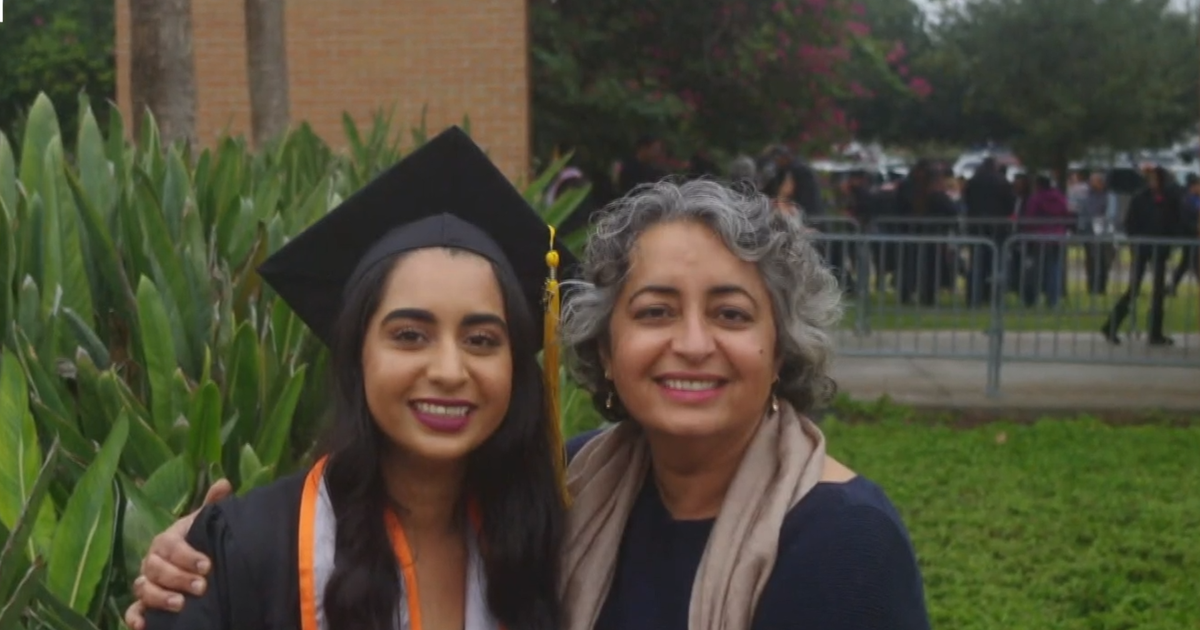
After spending six to seven agonizing weeks in federal immigration detention, Meenu Batra, a respected Texas court interpreter and devoted mother of four, finally walked free on Thursday. Her attorney, Deepak Ahluwalia, couldn’t contain his joy when confirming the news to CBS News, expressing relief that his client would finally be reunited with her family. “We are overjoyed,” he said, though he acknowledged the ordeal had taken longer than they had hoped. The case had captured national attention, highlighting the complexities and human costs of America’s immigration enforcement system. Batra’s arrest on March 17 at Valley International Airport in Harlingen, Texas, had shocked her family and colleagues alike—she was simply trying to board a flight to Milwaukee for a work assignment when federal immigration officers detained her, turning what should have been a routine business trip into a nightmare that would separate her from her four adult children, all of whom are U.S. citizens.
A Career Built on Service and a Life Interrupted
For more than two decades, Meenu Batra had built a distinguished career as a certified court interpreter, providing essential language services in Hindi, Punjabi, and Urdu across the United States. Her expertise was so valued that her skills were requested nationwide, making her an integral part of the justice system in numerous courtrooms. Her work helped bridge language barriers for countless individuals navigating the American legal system, ensuring that non-English speakers could understand and participate in their legal proceedings. This professional dedication made her sudden arrest all the more jarring—she was detained while traveling for the very work that had defined her contribution to American society. The federal district judge who ordered her release on Thursday determined that Batra’s due process rights had been violated because she was arrested without prior notice, without an interview, and without any formal process. This ruling underscored a fundamental principle of American justice: that even in immigration matters, individuals are entitled to basic procedural protections before being deprived of their liberty.
A Story of Survival and Seeking Safety
Batra’s journey to America began with tragedy and trauma. Born in India, she experienced unimaginable loss as a teenager when both of her parents were killed because of their Sikh religion—victims of religious persecution that has claimed too many innocent lives. Fleeing this violence approximately 35 years ago, she came to the United States seeking the safety and opportunity that America has long promised to those escaping persecution. She applied for asylum, hoping to find refuge in a country built by immigrants and refugees. In 2000, she was granted “withholding of removal,” an immigration status that differs from asylum but still recognized that she could not safely return to her home country. This status allowed her to remain in the United States legally, to work, and to build the life she had dreamed of—a life free from fear and filled with the possibility of raising a family in peace. Speaking to CBS News earlier this month while detained at the U.S. Immigration and Customs Enforcement’s El Valle Detention Facility in Raymondville, Texas, Batra explained her understanding of her situation: “I am here, and I am legal and will not be removed, so I have nothing to worry about. And I can live and I can work. And that is all I wanted to do.” Her words reflected the simple aspirations that drive so many immigrants—the desire to contribute, to provide for family, and to live without fear.
The Fight Continues: Securing Permanent Status
While Thursday’s release marked a significant victory, Batra’s attorney was quick to emphasize that their legal battle is far from over. “The fight is not over,” Ahluwalia told CBS News, outlining the work that still lies ahead. The legal team is now working to secure Batra a green card through her youngest son, Jasper, who serves his adopted country in the U.S. Army. The irony is stark: while one family member wears the uniform defending America, his mother faces the possibility of being removed from the only country her children have ever known. Ahluwalia said they plan to request expedited processing of the green card application and are hopeful for approval within the next four to six months. The attorney also emphasized an important protection that came with the judge’s ruling: Batra cannot be arrested again unless federal authorities provide formal notice and conduct an interview in the presence of an attorney. This procedural safeguard should prevent the kind of sudden, unexpected detention that traumatized Batra and her family in March. The legal team remains committed to exploring all forms of relief available to Batra and will vigorously oppose any attempt to deport her to a third country with which she has no previous relationship or connection—a practice that has become more common in recent immigration enforcement actions.
A Family’s Heartbreak and Hope
The emotional toll of Batra’s detention on her family cannot be overstated. Her four children—Amrita, Lucas, Aaryan, and Jasper—had previously told CBS News that it didn’t “feel right” to be in their family home near Brownsville, Texas, without their mother. The house that should have been filled with warmth and family connection felt empty and wrong in her absence. When Ahluwalia spoke about the family’s reaction to the release, he described them as “over the moon,” but he also painted a sobering picture of the lasting impact this experience has had on Batra herself. Having spoken with her almost daily throughout her detention, the attorney witnessed firsthand how the ordeal had “broken her.” The things she saw, the suffering she endured, and the traumatic manner of her arrest at the airport have left deep emotional and mental scars. “I can only hope that she can come out of what she had to experience for the last month and a half,” Ahluwalia said, acknowledging that healing from such an experience takes time. The detention facilities, the uncertainty, the separation from family, and the fear of being sent to a country she fled decades ago—all of these experiences have taken their toll on a woman who had simply been trying to live quietly, work hard, and contribute to her community.
The Broader Questions This Case Raises
Batra’s case highlights the ongoing tensions and contradictions within America’s immigration system. The U.S. Department of Homeland Security, when contacted by CBS News earlier in the month, referred to Batra as an “illegal alien” and stated that “employment authorization does not confer any type of legal status”—a position that seems at odds with the “withholding of removal” status Batra was granted in 2000. This disconnect raises important questions about what “legal status” truly means and how the government interprets and enforces its own immigration policies. For someone like Batra, who was granted protection from removal two decades ago, who has worked legally as a court interpreter for over twenty years, who has raised four American citizen children (one of whom now serves in the military), and who has built a life rooted in service to the American justice system, the arrest seemed to many observers to be unnecessarily cruel and potentially contrary to the spirit of the protections she was granted. As CBS News has reached out to the Department of Homeland Security for comment on the judge’s ruling, many will be watching to see whether this case prompts any policy clarifications or changes in how similar cases are handled. For now, Meenu Batra is home with her family, free but still fighting for the permanent security that has eluded her for 35 years—a reminder that for many immigrants, even those who have contributed significantly to American society, the path to belonging remains uncertain and fraught with obstacles.