
The Seven-Second Shield: How Secret Service Stopped an Assassination Attempt at the White House Correspondents’ Dinner
A Split-Second Response to Imminent Danger
On what should have been an evening of political satire and journalistic celebration, terror nearly struck at the heart of American democracy. Just after 8:30 p.m. on a Saturday evening, as President Trump and approximately 2,600 White House Correspondents’ Dinner guests enjoyed their salad course in a Washington Hilton ballroom, a would-be assassin made his move. Cole Allen, a 31-year-old man, burst through a set of double doors on the terrace level—just one floor above where the president sat. What could have become a national tragedy was instead a testament to split-second heroism and professional training. In just seven seconds, federal law enforcement officers apprehended the armed suspect before he could reach his intended target. The incident, which unfolded with terrifying speed, showcased both the vulnerability of public figures in modern America and the extraordinary readiness of those sworn to protect them.
The attack was methodical in its planning but ultimately thwarted by vigilant security measures. Allen had descended from his tenth-floor hotel room using an interior stairwell, arriving at an elevator bank on the terrace level. In a hallway strategically positioned out of view of security cameras, he removed a jacket that had been concealing a shotgun—a chilling moment of preparation captured only through forensic investigation after the fact. Law enforcement officials would later discover that discarded jacket, a piece of evidence that painted a picture of premeditation and intent. What followed was a rapid sequence of events that would be measured not in minutes but in individual seconds, each one potentially the difference between tragedy and heroism.
The Critical Seven Seconds
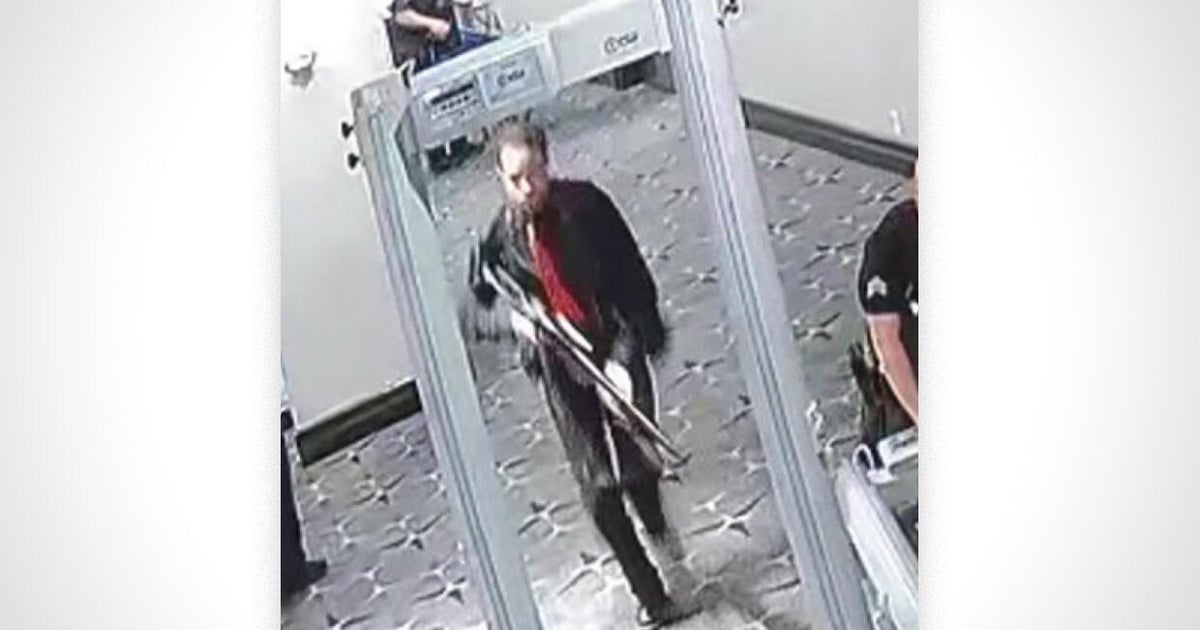
The timeline of the incident reads like something from an action thriller, yet every detail has been corroborated through multiple sources and surveillance footage. A K-9 unit exited a security checkpoint through the double doors that separated the secure area from the general hotel space. Two seconds later, Allen came through those same doors, turned left, and within another two seconds had sprinted through a magnetometer that U.S. Secret Service personnel were in the process of disassembling. The fact that security equipment was being taken down at that precise moment speaks to the timing of the attack—whether by design or deadly coincidence, Allen had chosen a moment when security transitions might have created vulnerability.
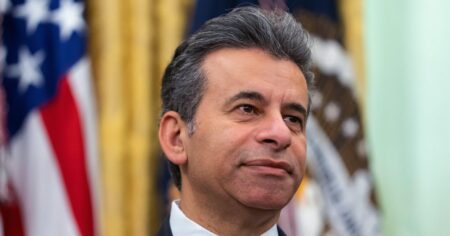
Just two seconds after Allen passed through the magnetometer, gunfire erupted in the hotel corridor. Secret Service Director Sean Curran later provided harrowing details of what transpired in those critical moments. According to the evidence Curran reviewed, the suspect fired at a uniformed Secret Service officer who, despite being shot point-blank in the chest with a shotgun, managed to return fire with five shots even as he was falling. This officer’s protective vest absorbed the buckshot, saving his life and allowing him to continue engaging the threat. The suspected gunman went down between the security checkpoint and a staircase that led directly to the ballroom below—a staircase that would have taken him straight to the president and hundreds of other high-profile attendees.
The Immediate Aftermath and What Was Found
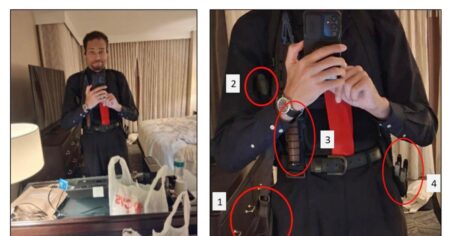
Director Curran’s account provided insight into exactly how Allen was stopped. “It appears that the suspect hit his knee while being engaged by the officer on one of our magnetometer boxes and began to fall to the ground,” Curran explained in a Fox News interview. Whether Allen stumbled due to the officer’s return fire, the physical obstacles in his path, or some combination of factors, his fall marked the end of his assassination attempt. Officers immediately placed Allen in handcuffs and moved him a short distance away to remove what appeared to be a tactical vest—another indication that this was no impulsive act but a planned assault.
The arsenal that authorities discovered on Allen painted a disturbing picture of his intentions. According to court filings by prosecutors, he was carrying multiple knives and a handgun in addition to the shotgun he had already fired. This wasn’t just an attempt to take a single shot at the president; Allen had come prepared for sustained violence. Remarkably, despite the exchange of gunfire, the Secret Service officer sustained only bruising from the buckshot impact on his protective vest, and the suspect himself wasn’t hit by any of the officer’s return fire. No one was seriously hurt—an outcome that can only be described as miraculous given the circumstances and the weapons involved.
The Physical Reality of What Was Prevented
The geography of the incident reveals just how close this came to being catastrophic while also demonstrating the effectiveness of security layering. U.S. Attorney for the District of Columbia Jeanine Pirro released surveillance video of the incident, showing the moment when Allen ran through the security checkpoint. The distance between that checkpoint and the ballroom staircase was approximately 40 feet—a distance that Allen might have covered in seconds had he not been stopped. However, had he somehow made it to those stairs, he would still have faced significant obstacles. The route to the ballroom required navigating two sets of steps separated by a landing, each moment providing additional opportunities for security personnel to intervene.
Secret Service Director Curran put the overall distances into perspective: “You’re talking almost 355 feet from magnetometer to podium. That’s almost 120 yards. That’s a long distance to get to.” While 120 yards might not sound insurmountable, in a security context with trained federal agents positioned throughout, it represents multiple layers of protection. Sources revealed to CBS News that more than 30 federal protective details were working at the dinner that evening—a massive security presence that reflects the high-profile nature of the event and the concentration of government officials, journalists, and celebrities in one location. This wasn’t a failure of security planning; if anything, it was a validation of the multi-layered approach that assumes breaches might occur and prepares response accordingly.
Legal Proceedings and Presidential Response
Cole Allen now faces severe federal charges that reflect the gravity of his actions. He has been charged with attempting to assassinate the president, transporting a firearm with intent to commit a felony, and discharging a firearm during a violent crime. As of the latest reports, he has not entered a plea. Federal prosecutors were also planning to file at least one additional charge against Allen for assaulting a federal officer—a charge that recognizes the violence directed at the Secret Service agent who stopped him. These charges collectively carry the potential for life imprisonment, ensuring that Allen will face full accountability for his attempt to commit what would have been one of the most shocking crimes in American history.
President Trump addressed the incident with his characteristic style, mixing praise for law enforcement with colorful commentary. “They stopped the NFL running back. He was like a running back. In fact, if he ever got out, they’re probably going to sign him. He was a speedy guy. But he was stopped,” Trump told reporters. Despite the levity in his tone, the president acknowledged the serious security challenges involved, noting that while there’s always room for improvement, the Washington Hilton where the White House Correspondents’ Dinner traditionally takes place is “a tough location” for security. His comments reflect the reality that protecting public figures in hotels—with their multiple access points, public areas, and rooms available for rent by anyone—presents unique challenges that even the most professional security services must continually adapt to address.
The incident at the White House Correspondents’ Dinner serves as a sobering reminder of the threats that persist against American political leaders and the constant vigilance required to protect them. In an era of deep political divisions and increasingly vitriolic public discourse, those who serve in protective roles do so knowing that the difference between a routine event and a national tragedy can be measured in seconds. The unnamed Secret Service officer who took a shotgun blast to the chest and still managed to return fire while falling exemplifies the extraordinary courage and training that stands between our leaders and those who would do them harm. While this particular threat was neutralized in seven seconds, the broader challenge of protecting democracy and its representatives continues every single day.