



Arthur Hayes on the Future of Altcoins: Why They’re Here to Stay
The Voice of Experience Speaks at Consensus 2026
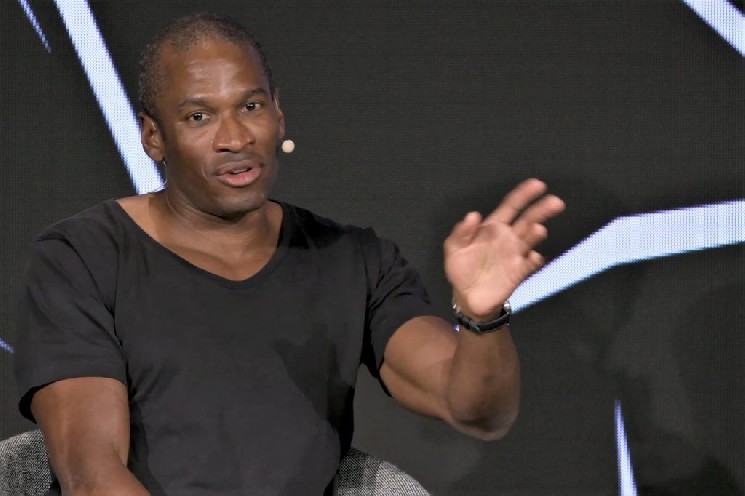
Arthur Hayes, the entrepreneurial mind behind BitMEX and one of cryptocurrency’s most recognizable voices, recently shared his perspectives at the Consensus 2026 Conference, offering a refreshingly optimistic take on the future of alternative cryptocurrencies. In an industry often characterized by dramatic predictions and extreme viewpoints, Hayes brought a measured yet bullish perspective that challenges the doom-and-gloom narratives surrounding altcoins. His appearance at this major blockchain conference reminded attendees why he remains one of the most influential figures in crypto—someone whose opinions carry weight not just because of his past successes, but because of his willingness to put his money where his mouth is. Hayes didn’t just theorize about altcoins; he revealed significant personal investments in the space, lending credibility to his optimistic outlook and demonstrating that even industry veterans with considerable resources see tremendous potential in projects beyond Bitcoin.
Why Altcoins Will Never Die: Hayes’ Central Thesis
Directly confronting the skeptics who predict a mass extinction event for alternative cryptocurrencies, Hayes made a bold declaration: “Altcoins will never die.” This wasn’t just wishful thinking or marketing hype, but rather a thesis grounded in the fundamental nature of innovation and human behavior. Hayes acknowledged what critics often point to—yes, many altcoin projects will fail, and the failure rate in this space is undeniably high. However, he argued that this cycle of creation, experimentation, and occasional failure is actually the lifeblood of the altcoin ecosystem, not a sign of its impending demise. According to Hayes, as long as there are entrepreneurs with new ideas and investors willing to take calculated risks on innovative blockchain solutions, new projects will continue to emerge. Some will fail spectacularly, others will fade into obscurity, but some will succeed and push the boundaries of what’s possible in decentralized technology. This constant renewal, Hayes suggests, ensures that the altcoin market as a category will persist indefinitely, even as individual projects come and go. It’s a perspective that views the high mortality rate of altcoins not as a fatal flaw but as evidence of a healthy, dynamic ecosystem where experimentation is encouraged and the best ideas eventually rise to the top.
Putting Money Behind the Message: Hayes’ Personal Altcoin Investments
What separates Hayes from armchair analysts and social media commentators is his willingness to back his convictions with substantial capital. The BitMEX co-founder revealed that he maintains significant positions in altcoins, specifically highlighting two projects that represent his largest holdings: Hyperliquid (ticker symbol $HYPE) and Zcash (ticker symbol $ZEC). These aren’t random selections or flavor-of-the-month choices, but rather represent two distinctly different approaches within the cryptocurrency landscape. Hyperliquid represents the newer generation of decentralized finance innovations, while Zcash is a more established project focused on privacy-enhanced transactions—a feature increasingly valued as blockchain surveillance becomes more sophisticated. By investing heavily in both, Hayes demonstrates a portfolio strategy that balances emerging opportunities with more mature projects that have already proven their staying power. This diversified approach within the altcoin space suggests Hayes isn’t simply gambling on speculative tokens but rather making calculated bets on projects he believes solve real problems or address genuine market needs. His disclosure of these positions also adds transparency to his public statements, allowing the crypto community to evaluate his predictions knowing he has substantial skin in the game.
Bold Predictions: $HYPE’s Near-Term Target
Hayes didn’t just reveal his holdings—he went further by making specific price predictions that give the market concrete benchmarks against which to evaluate his thesis. For Hyperliquid’s $HYPE token, Hayes set a relatively near-term target, predicting the asset could reach $150 by August. While the current price wasn’t specified in his statements, this prediction implies Hayes sees significant upside potential in a relatively compressed timeframe. August is just months away, making this a prediction that will be proven right or wrong quickly, putting Hayes’ reputation on the line. This kind of specific, time-bound forecast is relatively rare among high-profile crypto figures, many of whom prefer vaguer predictions that are harder to definitively assess. The $150 target for $HYPE suggests Hayes sees strong fundamental drivers or market conditions that could propel the token substantially higher in the coming months. Whether this optimism is based on upcoming protocol developments, broader market trends, or technical analysis remains unclear, but the specificity of the prediction demonstrates Hayes’ confidence in Hyperliquid’s trajectory. For investors and observers, this forecast provides a clear milestone to watch as 2026 progresses.
The Ambitious Zcash Vision: Reaching 10% of Bitcoin’s Price
While his $HYPE prediction was ambitious, Hayes’ forecast for Zcash was nothing short of extraordinary. He stated that his goal for $ZEC is for it to reach a price equivalent to 10% of Bitcoin’s value—a target that would represent massive appreciation from current levels. To put this in concrete terms, with Bitcoin trading around $81,900 (as implied by the calculations in the original report), Hayes’ target for Zcash would be approximately $8,190. Given that $ZEC currently trades around $570, reaching this target would require an astronomical increase of approximately 1,332%. This isn’t a prediction measured in months but rather appears to be a longer-term vision for where Zcash could eventually trade if it fulfills its potential as a privacy-focused alternative to Bitcoin. Hayes’ reasoning appears to be that as privacy becomes increasingly valuable in the cryptocurrency ecosystem—particularly as regulatory scrutiny intensifies and blockchain analysis tools become more sophisticated—Zcash’s technological advantages could drive significant appreciation. The fact that he frames this as reaching “10% of Bitcoin’s price” rather than a fixed dollar amount is also telling, suggesting he views $ZEC’s value as fundamentally linked to Bitcoin’s trajectory rather than as an independent asset. This framing implies that Hayes sees Zcash not as a Bitcoin replacement but as a complementary asset that could capture a meaningful fraction of Bitcoin’s market while serving a distinct use case.
The Bigger Picture: Innovation and Risk in Cryptocurrency Markets
Hayes’ overall message transcends specific price predictions and speaks to a broader philosophy about innovation, risk, and the nature of emerging technology markets. His assertion that altcoins will never die, despite high failure rates, reflects an understanding that technological progress rarely follows a straight line. The history of innovation is littered with failed experiments, but these failures don’t discredit the underlying technology or prevent new attempts. Just as the dot-com crash didn’t kill the internet but rather cleared the way for more sustainable business models, Hayes seems to believe the cryptocurrency market will follow a similar pattern. The constant emergence of new altcoin projects, even as others fail, creates a dynamic environment where the best ideas and strongest teams can succeed. This perspective stands in stark contrast to Bitcoin maximalists who argue that all altcoins are ultimately doomed and that only Bitcoin will survive long-term. Hayes’ position—backed by his substantial investments—suggests a more nuanced view where Bitcoin may remain the dominant cryptocurrency, but a diverse ecosystem of alternative projects will continue to serve specialized functions and attract both users and investment capital. His willingness to make specific, bold predictions also reflects a confidence that may be based on insights from his extensive experience in crypto markets, his network within the industry, or proprietary analysis his team has conducted. Regardless of whether his specific price targets are ultimately reached, Hayes’ central thesis about the persistence and importance of altcoins offers a counternarrative to the more pessimistic voices in the space, reminding the crypto community that innovation, speculation, and periodic failure are all healthy parts of a maturing but still-evolving market. As always with any investment discussion, it’s crucial to remember that these are opinions and predictions rather than guarantees, and anyone considering investments based on such forecasts should conduct their own research and carefully consider their risk tolerance.