



Bitcoin’s Evolving Future: Expert Insights on Market Cycles and Long-Term Value
The Current State of Bitcoin: Finding Solid Ground
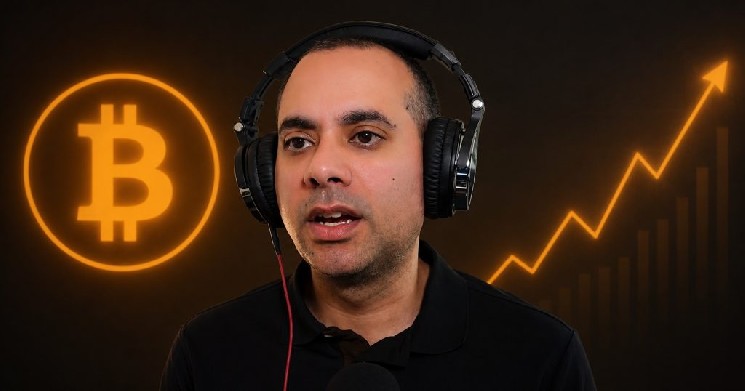
When it comes to understanding where Bitcoin is headed, few voices carry as much weight as Nik Bhatia, a respected financial analyst who has dedicated years to studying cryptocurrency markets and their relationship with traditional finance. In a recent conversation on Michaël van de Poppe’s show, Bhatia shared his perspective on where we stand today with Bitcoin, and his outlook is surprisingly optimistic despite the turbulence we’ve witnessed in recent months. According to Bhatia, the cryptocurrency market has weathered its worst storm, and while we might not be racing toward new all-time highs just yet, the foundation for recovery has been firmly established. His analysis suggests that the painful price movements we saw during January and February weren’t just random market noise—they represented a critical turning point that he describes as “capitulation,” a moment when weak hands exit the market and stronger, more committed investors establish a floor. This perspective offers a glimmer of hope for those who have watched their portfolios shrink during the downturn, suggesting that patient investors may soon see their conviction rewarded.
Understanding Market Capitulation and What It Means for Investors
The concept of capitulation might sound abstract, but it’s actually a well-documented phenomenon in financial markets that signals important transitions. When Bhatia talks about capitulation in the context of Bitcoin’s recent price action, he’s referring to that moment when fear reaches its peak, when even previously optimistic investors throw in the towel, and when selling pressure finally exhausts itself. During January and February, we witnessed exactly this kind of behavior as Bitcoin tested the resolve of its holder base. Prices dropped, panic spread through social media channels, and many investors who bought during more euphoric times decided to cut their losses and move on. But here’s the interesting part: once this wave of selling runs its course, there’s often nobody left to sell, which creates natural support for prices. Bhatia’s observation that “Bitcoin has hit bottom” doesn’t mean he’s guaranteeing that prices can’t dip lower temporarily, but rather that the psychology of the market has shifted from one dominated by fear to one where stability is taking root. He’s careful to distinguish between the end of a bear market and the beginning of a bull market—two different phases that don’t necessarily follow immediately after one another. There’s often a period of consolidation, a breathing space where the market digests what’s happened and prepares for its next major move.
The Strengthening Case for Bitcoin as Digital Gold
One of the most compelling aspects of Bhatia’s analysis centers on Bitcoin’s evolving identity as “digital gold.” This comparison isn’t new—people have been calling Bitcoin digital gold for years—but Bhatia argues that this characterization is becoming more accurate and widely accepted with each passing market cycle. Traditional gold has served as a store of value for thousands of years, offering protection against currency debasement, political instability, and economic uncertainty. Bitcoin, despite being only fifteen years old, is increasingly fulfilling similar functions for a new generation of investors who are comfortable with digital assets. The comparison goes deeper than just being a hedge against inflation. Like gold, Bitcoin has a limited supply that cannot be arbitrarily increased by governments or central banks. Like gold, it’s recognized and valued across international borders. And like gold, it serves as a form of savings that exists outside the traditional banking system. What makes Bhatia’s perspective particularly interesting is his assertion that this “digital gold” status is being “reinforced day by day.” He’s not talking about price movements here, but rather about institutional adoption, regulatory clarity, infrastructure development, and growing public understanding of what Bitcoin represents. Major financial institutions that once dismissed Bitcoin are now offering it to clients. Countries are developing clearer regulatory frameworks. The technology supporting Bitcoin transactions has matured significantly. All of these developments strengthen the narrative that Bitcoin isn’t just a speculative asset but a legitimate component of a diversified financial strategy.
Long-Term Price Predictions and the Path to Seven Figures
Perhaps the most attention-grabbing part of Bhatia’s interview was his long-term price prediction: Bitcoin reaching over $1 million sometime in the 2030s. To many people unfamiliar with Bitcoin’s history, this might sound absurdly optimistic or even impossible. But when you consider that Bitcoin was trading below $1,000 just eight years ago and has already reached nearly $70,000, a move to seven figures over the next decade becomes less far-fetched and more a question of continued adoption at historical rates. Bhatia isn’t just throwing out a random number to generate headlines. His prediction is built on fundamental analysis of Bitcoin’s supply dynamics, growing institutional demand, and the ongoing challenges facing traditional fiat currencies. If Bitcoin continues to capture even a small percentage of the market share currently held by gold, real estate, and other traditional stores of value, the mathematics point toward much higher prices. Importantly, Bhatia also provided a nearer-term milestone that would validate his longer-term thesis: Bitcoin reaching $130,000 within the next 18 months. This intermediate target serves as a kind of checkpoint—if Bitcoin can demonstrate the strength to push through to new all-time highs in this timeframe, it would confirm that the market structure remains intact and that the path toward much higher valuations remains open. For investors, this creates a roadmap of sorts, with clear indicators to watch that will either validate or challenge the bullish long-term scenario.
Rethinking Bitcoin’s Four-Year Cycle Theory
For years, Bitcoin enthusiasts have pointed to the four-year halving cycle as the dominant framework for understanding price movements. This theory is based on Bitcoin’s programmed supply schedule, which cuts the rate of new Bitcoin creation in half approximately every four years. Historically, these halving events have been followed by significant bull markets, creating a predictable pattern that many investors have used to guide their strategies. However, Bhatia suggests that this framework may be evolving or becoming less reliable as Bitcoin matures. In his work with mathematician Dr. Steven Perrenod, Bhatia has explored how Bitcoin’s market cycles might be stretching out and becoming less sharply defined. This makes intuitive sense when you consider that Bitcoin’s market capitalization has grown tremendously. In its early years, Bitcoin was a small, thinly-traded asset that could experience dramatic price swings based on relatively small amounts of capital flowing in or out. As the market has grown to hundreds of billions of dollars in value, with participation from institutional investors, sovereign wealth funds, and publicly-traded companies, the dynamics have necessarily changed. Larger markets tend to move more slowly and with less volatility than smaller ones. The implication of this evolving cycle theory is significant for investors: the traditional “buy after the halving, sell a year later” strategy may no longer be optimal. Instead, Bhatia’s analysis suggests that cycles could be “spread over a wider period of time,” meaning bull and bear markets might last longer and follow less predictable patterns than in the past.
Navigating Bitcoin Investment in Today’s Complex Environment
So what does all of this mean for someone trying to make sense of Bitcoin as a potential investment today? Bhatia’s analysis offers several important takeaways that can help frame a thoughtful approach. First, his belief that the worst is behind us suggests that current price levels may represent a reasonable entry point for long-term investors, even if there’s no guarantee of immediate gains. The capitulation he identifies in January and February has likely cleared out much of the weak supply that was hanging over the market, creating a more stable foundation. Second, his emphasis on Bitcoin’s “digital gold” narrative reminds us that short-term price fluctuations should be viewed in the context of Bitcoin’s fundamental value proposition as a scarce, decentralized store of value. This perspective encourages patience and long-term thinking rather than attempts to time every market swing. Third, his long-term price targets—while certainly optimistic—are grounded in continued adoption trends rather than pure speculation, giving investors a framework for evaluating whether the Bitcoin thesis remains on track. The intermediate milestone of $130,000 within 18 months provides a concrete marker to assess progress. Finally, his discussion of evolving market cycles serves as a reminder that Bitcoin is a maturing asset whose behavior is changing as it grows. Strategies that worked in previous cycles may need adjustment, and investors should remain flexible in their thinking rather than rigidly adhering to historical patterns. As always with any investment, but especially with one as volatile as Bitcoin, it’s crucial to remember that no prediction is guaranteed, and any allocation should be sized appropriately based on individual risk tolerance and financial circumstances. Bhatia’s insights offer valuable perspective, but they represent one expert’s view in a complex and rapidly evolving market where outcomes remain genuinely uncertain.