


Tragic School Shooting in Brazil Claims Two Lives and Injures Two Others
A Community in Mourning After Senseless Violence
The quiet city of Rio Branco in northern Brazil’s Acre state was shattered by violence on Tuesday when a 13-year-old student opened fire at the Instituto Sao Jose, a public school in the state capital. The attack left two female staff members dead at the scene and injured two others, including an 11-year-old girl who was shot in the leg. The young victim was rushed to a nearby hospital along with another injured staff member. What should have been an ordinary school day transformed into a nightmare that has left an entire community grappling with grief and searching for answers. The state government confirmed these tragic details in an official statement, while authorities worked to piece together the circumstances that led to this devastating incident. The identities of the victims have not been publicly released as officials work to notify families and respect their privacy during this impossibly difficult time.
The Attack and Its Aftermath
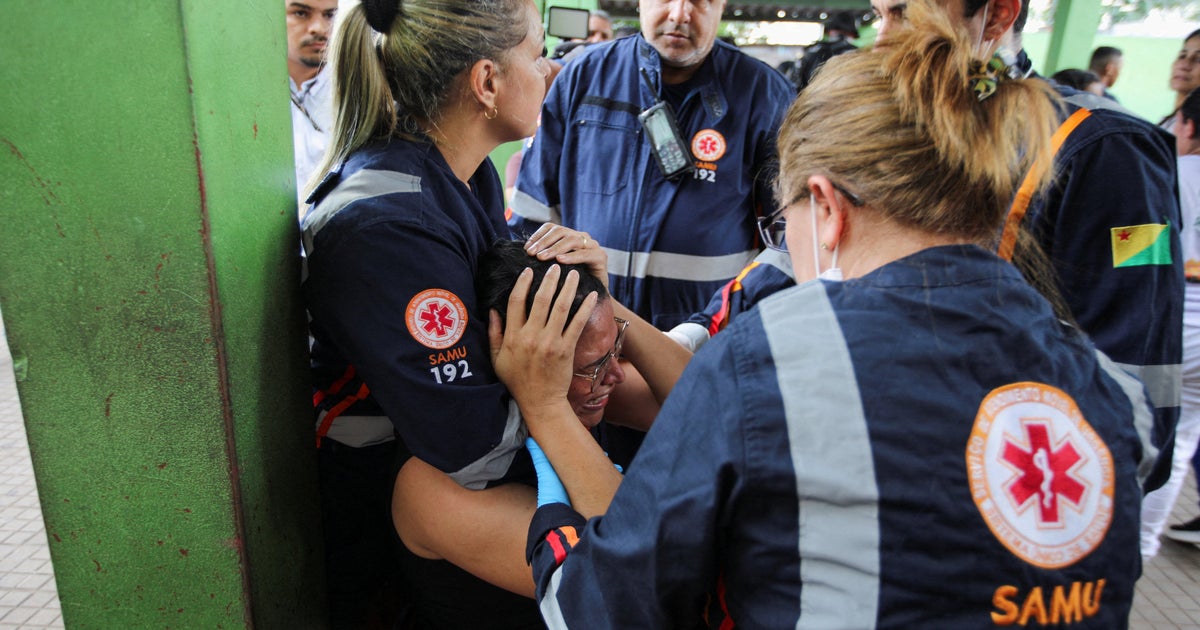
According to Lieutenant Colonel Felipe Russo of the Acre military police department, the teenage suspect fired multiple shots in a hallway that led toward the principal’s office before surrendering to police after the attack. The weapon used was reportedly a gun owned by the teenager’s legal guardian, with local media identifying the owner as the boy’s stepfather, who was also taken into custody by authorities. The chaos and terror of those moments were captured in the testimony of Eduardo Rodrigues Cavalcante, a 19-year-old receptionist working at a hotel located next to the school. He described desperate scenes of students attempting to escape the violence by climbing over the six-meter-high wall that separated the school from the hotel property. “Only one person managed to jump over and take refuge here in the hotel,” Cavalcante recalled, his voice still shaken by what he witnessed. “The other people were left on the school roof trying to escape.” He reported hearing “gunshots and a lot of screaming” that will likely haunt him for years to come. Images released by local media outlets painted a heartbreaking picture of the tragedy’s immediate aftermath, showing emergency responders evacuating a woman on a stretcher while anguished family members and community members gathered outside the school, crying and embracing one another in shared grief and shock.
Government Response and Support for the Community
In the wake of this tragedy, Acre Governor Mailza Assis issued a statement expressing solidarity with all those affected by the violence. “The state expresses deep solidarity with the victims’ families, the school community of Instituto Sao Jose and all education professionals affected by this incident,” Governor Assis said, acknowledging the profound impact this event will have on the entire educational community. Recognizing the urgent need for healing and processing, state officials announced that classes would be suspended for three days at all schools throughout Acre state. This decision allows students, teachers, and families time to grieve and begin coming to terms with what has happened. Additionally, the government mobilized psychological support teams to assist students, teachers, and staff members who are struggling to cope with the trauma of the attack or the broader feelings of fear and vulnerability it has created. These mental health professionals will play a crucial role in helping the school community navigate the difficult days, weeks, and months ahead as they work to heal from this senseless act of violence and eventually return to some sense of normalcy in their educational environment.
A Disturbing Pattern of School Violence in Brazil
This latest attack is part of an alarming trend that has seen Brazil experience a sharp increase in violent incidents at educational institutions in recent years. The frequency and severity of these attacks have raised serious concerns among parents, educators, and policymakers about school safety and the factors contributing to youth violence. Just months earlier, in September 2025, another tragedy struck when two teenagers were shot and killed at a school in the northeastern state of Ceara, with three others wounded in that attack. Going back further, in October 2023, a shooting at a school in Sao Paulo resulted in the death of a 17-year-old student and left three others wounded. That same year witnessed another attack in the southeastern state of Minas Gerais, where a teenager was killed and three others wounded in a knife attack as they were leaving school premises. Perhaps one of the most horrifying incidents occurred in April 2023, when a 25-year-old man entered a daycare center in the southern state of Santa Catarina and used an axe to kill four young children, all between the ages of 3 and 7. The brutality of that attack shocked the nation and raised urgent questions about security measures at educational facilities, particularly those serving very young children who are completely defenseless against such violence.
Understanding the Scope of the Crisis
The pattern of violence extends even further back, demonstrating that this is not a recent phenomenon but rather an escalating crisis that demands immediate attention and comprehensive solutions. In 2022, Brazil witnessed one of its deadliest school attacks when a former student, armed with a semiautomatic pistol and a revolver, killed four people and wounded twelve others in attacks on two separate schools. Police investigations later revealed that the suspect had been wearing a swastika pinned to his vest and had spent two years meticulously planning the attacks, indicating a level of premeditation and ideological motivation that added another disturbing dimension to the incident. These repeated tragedies have forced Brazilian society to confront difficult questions about gun access, mental health support for young people, the influence of violent ideologies and online extremism, bullying and social isolation in schools, and the adequacy of security measures at educational institutions. Each incident leaves behind devastated families, traumatized students and educators, and communities struggling to understand how their schools—places that should represent safety, learning, and hope for the future—have become sites of such terrible violence.
Moving Forward: Questions and Challenges Ahead
As Brazil grapples with this latest tragedy in Rio Branco, the nation faces difficult questions about how to protect its children and prevent future attacks. The fact that the weapon used in Tuesday’s shooting belonged to the teenage suspect’s stepfather highlights ongoing concerns about gun storage and access, particularly in homes with children and adolescents. While Brazil has relatively strict gun laws compared to some countries, legal gun ownership does exist, and ensuring that these weapons are properly secured and kept away from young people remains a critical challenge. Beyond the immediate question of gun access, the deeper issues of what drives young people to commit such acts of violence remain largely unanswered. Investigators will likely spend months trying to understand what motivated this 13-year-old student to bring a gun to school and open fire on staff members and fellow students. Was this a case of bullying that escalated to violence? Were there warning signs that were missed? Did the young suspect have access to violent content online that influenced his actions? These questions are essential not just for understanding this particular incident, but for developing effective prevention strategies that can identify at-risk youth and intervene before violence occurs. As the community of Rio Branco begins the long process of healing, and as psychological support teams work with traumatized students and educators, the broader Brazilian society must commit to meaningful action that addresses the root causes of school violence and creates safer environments for all students to learn and grow without fear.