



Bitcoin’s Recent Crash: Why Analysts Remain Optimistic About $150,000 Target
Understanding the Recent Market Turbulence
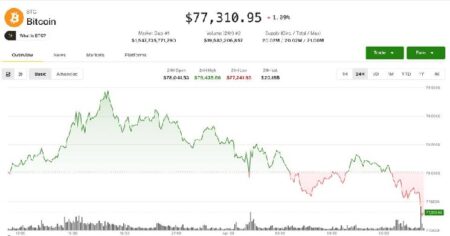
The cryptocurrency market witnessed significant turmoil last week as Bitcoin and various altcoins experienced a dramatic downturn that sent shockwaves through the digital asset community. Bitcoin’s price plummeted to alarming lows of $60,000, marking one of the most notable corrections in recent months and causing widespread concern among investors and market participants. This sudden decline sparked intense debate about the future trajectory of the leading cryptocurrency and raised questions about whether the current bull market cycle had come to an end. However, despite the panic selling and negative sentiment that gripped the market, prominent financial analysts from Bernstein have come forward with a surprisingly optimistic assessment of the situation, arguing that the recent price action doesn’t change their bullish long-term outlook for Bitcoin.
A Historical Perspective on Bitcoin Bear Markets
According to detailed analysis reported by The Block, Bernstein’s team of cryptocurrency experts has characterized this recent decline as something quite unusual in Bitcoin’s history – they’re calling it potentially the weakest bear market the cryptocurrency has ever experienced. This assessment might seem counterintuitive given the severity of the price drop, but the analysts are looking beyond simple price movements to examine the underlying structural health of the market. Unlike previous major bear markets that plagued Bitcoin’s history, the current situation lacks the catastrophic systemic failures that typically accompany prolonged downturns. There are no major cryptocurrency exchanges collapsing, no massive corporate bankruptcies within the crypto ecosystem, and most importantly, no hidden leverage schemes suddenly unraveling and creating cascading liquidation events. These observations have led Bernstein to conclude that what we’re witnessing is essentially a temporary crisis of confidence rather than a fundamental breakdown in Bitcoin’s value proposition or market structure.
The Fundamental Differences in This Market Cycle
Bernstein’s analysis goes deeper into explaining why this bear market differs substantially from previous downturns that have periodically shaken the cryptocurrency world. The analysts emphasize that past bear markets were typically triggered by serious structural problems within the crypto ecosystem itself – whether it was the collapse of major exchanges like Mt. Gox, the implosion of overleveraged lending platforms, or the discovery of massive fraud schemes that destroyed billions in investor value. In contrast, the current correction appears to be driven primarily by broader macroeconomic concerns, temporary fear in the market, and perhaps profit-taking after significant gains, rather than any fundamental flaw in Bitcoin’s infrastructure or adoption trajectory. The firm stated explicitly: “What we’re seeing is the weakest bear market scenario in Bitcoin history. This type of correction doesn’t undermine the long-term adoption trend or investment thesis.” This statement reflects their conviction that the underlying fundamentals supporting Bitcoin’s value remain intact and that the current price action is merely noise in the broader trend toward mainstream adoption.
Addressing Emerging Technological Concerns
While maintaining their optimistic stance, Bernstein analysts also acknowledged some of the emerging concerns that have recently surfaced in cryptocurrency discussions, particularly regarding quantum computing technology. The potential threat that quantum computers pose to Bitcoin’s cryptographic security has become a topic of increasing discussion in both technical and investment communities. However, rather than viewing this as a unique vulnerability for Bitcoin, Bernstein placed it in proper context by noting that quantum technology represents a common challenge for all global digital systems, not just cryptocurrencies. This includes traditional banking infrastructure, government security systems, and virtually all internet-based services that rely on current encryption standards. The implication is that as quantum computing develops, the entire digital world will need to evolve its security measures, and Bitcoin is no more vulnerable than any other critical digital system. In fact, Bitcoin’s open-source nature and engaged developer community may actually position it well to adapt to such challenges when they become practically relevant.
The Bullish Catalysts Supporting the $150,000 Target
Despite the recent volatility, Bernstein has firmly reiterated its year-end target of $150,000 for Bitcoin, pointing to several powerful catalysts that distinguish the current market cycle from all previous ones. The analysts highlighted the dramatically changed political and regulatory landscape in the United States, where pro-Bitcoin sentiment has grown significantly among policymakers and regulators, creating a much more favorable environment for institutional adoption. The successful launch and rapid growth of spot Bitcoin ETFs has created entirely new infrastructure for traditional investors to gain exposure to Bitcoin through familiar investment vehicles, bringing billions of dollars in new capital into the market. Additionally, the trend of corporations adding Bitcoin to their treasury strategies has continued to gain momentum, with more companies viewing it as a legitimate asset for preserving and potentially growing shareholder value. Perhaps most significantly, the sustained involvement of major asset management firms – the largest financial institutions in the world – signals that Bitcoin has definitively crossed over from a speculative fringe asset to a recognized component of modern investment portfolios. These institutional developments create a foundation of sustained demand that didn’t exist in previous market cycles.
Looking Forward with Confidence
Taking all these factors into account, Bernstein’s analysts concluded that the risk of forced selling has significantly decreased compared to previous market downturns, and that the recent correction has not negatively impacted Bitcoin’s long-term trajectory in any meaningful way. The temporary price weakness should be viewed as exactly that – temporary – rather than as evidence of fundamental problems with the Bitcoin investment thesis. For investors trying to navigate these turbulent waters, the key takeaway is that short-term volatility remains an inherent characteristic of cryptocurrency markets, but the long-term structural changes supporting Bitcoin’s value proposition continue to strengthen. The combination of improved regulatory clarity, robust institutional infrastructure, growing corporate adoption, and increased mainstream acceptance creates a much more resilient foundation for Bitcoin’s price than existed in any previous cycle. While no one can predict short-term price movements with certainty, and past performance never guarantees future results, the analytical framework supporting Bernstein’s $150,000 target appears grounded in substantive changes to Bitcoin’s role in the global financial system rather than mere speculation or hype. As always, potential investors should conduct their own thorough research, understand the risks involved in cryptocurrency investment, and never invest more than they can afford to lose. This analysis from Bernstein should not be construed as investment advice but rather as one perspective from experienced market analysts on the current state and future potential of Bitcoin in an evolving financial landscape.