


Understanding Bitcoin’s Wednesday Price Pattern: A Deep Dive into Market Behavior
The Discovery of a Recurring Market Phenomenon
In the ever-evolving world of cryptocurrency trading, patterns and trends often emerge that capture the attention of both seasoned investors and curious observers. Recently, a crypto analyst known as Sherlock has brought to light a fascinating and statistically significant pattern in Bitcoin’s price behavior that has remained remarkably consistent over the past three months. This discovery isn’t just another fleeting observation in the volatile crypto market—it represents a pattern that has repeated itself with striking consistency every single week for thirteen consecutive weeks.
The pattern is surprisingly specific: every Wednesday at 17:00 UTC (which corresponds to 20:00 Turkish Standard Time), Bitcoin reaches a certain price peak, only to experience a pullback of at least 1 percent within the following 24 hours. While cryptocurrency markets are known for their unpredictability and wild price swings, the consistency of this particular pattern has raised eyebrows throughout the trading community. What makes this observation particularly intriguing is not just that Bitcoin experiences a decline—after all, price fluctuations are the norm in crypto markets—but rather the remarkable regularity with which this specific behavior occurs at this specific time on this specific day of the week. It’s the kind of pattern that makes traders wonder whether there’s an underlying mechanism at play, or whether we’re witnessing an extraordinary statistical coincidence.
The Numbers Behind the Pattern
When we examine the data more closely, the consistency of this trend becomes even more apparent. Sherlock’s analysis reveals that over the thirteen-week period studied, the smallest drop observed was 1.11 percent, while the average decline stood at 2.58 percent, with a median drop of 2.40 percent. The largest pullback recorded during this period reached 3.91 percent. These numbers might seem modest compared to the dramatic price swings cryptocurrency markets are capable of producing, but their consistency is what sets them apart.
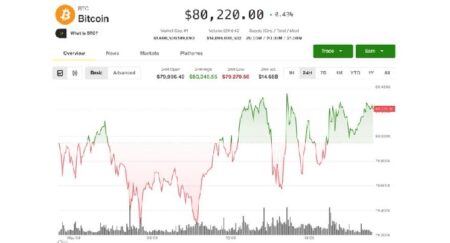
To put this in perspective with a recent example, during the most recent occurrence of this pattern, Bitcoin’s price stood at $81,452 at 5:00 PM UTC on Wednesday. True to form, within the next 24 hours, the price had fallen to $79,500, representing a drop of approximately 2.4 percent—right in line with the median decline observed over the previous twelve weeks. For traders and investors who have been paying attention to this pattern, this most recent occurrence served as yet another confirmation of the trend’s persistence. The fact that the drop was so close to the median value suggests that this isn’t just about Bitcoin experiencing random volatility around this time; there appears to be something more systematic at work. Whether this is driven by trading algorithms, institutional trading schedules, or some other factor remains a topic of speculation and analysis within the cryptocurrency community.
Beyond Bitcoin: A Multi-Asset Pattern
What makes this discovery even more remarkable is that Bitcoin isn’t experiencing this phenomenon in isolation. According to Sherlock’s analysis, the same weekly pattern has been observed in other major cryptocurrencies, specifically Ethereum and Solana—two of the largest altcoins by market capitalization. Both of these digital assets have reportedly exhibited the same Wednesday evening peak followed by a 24-hour pullback pattern for the same thirteen-week period.
The fact that multiple cryptocurrencies are moving in tandem according to this specific schedule suggests that whatever is driving this pattern isn’t unique to Bitcoin’s market dynamics. Instead, it points toward broader market forces that affect the cryptocurrency ecosystem as a whole. This could involve coordinated trading activities, scheduled rebalancing by major institutional investors, or perhaps automated trading systems that operate across multiple digital assets simultaneously. The synchronization across different cryptocurrencies adds another layer of intrigue to the pattern and strengthens the argument that this is more than just a random occurrence. It suggests a level of interconnectedness in the crypto markets where major assets move together in response to common influences or triggers that manifest on a predictable weekly schedule. For traders who operate across multiple cryptocurrencies, recognizing this pattern could provide valuable insights for timing their trades and managing risk exposure.
The Statistical Significance: Understanding the P-Value
For those who might dismiss this pattern as mere coincidence, Sherlock presents a compelling statistical argument. The analyst calculated what’s known as a “P-Value” for this phenomenon, which came out to 0.000244. For those unfamiliar with statistical terminology, the P-Value is a measure used to determine the probability that an observed pattern could occur purely by chance. In simple terms, a P-Value of 0.000244 means that the odds of this thirteen-week pattern occurring completely randomly are approximately 1 in 4,096.
To understand how remarkable this is, consider that in statistical analysis, a P-Value of 0.05 (or 5 percent, representing odds of 1 in 20) is typically considered the threshold for statistical significance. Sherlock’s calculated P-Value is more than 200 times smaller than this conventional threshold, indicating an extraordinarily low probability that this pattern is the result of random chance. This statistical rigor transforms what might otherwise be dismissed as pattern-seeking or confirmation bias into a phenomenon that demands serious consideration. When something has only a 1 in 4,096 chance of occurring randomly, it strongly suggests that there are genuine underlying factors driving the behavior. This level of statistical significance is what separates meaningful market patterns from the countless false patterns that traders might imagine they see in the noise of daily price movements. However, it’s important to note that even with strong statistical significance, identifying a pattern doesn’t automatically reveal its cause or guarantee its continuation into the future.
Possible Explanations and Market Implications
While Sherlock’s analysis clearly demonstrates that this pattern exists and is statistically significant, it doesn’t definitively explain why it’s happening. The cryptocurrency community has begun speculating about various potential causes. One possibility involves institutional trading schedules and portfolio rebalancing activities that might occur on predictable weekly cycles. Large institutional investors often have set times for reviewing and adjusting their portfolios, and if multiple major players follow similar schedules, their collective actions could create observable market patterns.
Another potential explanation involves automated trading systems and algorithms. The cryptocurrency market has seen an increasing presence of sophisticated trading bots and algorithmic trading systems that execute trades based on time-based triggers or technical indicators. If numerous algorithms are programmed with similar logic or timing mechanisms, their combined trading activity could create the patterns we’re observing. Additionally, there might be correlation with traditional financial markets, where certain activities or reports are released on weekly schedules that influence investor sentiment across both traditional and crypto markets. Some analysts have also pointed to the possibility of coordinated whale activity—large holders of cryptocurrency who might be strategically timing their sell orders to maximize profits by selling into Wednesday evening strength. Whatever the cause, the pattern’s consistency suggests that traders who are aware of it might begin to position themselves accordingly, potentially creating a self-fulfilling prophecy where the pattern continues partly because traders expect it to continue. This is one of the fascinating aspects of market psychology: once enough participants become aware of a pattern and act on it, their actions can reinforce the very pattern they’re responding to.
Looking Forward: Caution and Context
While this thirteen-week pattern is certainly intriguing and statistically significant, it’s crucial to approach it with appropriate caution and context. The cryptocurrency market is notoriously unpredictable, and past performance—even when statistically significant—is never a guarantee of future results. Patterns can and do break, especially once they become widely known and traders begin attempting to profit from them. The very act of publicizing this pattern might alter the dynamics that created it in the first place.
Furthermore, thirteen weeks, while consistent, represents a relatively short timeframe in the grand scheme of market behavior. Patterns that seem ironclad over weeks or even months can suddenly dissolve when broader market conditions change. A major regulatory announcement, macroeconomic shift, or significant technological development in the blockchain space could easily override whatever factors have been driving this Wednesday pattern. It’s also worth remembering that even a 1 in 4,096 statistical probability means that unlikely events do sometimes occur by chance—extraordinarily unlikely doesn’t mean impossible. For individual investors and traders, the key takeaway isn’t necessarily that they should restructure their entire trading strategy around Wednesday evening price movements, but rather that market patterns do exist, they can be measured and analyzed, and staying informed about market behavior can contribute to better decision-making. As with all market analysis, this pattern should be considered as one data point among many, not as a crystal ball that predicts the future. The disclaimer that accompanies this analysis—that it is not investment advice—should be taken seriously. Anyone considering trading decisions should conduct their own research, understand their risk tolerance, and ideally consult with financial professionals before making significant investment moves in the volatile cryptocurrency market.