



Crypto Markets Surge as Bitcoin Holds Strong and Risk Appetite Returns
Bitcoin Stability Fuels Broader Market Confidence
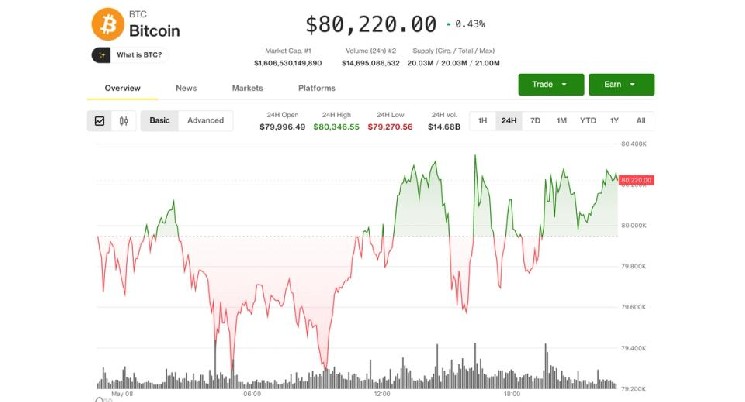
The cryptocurrency market experienced a wave of renewed optimism this past Friday as Bitcoin maintained its position above the psychologically important $80,000 threshold. This stability in the world’s largest cryptocurrency provided the foundation for a broader rally across digital assets, with investors demonstrating increased appetite for risk by moving capital into alternative cryptocurrencies and blockchain infrastructure projects. The positive sentiment wasn’t confined to crypto markets alone—traditional stock markets also participated in the rally, with major indices reaching fresh record highs. This synchronized movement across both digital and traditional assets suggests growing confidence among investors about the overall health of financial markets and the economy. The convergence of strong price action in Bitcoin, robust stock market performance, and encouraging economic data created a perfect storm of positive momentum that lifted sentiment across the entire digital asset ecosystem.
Altcoins Lead the Charge with Impressive Gains
While Bitcoin provided the stable foundation, it was the alternative cryptocurrency market that truly shone on Friday. Major blockchain platforms and decentralized finance tokens posted substantial gains that outpaced Bitcoin’s performance, indicating that investors were willing to venture beyond the relative safety of the largest cryptocurrency. Solana, a high-performance blockchain platform known for its fast transaction speeds, climbed approximately 5%, while Chainlink, which provides real-world data to blockchain networks through its oracle services, matched that performance. Near Protocol and Uniswap, both important players in the decentralized finance landscape, posted even stronger gains of around 7%. However, the standout performer was Internet Computer Protocol, whose ICP token surged nearly 12% to lead gains among major cryptocurrencies. These substantial movements in altcoins suggest that investors are becoming more comfortable allocating capital to projects beyond Bitcoin, viewing the current market environment as favorable for taking on additional risk in pursuit of higher returns.
Traditional Markets Provide Supportive Backdrop
The rally in cryptocurrency markets didn’t occur in isolation—it was accompanied by strong performance in traditional equity markets, particularly in the technology sector. The Nasdaq Composite Index, which is heavily weighted toward technology companies, climbed an impressive 2.2% to reach fresh all-time highs, demonstrating robust investor confidence in the tech sector. The broader S&P 500 Index also participated in the rally, adding 0.85% to close at a new record high as well. This coordinated strength across both traditional and digital asset markets suggests a fundamental shift in risk sentiment, with investors becoming more willing to deploy capital into growth-oriented assets. The strong performance in technology stocks is particularly relevant for cryptocurrency markets, as there tends to be significant overlap between investors who favor high-growth tech companies and those who invest in digital assets. When technology stocks are performing well, it often creates a halo effect that benefits cryptocurrencies, as both asset classes are viewed as plays on innovation and the future of finance and technology.
Economic Data Exceeds Expectations
Adding further fuel to the positive market sentiment was Friday’s release of U.S. labor market data, which came in significantly better than economists had anticipated. The April jobs report showed that the U.S. economy added 115,000 new positions during the month, nearly doubling the consensus expectation of just 62,000 jobs. Perhaps equally important, the unemployment rate held steady at 4.3%, indicating a labor market that remains healthy and stable without showing signs of overheating that might prompt aggressive action from the Federal Reserve. This Goldilocks scenario—strong enough to indicate economic health but not so strong as to reignite inflation concerns—is precisely what investors want to see. It suggests that the economy can continue expanding without triggering the kind of inflationary pressures that would force the central bank to tighten monetary policy. For risk assets like cryptocurrencies and growth stocks, this kind of economic environment is ideal, as it allows investors to focus on growth potential without worrying about rising interest rates or restrictive monetary policy that could dampen valuations.
Coinbase Recovery Despite Challenging Quarter
Crypto-related equities also participated in Friday’s rally, with Coinbase, the largest publicly-traded cryptocurrency exchange in the United States, staging a notable recovery. The company’s shares rebounded 10% from their session lows, an impressive move considering that Coinbase had just reported disappointing quarterly results the previous evening. The earnings report showed a $398 million quarterly loss, reflecting softer trading activity on the platform as cryptocurrency market volatility declined during the period. Making matters worse, Coinbase’s trading platform experienced a several-hour outage early Friday morning due to a failure at Amazon Web Services (AWS), the cloud infrastructure provider that hosts much of the platform’s operations. The outage was eventually resolved, but it highlighted the operational challenges that even major cryptocurrency platforms can face. Despite these near-term headwinds, Wall Street analysts who cover the stock chose to focus their commentary on longer-term growth opportunities. Specifically, analysts highlighted the potential for Coinbase to benefit from the growth of stablecoins—cryptocurrencies pegged to fiat currencies like the U.S. dollar—and from evolving cryptocurrency regulations that could provide greater clarity and legitimacy to the industry. This forward-looking perspective helped support the stock’s recovery and demonstrated that investors are willing to look past short-term operational and financial challenges when the long-term story remains compelling.
Regulatory Developments Point Toward Crypto Integration
Perhaps the most significant development for the long-term trajectory of cryptocurrency markets came from comments made by SEC Chairman Paul Atkins on Friday. Atkins revealed that the Securities and Exchange Commission is actively considering new regulatory frameworks for several key areas of cryptocurrency infrastructure. Specifically, the agency is weighing potential rulemaking around onchain trading systems, which would allow securities to be traded directly on blockchain networks; crypto custody infrastructure, which addresses how digital assets are securely stored; and blockchain-based settlement rails, which could dramatically speed up the clearing and settlement of financial transactions. Atkins noted that these considerations are becoming increasingly urgent as traditional finance continues to converge with artificial intelligence and distributed ledger technology. The SEC chair also expressed support for congressional efforts to pass comprehensive crypto market structure legislation, comments that investors interpreted as a signal that regulators are taking a more constructive approach to integrating cryptocurrencies into the traditional financial system. This regulatory theme drove significant gains in equities tied to blockchain infrastructure and tokenization—the process of representing real-world assets as digital tokens on a blockchain. Bullish, which is the parent company of CoinDesk and had announced earlier in the week a deeper push into tokenization services, saw its shares rise 6%. BitGo, a digital asset infrastructure firm that provides custody and other services, surged 10%. And Cantor Equity Partners II, a special purpose acquisition company that plans to merge with Securitize—a tokenization platform backed by asset management giant BlackRock—gained 4.3%. These movements suggest that investors are increasingly viewing blockchain-based financial infrastructure as a legitimate and growing segment of the financial services industry, with regulatory clarity serving as a key catalyst for broader adoption and integration into mainstream finance.