


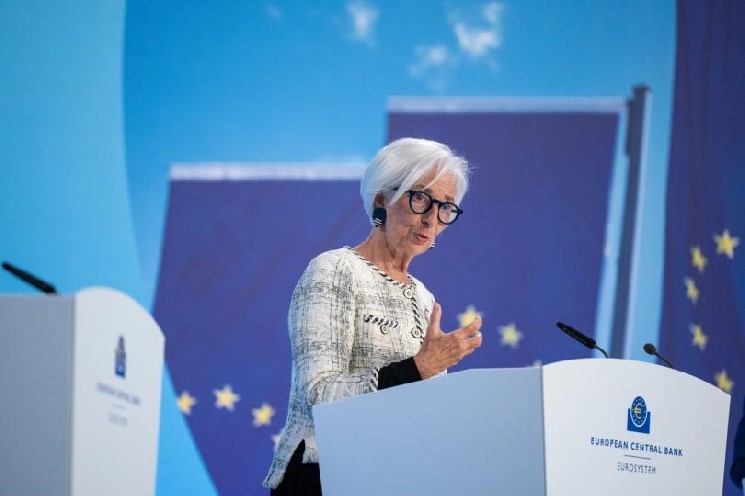

ECB President Christine Lagarde Pushes Back Against Private Euro Stablecoins
The Central Bank’s Stance on Digital Currency Innovation
In a thought-provoking speech at the Bank of Spain’s Latin American Economic Forum in Madrid, European Central Bank President Christine Lagarde made waves by questioning whether Europe really needs privately-issued stablecoins pegged to the euro. Her remarks came at a time when the global cryptocurrency market is overwhelmingly dominated by dollar-backed digital tokens, which account for roughly 98% of all stablecoin activity. Rather than racing to create euro-denominated alternatives to compete with American stablecoins like Tether and USD Coin, Lagarde advocated for a different approach: building robust tokenized settlement systems that are firmly rooted in central bank money. This perspective represents a fundamental departure from what many in the private banking sector believe Europe needs to maintain its financial sovereignty in an increasingly digital world.
Lagarde’s argument centers on the idea that the technological benefits stablecoins offer can be effectively replicated through properly designed central bank infrastructure, without exposing the financial system to the risks that come with privately-issued digital currencies. She emphasized that while stablecoins might seem like an innovative solution to modernizing payments and cross-border transactions, their monetary function introduces dangers to financial stability that European regulators cannot afford to ignore. This viewpoint puts the ECB at odds with significant portions of Europe’s banking establishment, who see private digital euros as essential to preventing the continent from becoming increasingly dependent on dollar-denominated digital assets. The debate touches on fundamental questions about who should control the future of money, how innovation should be balanced against stability, and what role central banks should play in the digital economy.
Europe’s Banking Giants Chart Their Own Course
The tension between Lagarde’s position and the private sector’s ambitions became crystal clear when Qivalis, an impressive consortium of twelve of Europe’s largest and most influential banks, announced plans to launch their own privately-issued digital euro later this year. This coalition includes financial powerhouses such as ING, BBVA, BNP Paribas, Danske Bank, and UniCredit—institutions that collectively serve hundreds of millions of customers across the continent. Their initiative represents a direct challenge to the ECB’s preferred approach, as these banks believe that waiting for central bank digital currencies would leave Europe dangerously exposed to what they call “digital dollarization.” Jan-Oliver Sell, CEO of Qivalis, didn’t mince words when explaining the urgency his consortium feels: “If we don’t have a euro onchain with depth of liquidity, then the only alternative is the U.S. dollar. That’s a real risk to Europe’s financial and digital sovereignty.”
This perspective reflects a growing anxiety within European financial circles that the continent is falling behind in the digital currency race. While American stablecoin issuers have captured nearly the entire market, creating massive liquidity pools denominated in dollars, euro-based alternatives remain virtually nonexistent. The banks backing Qivalis argue that this imbalance isn’t just a market curiosity—it represents a strategic vulnerability that could undermine Europe’s monetary independence. When businesses and individuals across the globe increasingly use dollar-backed stablecoins for international transactions, savings, and smart contracts, they’re essentially choosing to operate within a dollar-based financial ecosystem, even if they have no particular connection to the United States. For Europe, which has worked for decades to establish the euro as a major global reserve currency, this trend threatens to reverse hard-won gains in international monetary influence.
Financial Stability Concerns Take Center Stage
Lagarde’s skepticism about private stablecoins isn’t purely theoretical—it’s grounded in real-world events that exposed significant vulnerabilities in these digital instruments. She specifically pointed to the March 2023 collapse of Silicon Valley Bank as a cautionary tale about what can happen when stablecoins face unexpected stress. During that crisis, Circle, the company behind USD Coin (USDC), revealed that $3.3 billion of the reserves backing its stablecoin were deposited at the failing bank. This disclosure triggered immediate panic among USDC holders, causing the stablecoin to temporarily break its peg to the dollar—meaning that tokens supposedly worth one dollar were suddenly trading for significantly less. While the situation eventually stabilized, the incident demonstrated how quickly confidence in these instruments can evaporate when their underlying backing comes into question.
Expanding on this concern, Lagarde warned that as stablecoins grow larger and more systemically important, they could create dangerous feedback loops during periods of financial turbulence. She explained that the promise of being able to redeem stablecoins at face value depends entirely on market confidence—the very thing that disappears fastest during a crisis. If holders of a major stablecoin suddenly rush to redeem their tokens for traditional currency, the issuer would need to rapidly sell the assets backing those tokens. In a large-scale panic, this mass selling could depress asset prices, which in turn could make other stablecoin holders even more nervous, triggering additional redemptions in a downward spiral. “At scale, such dynamics can transmit stress to the underlying asset markets,” Lagarde cautioned. “The promise of par redemption depends on the very market confidence that can vanish when financial stability deteriorates—and a mass redemption can accelerate that deterioration.” This risk becomes particularly acute, she noted, when stablecoin issuers operate as non-banks, without the regulatory oversight, capital requirements, and emergency liquidity access that traditional financial institutions have.
The Dollar’s Growing Digital Dominance
The numbers driving this entire debate are striking and reveal why both sides feel such urgency. Just six years ago, the total circulation of stablecoins stood at a relatively modest $10 billion. Today, that figure has exploded to approximately $310 billion—a more than thirtyfold increase that reflects both the growing adoption of cryptocurrency and the increasing use of stablecoins as essential infrastructure for digital asset markets. Even more concerning from Europe’s perspective is that nearly 90% of this massive market is controlled by just two companies: Tether, which issues USDT, and Circle, which issues USDC. Both companies are closely connected to the United States financial system, and both issue tokens pegged exclusively to the American dollar. This concentration of control and the overwhelming dollar denomination of the stablecoin market represent what European policymakers increasingly see as a strategic challenge.
Lagarde acknowledged this growing concern across Europe about the continent’s diminishing relevance in the digital currency space. The debate within European policy circles has intensified as officials recognize that decisions made today about digital currency infrastructure will shape the financial landscape for generations to come. Some voices within this debate argue that “Europe must respond by promoting euro-denominated stablecoins of its own. Otherwise, it faces a future of digital dollarisation and a loss of monetary sovereignty.” This perspective sees private euro stablecoins as a necessary defensive measure—a way to ensure that European businesses and citizens have viable alternatives to dollar-based instruments for their digital transactions. However, Lagarde’s position represents a different response to the same concern: rather than encouraging private alternatives that might introduce new risks, she believes Europe should focus on developing public infrastructure that provides the benefits of tokenization while maintaining central bank control over the monetary system.
The Path Forward: Central Bank Digital Currencies
So what exactly is Lagarde’s alternative to private stablecoins? Her answer centers on accelerating the development of central bank digital currencies (CBDCs) and building public infrastructure that enables tokenization without surrendering monetary control to private entities. “We must build the public infrastructure that will enable alternative instruments, such as stablecoins and other forms of tokenised money, to operate within a framework anchored by central bank money,” Lagarde explained in her Friday speech. This vision imagines a future where the technological benefits of blockchain and tokenization are fully available, but where the foundation of the system remains firmly under central bank authority. In this model, private innovation would still have a role to play, but it would operate on top of public infrastructure rather than creating parallel monetary systems.
Late last year, Lagarde provided concrete details about the ECB’s timeline for implementing this vision, announcing plans for a digital euro to be operational by 2029. This ambitious target comes with important caveats, however. The project assumes that European co-legislators will adopt the necessary regulatory framework by 2026—no small assumption given the complexity of European Union decision-making and the significant political and technical questions that surround central bank digital currencies. If this regulatory timeline holds, Lagarde indicated that preparatory steps, including pilot programs and initial test transactions, could begin as early as mid-2027. This would give the ECB approximately two years to work out practical implementation issues before a full launch. For critics who believe Europe needs private euro stablecoins immediately, this timeline seems dangerously slow, potentially leaving the continent vulnerable to further digital dollarization for the remainder of this decade. For supporters of Lagarde’s approach, however, the careful, deliberate development of public infrastructure represents the only responsible path forward—one that prioritizes long-term financial stability over short-term competitive concerns.
Balancing Innovation, Sovereignty, and Stability
The debate between Christine Lagarde and Europe’s private banking sector ultimately reflects tensions that extend far beyond stablecoins or even Europe itself. At its heart, this discussion grapples with fundamental questions about the future of money in an increasingly digital world: Who should be trusted to issue it? How should innovation be balanced against the need for stability? What does monetary sovereignty mean when value can flow across borders instantly through decentralized networks? These questions don’t have easy answers, and reasonable people across the financial spectrum disagree about the best path forward. Lagarde’s caution about private stablecoins reflects decades of central banking experience and a deep awareness of how quickly financial innovations can transform from promising solutions into sources of systemic risk. The Silicon Valley Bank incident she referenced wasn’t a theoretical concern—it was a real-world moment when billions of dollars in supposedly stable value suddenly became uncertain, causing ripples throughout digital asset markets.
Yet the concerns raised by Qivalis and other private sector advocates are equally legitimate. The explosive growth of dollar-denominated stablecoins isn’t happening in a vacuum—it reflects genuine market demand for efficient, programmable forms of money that can move seamlessly in digital environments. If European institutions and users increasingly turn to dollar stablecoins simply because euro alternatives don’t exist or aren’t competitive, the long-term implications for European monetary policy and financial autonomy could be severe. Perhaps the ultimate solution will involve elements of both approaches: robust public infrastructure developed by central banks, complemented by private innovation that operates within carefully designed regulatory guardrails. What seems certain is that Europe, like other major economic regions, cannot afford to sit on the sidelines while the architecture of digital finance is constructed without its participation. Whether that participation takes the form of CBDCs, regulated private stablecoins, or some hybrid approach remains one of the most important financial policy questions of our time.