



Bitcoin’s Mining Concentration Crisis: When One Player Controls Too Much of the Network
Understanding What Just Happened on Bitcoin’s Blockchain
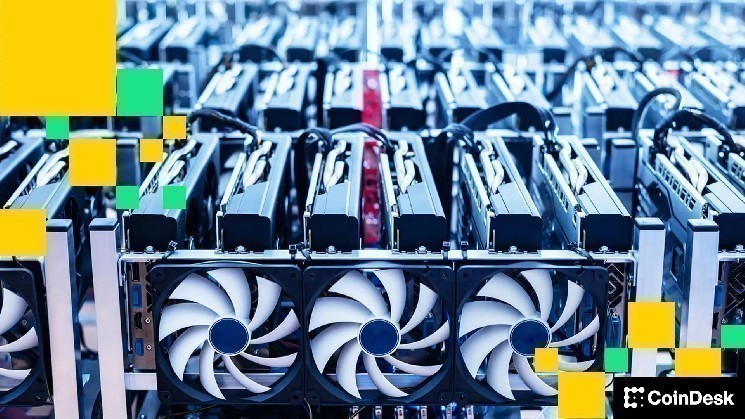
In a development that has raised eyebrows across the cryptocurrency community, Bitcoin’s blockchain recently experienced what experts call a “reorganization” or “reorg” – a rare event that has brought the issue of mining concentration sharply into focus. At the heart of this incident is Foundry USA, currently the largest bitcoin mining pool in the world. For those unfamiliar with the terminology, a mining pool is essentially a collective of individual miners who band together, pooling their computational resources to verify transactions and mine new blocks on the Bitcoin network. When successful, they share the rewards proportionally based on their contributed computing power. While this cooperative approach makes mining more accessible and predictable for smaller players, it also means that power becomes concentrated in the hands of pool operators who coordinate these massive operations.
What transpired on Monday was a textbook example of how blockchain technology is designed to resolve conflicts, but it also revealed something more concerning about the current state of Bitcoin’s decentralization. The incident began when both Foundry USA and another major pool called AntPool successfully mined valid blocks at almost exactly the same time – within just twelve seconds of each other. This isn’t necessarily unusual in itself; the Bitcoin network is designed to handle such situations. When two miners discover blocks simultaneously, the network temporarily operates with two competing versions of the blockchain until one version pulls ahead and becomes the accepted truth. This is precisely what blockchain reorganizations are meant to address, and the Bitcoin protocol handled it exactly as Satoshi Nakamoto designed it to over a decade ago. However, what made this particular event noteworthy was what happened next and what it reveals about the changing dynamics of Bitcoin mining power.
The Chain Split: A Race That Left Some Miners Empty-Handed
To understand why this matters, imagine two checkout lines opening simultaneously at a crowded supermarket. Initially, customers start flowing into both lines, and both seem equally valid choices. But then one cashier starts processing customers significantly faster than the other. Naturally, more customers gravitate toward the faster-moving line, and eventually, the slower line gets abandoned entirely, with those who initially chose it having wasted their time waiting. This is essentially what happened on the Bitcoin blockchain, except instead of frustrated shoppers, we had miners who lost real money and computational effort that yielded them nothing in return.
Here’s how the technical sequence unfolded: At block height 941,881, both AntPool and Foundry discovered valid blocks within those twelve seconds of each other, at 15:49:35 and 15:49:47 UTC respectively. Both blocks were completely legitimate according to Bitcoin’s consensus rules, which meant the network briefly split, with different nodes across the globe following different versions of the blockchain depending on which block they received first. This created a temporary fork – not the kind that creates a new cryptocurrency, but rather a short-lived branching of the chain that needed to be resolved. The race then continued to the next block, number 941,882, where ViaBTC (another mining pool) found a block that extended AntPool’s chain, while Foundry simultaneously extended its own chain. At this point, there were two competing versions of reality, each two blocks deep, running parallel to each other across different parts of the Bitcoin network.
What decided the outcome was raw computational power and a bit of luck. Foundry proceeded to mine blocks 941,883, 941,884, 941,885, and 941,886 – an impressive streak of four consecutive blocks that extended their version of the chain and made it unquestionably the “heaviest” or longest chain. According to Bitcoin’s fundamental rule of “longest chain wins,” the network reorganized around Foundry’s version of events. The practical result was that the blocks mined by AntPool and ViaBTC were “orphaned” – a term that sounds almost sad because it accurately describes what happens to these blocks. Despite being perfectly valid and representing significant computational work and electricity expenditure, these blocks were effectively erased from the permanent ledger. The miners who produced them earned absolutely nothing for their efforts, their rewards evaporating as if they had never existed.
Why This Reveals Bitcoin’s Growing Centralization Problem
While the transactions themselves weren’t lost – they simply returned to the “mempool” (the waiting room for unconfirmed transactions) and were eventually included in subsequent blocks – the incident highlights a growing concern about mining concentration in the Bitcoin ecosystem. A two-block reorganization doesn’t threaten Bitcoin’s fundamental security; the network performed exactly as designed, with consensus re-establishing within minutes and the integrity of the blockchain maintained. However, the ease with which Foundry produced six consecutive blocks reveals something more troubling about the distribution of mining power. When a single entity controls a substantial portion of the network’s total computing power (known as hashrate), the mathematical probability of that entity finding multiple blocks in succession increases dramatically. This creates a feedback loop where concentrated power becomes self-reinforcing.
The mathematics behind this are straightforward but concerning. If a mining pool controls, say, 30% of the network’s total hashrate, they have a 30% chance of finding the next block, but they also have a 9% chance of finding two blocks in a row (0.3 × 0.3), and increasingly smaller but still significant probabilities of finding three, four, or more consecutive blocks. When hashrate is more evenly distributed among many smaller miners, these consecutive block streaks become statistically rare. But as mining concentrates into fewer hands, they become more common, and with them comes an increased likelihood of reorganization events when two large pools find blocks simultaneously. The pool that can consistently produce blocks faster has a structural advantage in these races, which translates directly into economic outcomes – winners take all, and losers get nothing, even for legitimate work performed.
The Economic Pressures Driving Centralization
The timing of this reorg is particularly significant because it occurred against a backdrop of severe economic stress in the Bitcoin mining industry. Just days before this incident, Bitcoin’s mining difficulty – an automatic adjustment that ensures blocks are found approximately every ten minutes regardless of total network computing power – dropped by 7.76%, marking the second-largest negative adjustment of 2026. This technical adjustment reflects a harsh economic reality: miners are shutting down their operations in significant numbers. The network’s total hashrate has retreated to approximately 920 exahashes per second, down considerably from the record-breaking 1 zetahash milestone achieved in 2025. These aren’t just abstract numbers; they represent real mining facilities going dark, equipment being powered down, and businesses shutting their doors.
The reason for this exodus is brutally simple economics. With Bitcoin trading around $70,000, it sits well below the estimated average production cost of approximately $88,000 per bitcoin. This means that for many miners, every single bitcoin they successfully mine costs them more in electricity, equipment depreciation, facility costs, and other operational expenses than they can sell it for on the open market. This is an unsustainable situation that inevitably forces difficult decisions. The miners who are exiting first are typically the smaller and mid-sized operations – those with higher electricity costs, older and less efficient equipment, or less access to capital to weather extended periods of unprofitability. The large, well-capitalized mining operations, often organized into or operating massive mining pools like Foundry USA, have economies of scale, access to cheaper electricity through long-term contracts, more efficient latest-generation mining equipment, and deep enough pockets to operate at a loss temporarily while waiting for conditions to improve.
What Mining Concentration Means for Bitcoin’s Future
The consequence of this natural selection process is that hashrate becomes increasingly concentrated among the survivors. Every small miner that shuts down means their portion of the network’s computing power effectively gets redistributed among those who remain, and proportionally, the largest pools gain the most. This creates a concerning trajectory for Bitcoin’s decentralization – one of its most fundamental value propositions and security features. Bitcoin was conceived as a decentralized network where no single entity could control or manipulate the ledger, where power was distributed among thousands or even millions of independent participants. The reality we’re seeing evolve is quite different: a handful of large mining pools controlling increasingly dominant shares of the network’s total computing power.
This concentration carries real risks beyond just philosophical concerns about decentralization. When a small number of entities control the majority of hashrate, the network becomes theoretically vulnerable to collusion or coercion. While a 51% attack – where an entity controlling more than half the network’s hashrate could potentially double-spend coins or prevent transactions from confirming – remains economically irrational for any single mining pool due to the damage it would cause to Bitcoin’s value and their own investment in mining infrastructure, the smaller the number of entities that would need to cooperate to reach that threshold, the higher the theoretical risk. Beyond outright attacks, concentration also means that decisions about which transactions to include, whether to adopt protocol changes, and other governance questions increasingly rest with a smaller group of powerful players rather than being truly distributed across a diverse network of independent operators.
Looking Ahead: Can Bitcoin Solve Its Centralization Challenge?
The Monday reorg serves as a visible, on-chain reminder that Bitcoin’s mining landscape has fundamentally changed from its early days when anyone could mine from a laptop. Today’s Bitcoin mining is an industrial-scale operation dominated by specialized companies with access to massive capital, cheap energy, and the latest ASIC mining hardware. While the protocol itself worked perfectly during this reorganization event – proving that Bitcoin’s consensus mechanism is robust and functions as designed even under competitive conditions – the incident illuminates a deeper structural challenge that won’t be easily resolved through technological means alone. The economic pressures that drive centralization are fundamental to any proof-of-work system: efficiency favors scale, which favors consolidation.
Whether this trend continues or eventually reverses depends on factors both within and beyond the Bitcoin ecosystem’s control. A sustained increase in Bitcoin’s price would improve mining economics and potentially bring smaller operators back into profitability, redistributing hashrate more broadly. Technological innovations that lower the barrier to entry for mining, advances in energy technology that make renewable or distributed power more economically viable for smaller operations, or protocol changes that somehow advantage decentralization could all potentially counteract current trends. However, absent such developments, the path of least resistance appears to lead toward further consolidation. The Bitcoin community has long prided itself on the network’s decentralization and resistance to control by any single entity or small group of entities. Events like Monday’s reorg don’t represent catastrophic failures, but they do serve as important indicators of the network’s health and reminders that the decentralization that makes Bitcoin valuable isn’t automatically guaranteed – it must be actively maintained through both technological design and economic conditions that support a diverse, distributed mining ecosystem. As Bitcoin continues to mature and professionalize, maintaining that decentralization against natural economic pressures toward consolidation may prove to be one of its most significant ongoing challenges.