



Eric Trump Declares Bitcoin’s “Greatest Period Ever” at Las Vegas Conference
A Defining Moment for Digital Currency
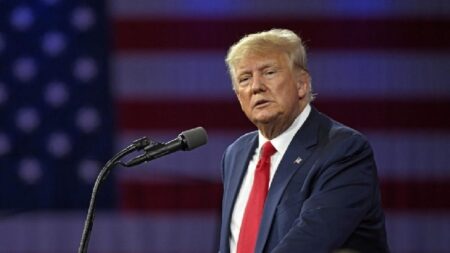
Speaking at the Bitcoin 2026 conference in Las Vegas, Eric Trump delivered an emphatic message that sent ripples through the cryptocurrency community: Bitcoin’s golden age isn’t something to anticipate in the distant future—it’s happening right now. As the co-founder and chief strategy officer of American Bitcoin (ABTC), Trump brought both credibility and conviction to his assertion that the digital asset has reached an unprecedented inflection point in its history. His words carried particular weight given the dramatic transformation the cryptocurrency market has undergone in recent months, with institutional players, corporate giants, and traditional financial institutions finally embracing what was once considered a fringe digital experiment. The conference setting itself—a glittering Vegas stage filled with believers and skeptics alike—served as the perfect backdrop for Trump’s bold declaration about Bitcoin’s current trajectory and future potential.
Transformation Accelerating at Unprecedented Speed
Trump didn’t mince words when describing the recent evolution of Bitcoin’s market position, characterizing the past six months as nothing short of revolutionary compared to the three years that preceded them. “What bitcoin has done in the last six months relative to the previous three years is transformational,” Trump stated emphatically from the conference stage. “We are in the greatest period I’ve ever seen.” This wasn’t mere promotional hyperbole from someone with skin in the game; rather, Trump was articulating what many market observers have been witnessing in real-time: a fundamental shift in how Bitcoin is perceived, acquired, and utilized across the financial landscape. The velocity of this change has caught even seasoned cryptocurrency advocates off guard, with adoption curves steepening at rates that surpass the most optimistic projections from just a year ago. Trump’s assessment reflected a broader consensus among industry insiders that something qualitatively different is happening in the Bitcoin ecosystem—a maturation process that has accelerated dramatically and brought the digital currency from the periphery to the center of serious financial discussion.
Wall Street’s Complete Reversal on Bitcoin
Perhaps the most striking evidence Trump offered for his optimistic assessment came in the form of traditional banking institutions—the very entities that once dismissed Bitcoin as a speculative bubble or worse—now actively building infrastructure to serve Bitcoin holders. Trump highlighted how major banks have begun offering Bitcoin-backed mortgages and comprehensive custody services, marking a complete reversal from their previous stance of skepticism and avoidance. “People are not selling it. People are holding it. Bitcoin is becoming sticky,” Trump observed, using language that speaks directly to the fundamental shift in how investors view the asset. The term “sticky” is particularly significant in financial parlance, suggesting that Bitcoin has evolved from a trading vehicle into a long-term holding that investors are reluctant to part with, similar to how previous generations viewed real estate or blue-chip stocks. Trump further noted that this behavioral change is occurring against a backdrop of limited supply—Bitcoin’s famous 21 million coin cap—and surging demand from both institutional investors and sovereign governments, creating what he described as structural compression in the market. This compression suggests that the basic economic principle of supply and demand is working decidedly in Bitcoin’s favor, with more players competing for a fixed and diminishing pool of available coins as more Bitcoin becomes locked away in long-term holdings.
Democratization Through ETF Innovation
The conversation gained additional context when moderator Eric Balchunas, Bloomberg’s senior ETF analyst, weighed in with his expert perspective on how Bitcoin exchange-traded funds have fundamentally altered the accessibility landscape. Balchunas framed the recent developments through the specific lens of the ETF market, noting that Bitcoin ETFs have shattered records to become among the most successful product launches in the entire history of the investment instrument. This achievement isn’t merely a matter of industry bragging rights—it represents a genuine democratization of access to Bitcoin investment opportunities that were previously the exclusive domain of institutional players with the resources, technical knowledge, and risk tolerance to navigate the cryptocurrency ecosystem directly. Before Bitcoin ETFs gained regulatory approval and market traction, ordinary investors faced significant barriers to entry: they needed to understand digital wallets, navigate cryptocurrency exchanges with varying degrees of legitimacy and security, and assume the considerable responsibility of safeguarding their own digital assets against loss or theft. The ETF structure elegantly solves these problems by wrapping Bitcoin exposure in a familiar, regulated investment vehicle that can sit comfortably alongside stocks and bonds in a traditional brokerage account. This innovation has opened the floodgates for retail investors, financial advisors, and institutions that wanted Bitcoin exposure but were deterred by the operational complexities and regulatory uncertainties of direct ownership.
Long-Term Vision Amid Short-Term Volatility
Despite his bullish stance on Bitcoin’s current moment and future prospects, Trump demonstrated a realistic understanding of the cryptocurrency’s notorious price volatility, acknowledging the turbulence that has characterized Bitcoin’s journey and will undoubtedly continue. “I’ll ride out the volatility,” Trump declared with the confidence of someone committed to a long-term thesis rather than short-term trading gains. “We’ll see who wins in a 10-year period of time.” This statement revealed a fundamental investment philosophy that contrasts sharply with the get-rich-quick mentality that has sometimes plagued cryptocurrency discourse and damaged its credibility with serious investors. Trump was essentially drawing a line in the sand, positioning himself and American Bitcoin on the side of patient capital that views temporary price fluctuations as noise against the signal of long-term structural adoption. His 10-year timeframe is particularly telling, suggesting that the true measure of Bitcoin’s success won’t be found in daily price charts or quarterly performance reports, but rather in the accumulated evidence of sustained adoption, infrastructure development, and integration into the global financial system over a meaningful time horizon. This perspective aligns with how sophisticated investors approach other asset classes—focusing on fundamentals, secular trends, and long-term value creation rather than attempting to time short-term market movements.
The Convergence Creating Bitcoin’s Moment
What makes this current period genuinely transformational, according to Trump’s analysis, is not any single development but rather the convergence of multiple powerful trends happening simultaneously. Institutional adoption has moved from exploratory to operational, with major financial institutions not just studying Bitcoin but actively building products and services around it. Corporate treasuries, led by pioneering companies that converted significant portions of their cash reserves to Bitcoin, have normalized what was once considered radical treasury management. Sovereign governments, once uniformly hostile or indifferent, are now divided between those accumulating Bitcoin reserves and those scrambling to develop regulatory frameworks that acknowledge its permanence. Mainstream financial access through ETFs and banking products has eliminated the technical barriers that kept ordinary investors on the sidelines. When Trump speaks of Bitcoin’s “most important moment to date,” he’s referring to this unprecedented alignment of institutional validation, infrastructure development, regulatory clarity, and accessible investment vehicles. Each of these factors is significant individually, but their simultaneous occurrence creates a compounding effect that could indeed represent a watershed moment for the digital asset. Whether Trump’s optimism proves prescient or premature will ultimately be determined by how these trends develop over his stated 10-year timeframe, but his Las Vegas declaration has certainly captured the attention of an industry at an inflection point, watching closely to see whether Bitcoin’s best days are truly here or still ahead on the horizon.