
Ukraine’s Sea Drones Could Be the Answer to the Strait of Hormuz Crisis
A Ukrainian Innovation Born from Necessity
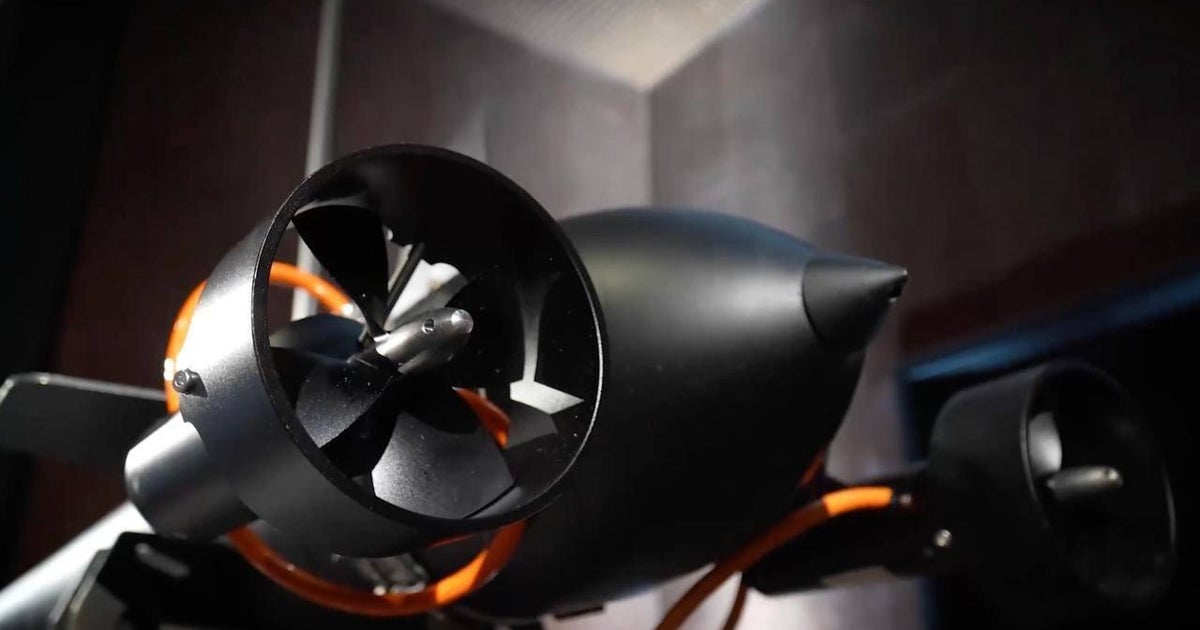
Deep beneath the choppy waters of the Black Sea, a sleek 8-foot drone silently glides through the darkness, its cameras and sensors methodically mapping the deadly minefield below. This is the TLK-150, a Ukrainian-made sea drone that weighs about 50 pounds and can travel an impressive 1,200 miles on a single charge. Manufactured by Toloka, a Ukrainian defense company, this remarkable piece of technology has completed hundreds of missions along Ukraine’s coastline, hunting for the thousands of mines Russia has scattered across the seabed since the invasion began in 2022. What started as a desperate solution to a wartime problem has evolved into cutting-edge technology that the world may desperately need. Halfway across the globe, the Strait of Hormuz—a narrow waterway through which 20% of the world’s energy supply normally flows—sits eerily quiet. Iran dropped mines across the strait in March, effectively choking off one of the world’s most critical shipping lanes. Until someone clears these underwater explosives, the global economy remains in a stranglehold, and experts warn this could take months using traditional methods.
America’s Neglected Naval Capability
The irony of the situation is striking: the world’s most powerful navy finds itself ill-equipped to handle what should be a routine, if dangerous, maritime operation. According to Scott Savitz, a senior engineer at the Rand Corporation who has advised the U.S. Navy’s mine warfare command, America has essentially abandoned its mine countermeasures capabilities. “The U.S. Navy has been neglecting the mine countermeasures mission for more than 20 years,” Savitz explained bluntly. “It’s a mission that gets very little attention, very little respect.” While the Pentagon insists it’s addressing the mine risk using both manned and unmanned capabilities, the reality on the water tells a different story. The Navy is currently relying on its Littoral Combat Ships to locate Iran’s mines, but there are only two of these vessels in service in the Middle East. These ships deploy helicopters and sea drones equipped with lasers and sonar to find mines, but they face significant limitations. Their metal hulls mean they must maintain a safe distance from minefields to avoid triggering the very explosives they’re trying to locate, which severely limits how much area they can effectively cover.
Ukraine’s Hard-Won Expertise in a Deadly Game
While America has let its demining capabilities atrophy during decades of relative peace, Ukraine has been forced to become the world’s leading expert in mine clearance through brutal necessity. Russia’s strategy of seeding the Black Sea with thousands of mines was designed to strangle Ukraine’s maritime trade, cutting off access to its vital Black Sea ports and devastating its economy. Initially, Ukrainian forces relied on human divers—a dangerous, slow, and often deadly approach. But desperation breeds innovation, and over the past four years, Ukraine has developed some of the world’s most advanced demining technologies. Ed Crowther, a mine action adviser with the United Nations Development Program in Ukraine, doesn’t mince words: “Without question, Ukraine is at the cutting edge of the mine action world. Technologies being developed here will change the way humanitarian demining is done.” This isn’t just about clearing explosives faster—it’s about surviving in the most hostile electronic warfare environment on Earth while doing it. As Emma Salisbury, a maritime security expert at the Royal Navy Strategic Studies Centre, points out, finding the mines is often harder than removing them. GPS connections can be easily jammed, and transmitting location data back to base becomes nearly impossible when the enemy is actively working to disrupt your communications.
Where American Technology Falls Short
The differences between American and Ukrainian demining capabilities became painfully apparent during a training exercise in the Black Sea last year. Western-made unmanned vehicles were deployed to sweep for mines, but when an air raid began and Ukraine activated its GPS jammers for defense, the expensive American drones simply stopped working. They surfaced, lost their navigation, and their batteries died—expensive paperweights floating uselessly on the waves. “It is very different in a wartime environment,” one witness to the incident explained. The drones deployed by America’s Littoral Combat Ships, manufactured by defense giants like General Dynamics and RTX, work fine in controlled conditions and peacetime exercises. Some even resemble Ukraine’s TLK-150 in basic design, traveling below the surface using sonar and cameras to map waterways. But when electronic jamming enters the picture—something Iran could easily deploy if it chose to—these systems become vulnerable. This isn’t a theoretical concern. Ukraine’s battlefield has become a testing ground where both sides employ extensive electronic jamming systems, creating what experts describe as the most challenging electronic warfare environment in the world. Even the most advanced Western military drones have frequently failed when subjected to these conditions.
The Ukrainian Advantage: AI and Innovation Under Fire
What makes Ukraine’s sea drones different? According to Dima Zelenskiy, founder of Toloka (no relation to the president), it’s all about real-time data and resistance to jamming. While conventional mine-hunting drones must be retrieved from the water and physically connected to a computer via USB to download their findings—a process that can take days or weeks—the TLK-150 transmits information in real-time as it discovers mines. This dramatically speeds up the mapping process and allows operators to adjust search patterns on the fly. But the real game-changer is the drone’s resistance to electronic warfare. The TLK-150 uses artificial intelligence identification tools that allow it to navigate and know its position without relying on GPS connections that can be jammed. This same technology, developed by Ukrainian defense company Sine Engineering, recently attracted a $70 million investment from the U.S. Development Finance Corporation, part of the Trump administration’s international development arm. As Savitz notes, “Iranians may not be as sophisticated as the Russians are in electronic warfare, but GPS jamming is a really easy task. You just have to generate a signal that is stronger than that of satellites.” Ukraine’s technology was built from the ground up to function in exactly these conditions. Beyond just finding mines, Toloka manufactures four different models of sea drones, with the TLK-150 being the smallest. These versatile machines serve double duty as both minesweepers and naval strike drones, employing technologies that allow them to travel farther than competing models while simultaneously transmitting everything they see back to base.
Bureaucracy vs. Urgency: Why Help May Not Come Soon
Ukrainian President Volodymyr Zelenskyy has made it clear that his country stands ready to help clear the Strait of Hormuz. “We raised this issue, because it is a painful and urgent one—as we can all see, for the entire world. There is an energy crisis,” Zelenskyy said in March. He added pointedly a week later: “We can share this expertise with other countries, but nobody asked us to come and help with the Hormuz Strait.” The silence from Washington speaks volumes, but it may have less to do with politics than with the grinding gears of military procurement bureaucracy. Savitz explains the challenge: “If someone has a gadget that they bring to the U.S. acquisition system, then it goes through a very long series of processes, including the testing and evaluation of various kinds and lots of back and forth. And then, ultimately, that system is brought into the U.S. and is acquired for use, which may be why we’re not incorporating this novel technology.” In other words, even if Ukrainian drones could clear the strait in weeks, it might take months or years for the Pentagon to officially approve their use through normal channels. This bureaucratic gridlock persists even as 20% of the world’s energy supply remains hostage to a minefield that Ukraine has the proven capability to clear. The situation highlights a broader problem: America’s military acquisition system, designed for predictable peacetime procurement of major weapons systems, struggles to rapidly incorporate innovative solutions from unexpected sources—even when those solutions have been proven effective in actual combat conditions. Ukraine didn’t ask for the expertise it now possesses in mine warfare, but four years of brutal necessity have made it the world leader in a field America neglected. Whether that expertise gets used to help solve an international crisis may depend less on capability than on whether bureaucracy can move at the speed of global need.