


We the Women: Uncovering America’s Hidden Heroines
A Bold Statement on Independence Day
On America’s 100th birthday, July 4, 1876, something extraordinary happened in Philadelphia that most of us never learned about in school. While thousands gathered in the sweltering summer heat to celebrate the nation’s centennial and hear the reading of the Declaration of Independence, a small group of determined women were about to make history in their own right. Elizabeth Cady Stanton, Susan B. Anthony, and their fellow suffragists had been turned away from officially participating in the day’s program—organizers claimed there simply wasn’t room for them. But these women weren’t about to let that stop them. As Richard Henry Lee of Virginia finished reading from the original Declaration of Independence, promising equal rights for all, Susan B. Anthony and four other women rose from their seats and marched straight to the front of the platform, draped in patriotic red, white, and blue. The presiding officer, Senator Thomas W. Ferry, stood stunned and pale-faced as Susan handed him their pamphlet—the “Declaration of Rights of the Women of the United States.” He accepted it reluctantly, but in doing so, made it an official part of the day’s proceedings. This groundbreaking four-page document drew direct parallels between women’s oppression and the treatment colonists had endured under King George III. The crowd erupted. Men stood on their seats to see what was happening as the women quickly exited the stage, handing out copies of their manifesto to eager hands reaching out from the audience. General Joseph R. Hawley, the very man who had denied their request to participate, shouted “Order! Order!” but it was too late—the women had created their own fireworks that day, one that would echo through history.
Why These Stories Matter Now
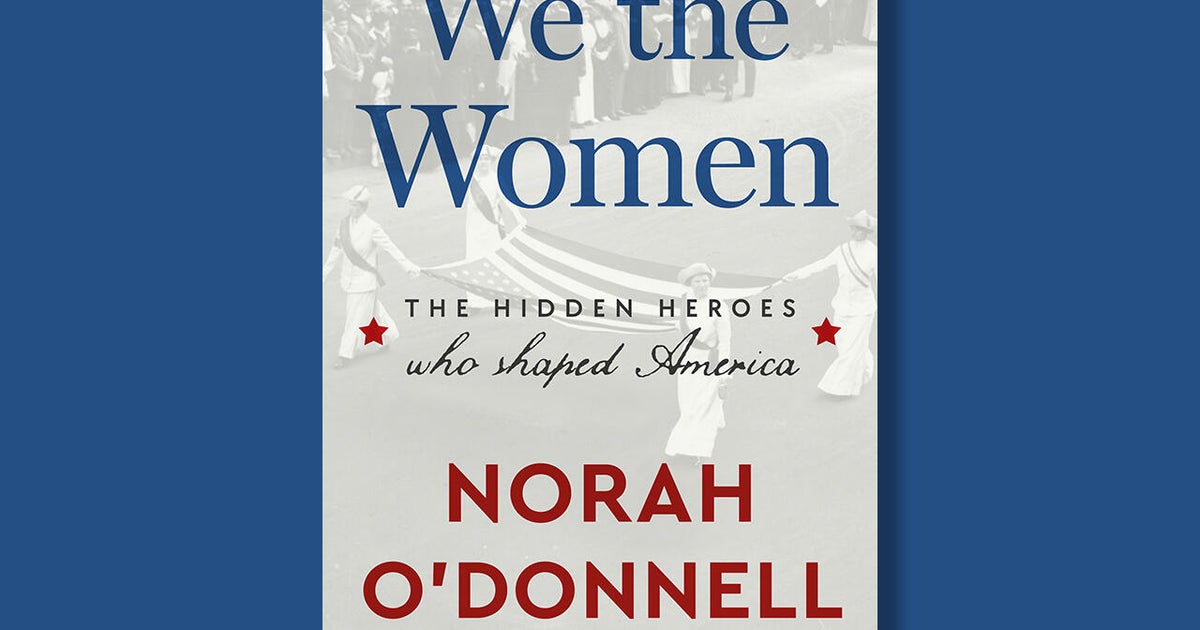
CBS News anchor Norah O’Donnell and co-author Kate Andersen Brower have written “We the Women: The Hidden Heroes Who Shaped America” to shine a light on stories exactly like this one—powerful moments in American history that have been relegated to mere footnotes or erased entirely from our collective memory. O’Donnell admits she never learned about this dramatic Fourth of July protest in school or from the countless history books she’d read over the years. This realization sparked a fundamental question: what else was missing from her understanding of America’s founding principles and the centuries-long struggle for civil and women’s rights? The statistics are sobering—the National Women’s History Museum found that only 15% of what’s taught in American schools highlights the achievements and history of women. This book aims to change that by putting women back in their rightful place on the pages of American history. These aren’t just interesting stories; they’re essential pieces of the American narrative that help explain how we got to where we are today. Every right that women now enjoy—the ability to vote, own property, have their own bank accounts, work in any profession they choose—had to be fought for and won over the past 250 years. None of it was simply given.
The Personal Connection to History
For O’Donnell, this project became deeply personal. She found herself wondering how different her own sense of self, power, and courage might have been if she’d learned about these remarkable women as a young girl. The question resonates because representation matters—seeing yourself reflected in history’s heroes shapes how you see your own possibilities. The book takes on additional meaning as America celebrates its 250th birthday. O’Donnell weaves in her own family’s American story, particularly that of her grandmother, Mary Teresa Monaghan O’Kane, who arrived at Ellis Island in 1930 with just $20 to her name and dreams of a better life. The oldest of nine children from Northern Ireland, she’d been working in a linen factory since age 12, traveling through barbed wire and barricades daily—not to school, but to support her family. When her grandmother’s ship entered New York Harbor, she was greeted by the Statue of Liberty—a woman holding a torch, welcoming newcomers to America’s shores. The symbolism wasn’t lost on O’Donnell: what did this 150-year-old country offer young women that other places didn’t? The bronze plaque on Lady Liberty’s pedestal bears words written by Emma Lazarus, a young female poet: “Give me your tired, your poor, Your huddled masses yearning to breathe free.” America, for all its imperfections, represented opportunity, especially for women willing to fight for it.
Hidden Heroines Who Changed Everything
The women profiled in “We the Women” span 250 years of American history and represent every arena of public life—the courtroom, the battlefield, government halls, and protest movements. Many were “firsts” in their fields: Mary Katherine Goddard was the only woman whose name appears on the Declaration of Independence; Belva Lockwood became the first woman to argue before the U.S. Supreme Court and the first to run for president; Phillis Wheatley was the first African American woman to publish a book of poems; Dr. Elizabeth Blackwell was the first woman admitted to medical school. Some held unique distinctions that remain unmatched to this day. Dr. Mary Edwards Walker is still the only woman ever to receive the Medal of Honor, the nation’s highest military decoration. Others wielded influence in ways that shaped entire eras: Mary McLeod Bethune led the Black Cabinet during FDR’s presidency, Frances Perkins served as the nation’s first female Cabinet member and architect of the New Deal, and Susette La Flesche devoted her life to advocating for Indigenous people’s rights. The authors chose to highlight lesser-known figures alongside more familiar names. Rather than focusing on Abigail Adams, for example, they profile her friend Mercy Otis Warren, who wrote the first history of the American Revolution. These choices were deliberate—the goal was to uncover gems of history, valuable stories with significant impact that deserve to be discovered and shared.
Warriors, Builders, and Movement Makers
One of the book’s most powerful revelations is how women have contributed to America during every period of crisis and transformation. They’ve bled for their country in every war—some taking bullets when they didn’t even have the right to vote. They built the nation’s infrastructure—bridges, banks, hospitals—and they birthed movements that transformed society, not just suffrage but also the Civil Rights movement. As Harriet Beecher Stowe famously observed, “Women are the real architects of society.” Many early female reformers were abolitionists, fighting for others’ freedom while still denied their own full rights as citizens. This pattern repeated throughout American history: women demanding their place, their rights, and rights for others, often at great personal cost. They faced discrimination, hatred, and violence, yet they persevered. The phrase “We the People” that opens the U.S. Constitution represents the principle that government authority comes from all citizens—that our system is by and for the people. “We the Women” serves as a reminder that women waged a collective fight to ensure the government recognized them as full citizens. It’s a story of shared struggle that has been largely missing from history books, and its absence has consequences. O’Donnell developed personal connections to each woman she researched, admiring what they endured and the courage it took to continue fighting despite overwhelming obstacles. Their grit and determination filled her with resilience during challenging times in her own life, and she hopes readers will find similar inspiration.
A More Perfect Union, Still in Progress
The book arrives as America marks 250 years since its founding, a milestone that invites reflection on how far the nation has come and how far it still needs to go. A more perfect union remains a work in progress, but the democratic ideals enshrined in America’s founding documents continue to inspire people worldwide. Those ideals drew O’Donnell’s grandmother across the Atlantic, just as they’ve drawn millions of others seeking opportunity and freedom. Standing in the shadow of Washington’s statue at Independence Hall on that sweltering July day in 1876, Susan B. Anthony struck what she called “the one discordant note” during centennial celebrations. She reminded the crowd that women had no right to vote, no marriage rights, no real legal protections, and suffered taxation without representation. “We ask justice, we ask equality, we ask that all the civil and political rights that belong to citizens of the United States, be guaranteed to us and our daughters forever,” she declared. “Our daughters forever”—those words capture why this history matters so much. The courageous call for universal suffrage delivered that day helped inspire the struggle that culminated in the 19th Amendment more than four decades later. It represents a profound American moment that expanded democracy and ensured future generations would have the right to vote. Each person plays a role in the arc of history. Dr. Martin Luther King Jr. said that arc is long but bends toward justice. The women in this book have been central to bending that arc, persistently defending the country’s ideals and forcing the nation to live up to its promises. O’Donnell and Brower aren’t historians—they’re journalists committed to amplifying women’s stories. They acknowledge the book can’t possibly include every deserving figure from 250 years of history. Their hope is that readers will be inspired to seek out and share additional stories of women who exemplified American values. The goal isn’t comprehensive biography but rather painting pictures of grit and determination, highlighting women who pushed America to honor its founding promises of liberty, equality, and the pursuit of happiness. These hidden heroines deserve more than footnote status—they belong at the center of how we understand and teach American history.