
The FCC’s Challenge to Disney’s ABC Licenses: A Complex Legal Battle
The Federal Communications Commission has initiated an unprecedented early review of Disney’s ABC television station licenses, citing concerns about the company’s diversity, equity, and inclusion (DEI) policies. However, legal experts widely agree that the FCC faces substantial legal hurdles if it attempts to actually strip Disney of these valuable broadcast licenses. This action has sparked debate about government overreach, First Amendment protections, and the politically charged timing of regulatory enforcement in modern America.
Questionable Timing Raises Eyebrows About Political Motivation
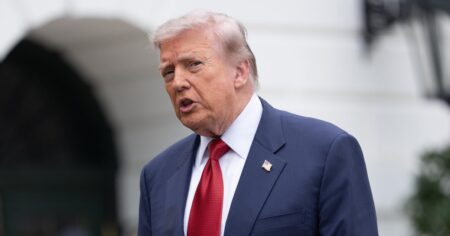
The FCC’s decision to fast-track the license review on Tuesday raised immediate red flags among First Amendment advocates and media law specialists, largely because of what happened just one day earlier. President Trump had publicly demanded the firing of late-night host Jimmy Kimmel following a joke on Kimmel’s ABC show that apparently angered both the President and First Lady Melania Trump. The coincidental timing struck many observers as more than just happenstance. Katie Fallow, who serves as deputy litigation director at Columbia University’s Knight First Amendment Institute, didn’t mince words when speaking with CBS News. She characterized the FCC’s action as “a way to put pressure on Disney and ABC to achieve different programming and to get them to fire Jimmy Kimmel,” calling the timing “highly suspect.” Blair Levin, a policy analyst who previously worked at the FCC itself, echoed these concerns in his analysis, stating that the timing provides “strong evidence that the motive for the early renewal process relates to the president’s call to fire Kimmel, not an ABC employment action.” The implication is troubling for those who believe regulatory agencies should operate independently of political pressures, particularly when it comes to matters touching on free speech and press freedom. The notion that a federal agency might be wielding its regulatory power as a cudgel against a media company for airing content that displeases the sitting president strikes at the heart of First Amendment protections that have long shielded American journalism and entertainment from government interference.
The DEI Investigation That Started It All
To understand the current controversy, we need to look back to March 2025, when the FCC first launched its investigation into Disney’s employment practices. The probe centers on whether the entertainment giant’s diversity, equity, and inclusion policies violate federal anti-discrimination rules—a question that has become increasingly politicized in recent years. FCC Chairman Brendan Carr sent a letter to then-Disney CEO Robert Iger alleging that ABC’s mandatory “inclusion standards” may have resulted in racial and identity quotas permeating every level of production. The agency’s accusations go further, claiming that ABC engaged in race-based hiring practices and limited corporate fellowship opportunities to selected demographic groups. This investigation didn’t happen in isolation; rather, it’s part of a much broader campaign by the Trump administration to dismantle DEI initiatives across American institutions, including employers, federal agencies, universities, and other organizations. The timing and scope of this campaign have led critics to question whether legitimate concerns about discrimination are driving these investigations, or whether they represent an ideological effort to undo policies that were implemented during previous administrations. Disney, for its part, has pushed back firmly against the allegations. While the company declined to provide additional comment for recent news coverage, a spokesperson stated earlier in the week that Disney has a “long record” of operating in full compliance with FCC regulations. The company expressed confidence that “the record demonstrates our continued qualifications as licensees under the Communications Act and the First Amendment” and indicated readiness to defend its practices “through the appropriate legal channels.”
The Rare and Drastic Sanction of License Denial
One of the most striking aspects of this case is just how rarely the FCC has actually denied or revoked broadcast licenses throughout its history. The regulatory agency technically has two pathways for challenging a broadcaster’s licensing. First, it can decline to renew a license, which triggers a lengthy legal process during which the broadcaster can continue operating normally. Second, and far more severe, the FCC can revoke a license outright—a nuclear option that effectively forces a broadcaster off the air immediately. Notably, the FCC’s Tuesday order to Disney didn’t explicitly threaten either measure, though the implicit threat hangs in the air. Historical precedent suggests that actually following through on such threats would be extraordinarily difficult. The last significant case of the FCC denying broadcast license renewals occurred way back in 1975, when the agency pulled licenses for five radio stations after discovering that the parent company’s owner had instructed stations to provide favorable coverage of two Senate candidates. According to research from Chad Raphael, a communications professor at Santa Clara University, such actions have been exceedingly rare throughout the FCC’s existence. Andrew Jay Schwartzman, a public interest lawyer who specializes in media law, told CBS News that while the FCC technically has the authority to revoke broadcast licenses, both revocation and non-renewal face extraordinarily high legal standards. “There’s no way they would try to revoke the license. The legal standard is insurmountable,” he explained. “Revocation places the entire burden on the FCC to demonstrate that the broadcaster is engaged in the most gross forms of abuse of rules and misconduct.” The last time the FCC actually revoked a television station’s license was several decades ago, underscoring just how exceptional such an action would be.
The Challenging Legal Roadblocks Ahead
Even if the FCC were determined to pursue license denial rather than revocation, it would face a complex and time-consuming legal gauntlet that could stretch on for years. The agency would need to meticulously document exactly how Disney’s diversity policies constitute discrimination under federal law—a task that legal experts suggest would be far more difficult than FCC officials might anticipate. Robert Corn-Revere, chief counsel at the Foundation for Individual Rights and Expression (a nonprofit dedicated to protecting free speech), explained that the process would require the FCC to present its case before an administrative law judge. That judge would then need to issue separate decisions for each of ABC’s eight television stations, including major properties like WABC-TV in New York and KABC-TV in Los Angeles. Each of those decisions could then be appealed, potentially creating a labyrinthine legal process that might not conclude for many years. Corn-Revere also suggested that the FCC’s current allegations against Disney seem insufficient to support a license challenge. “If they’re really just noticing issues on DEI, then they would not be able to get into the programming issues,” he noted. “And if they do list programming issues, they buy themselves a whole lot of trouble under the First Amendment.” This observation highlights a fundamental tension in the FCC’s approach: if the agency sticks solely to employment practice concerns, it may lack sufficient grounds to challenge broadcast licenses; but if it ventures into critiquing ABC’s programming decisions—such as its support for Jimmy Kimmel’s show—it risks running headlong into First Amendment protections that courts have historically defended vigorously.
Industry Concerns About Precedent and Fairness
The broadcasting industry has been watching this case with considerable anxiety, recognizing that what happens to Disney could establish precedents affecting all broadcasters. The National Association of Broadcasters, the industry’s primary trade group, issued a carefully worded statement on Wednesday expressing serious concerns about the FCC’s approach. The organization emphasized that the license renewal process must be grounded in “predictability, fairness, and transparency”—principles that the current case appears to challenge. The trade group noted that the FCC’s “nearly unprecedented request for one company to quickly reapply for all of its licenses — rather than utilize its traditional enforcement process — runs contrary to these principles and creates significant uncertainty for all broadcasters.” This statement reflects a broader industry fear that the FCC might be weaponizing its regulatory authority in ways that could make all broadcasters vulnerable to political pressure. When asked directly about whether the FCC’s action was connected to Kimmel’s joke, Chairman Carr deflected at a Thursday press conference, instead reiterating the agency’s allegations about Disney’s employment practices. He pointed out that more than a year ago, he had written to Disney citing “evidence… or allegations indicating that Disney, through this sort of invidious form of DEI discrimination, was creating, as I specified in a letter to them, racially segregated spaces inside the company.” Carr also noted that the FCC had taken similar action against another broadcaster, Bridge News, ordering early license renewal applications for its TV stations as well. “We’ve been very clear that we’re holding broadcasters accountable to their obligations — not just public interest standards, but [equal employment opportunity] obligations,” Carr stated, though he conspicuously avoided commenting on the Kimmel controversy. This careful response suggests awareness that the optics of the timing are problematic, even as the FCC maintains that its actions are based solely on employment practice concerns rather than content-based retaliation.
What This Means for Press Freedom and Corporate Governance
This confrontation between the FCC and Disney represents more than just a regulatory dispute—it touches on fundamental questions about government power, press freedom, and the boundaries of acceptable corporate employment practices in contemporary America. For defenders of media independence, the case raises alarming questions about whether regulatory agencies can be deployed to intimidate or punish media companies for programming that displeases political leaders. The First Amendment has traditionally provided robust protections for broadcasters, precisely because the nation’s founders understood the dangers of government control over the press. Yet this case demonstrates that those protections aren’t absolute, and that creative regulatory theories—in this case, employment discrimination allegations—might provide pathways for government pressure that don’t explicitly target programming content but nonetheless create powerful incentives for self-censorship. For critics of DEI policies, meanwhile, the case represents legitimate government oversight of employment practices that they view as themselves discriminatory. From this perspective, the FCC is simply enforcing existing anti-discrimination laws and holding a major corporation accountable for policies that may violate those laws. The timing relative to Kimmel’s joke may be unfortunate optics, but shouldn’t distract from the substantive questions about whether Disney’s employment practices comply with federal law. As this case moves forward through what will likely be a prolonged legal process, it will test the resilience of both First Amendment protections and administrative law safeguards against politically motivated regulatory enforcement. Whatever the ultimate outcome, the Disney-FCC confrontation has already succeeded in creating what the National Association of Broadcasters warned about: significant uncertainty for all broadcasters about how regulatory discretion might be exercised in our current political climate.