
California Man Detained After White House Correspondents’ Dinner Attack: Inside His High-Security Confinement
The Arrest and Charges
Cole Allen, a 31-year-old California resident, now finds himself at the center of one of the most serious federal criminal cases in recent memory. Following a shooting incident at the prestigious White House Correspondents’ Dinner over the weekend, Allen has been charged with attempting to assassinate President Trump, along with two additional firearms-related offenses. The gravity of these charges cannot be overstated—an alleged assassination attempt against a sitting president represents one of the most severe crimes under federal law. Allen has not yet entered a plea to any of the charges, and his case is still in its preliminary stages. The incident has sent shockwaves through Washington’s political and media establishments, raising serious questions about security protocols at high-profile events and the safety of public officials. As the legal process unfolds, Allen remains in custody while prosecutors build their case and his defense team prepares their strategy for what promises to be a closely watched trial.
Detention Conditions and Security Measures
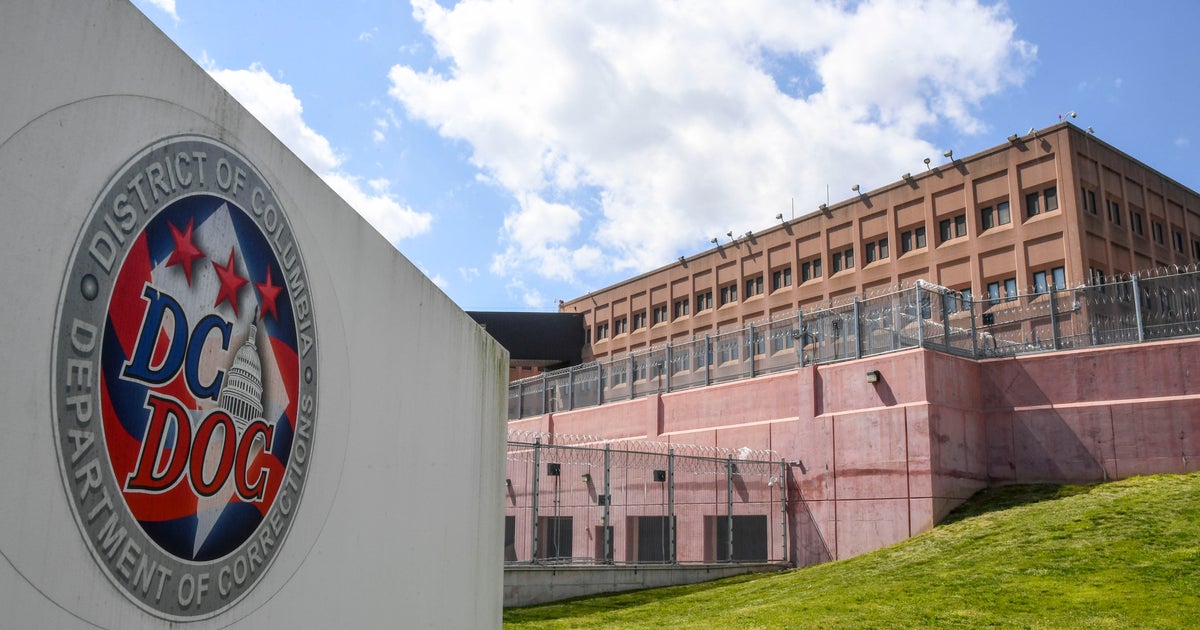
Allen is currently being held at the Correctional Treatment Facility (CTF), part of the D.C. jail complex, according to law enforcement sources who confirmed details to CBS News. This facility has gained some notoriety in recent years as it previously housed many defendants charged in connection with the January 6th Capitol riot. The CTF is considered a newer and more modern facility compared to the main D.C. jail, and it’s operated by the D.C. Department of Corrections. The facility houses a diverse population including men, women, and juveniles who have been charged as adults, though they are kept in separate areas. Given the extraordinary nature of Allen’s alleged crime, he is being held under the most restrictive conditions available within the facility. He has been placed in a restrictive cell in medical isolation—a standard protocol for high-profile or potentially vulnerable inmates. According to corrections protocol, Allen must remain under suicide watch for the first 72 hours of his detention, during which time he is required to wear what’s known as a “green suicide smock,” a tear-resistant garment designed to prevent self-harm. His lawyer described his accommodations to the court as a “safe cell” where Allen is under 24-hour lockdown, with a D.C. correctional officer posted directly outside his cell door around the clock to maintain constant observation.
Daily Life in Maximum Restriction
The conditions of Allen’s confinement are severely restrictive, reflecting both security concerns and suicide prevention protocols. During his time under observation, he has no access to outside materials that could be used for self-harm or other purposes. His meals consist of finger foods delivered on a tray, and he is not allowed any utensils—a standard precaution for inmates under suicide watch. Even basic hygiene is regulated under strict schedule: Allen is permitted to shower only once every 72 hours. These austere conditions, while jarring to most people accustomed to normal life, are considered standard operating procedure for high-profile federal detainees, especially those charged with violent crimes or crimes against government officials. The isolation serves multiple purposes—it protects Allen from potential harm from other inmates, prevents him from potentially harming himself, and ensures he cannot interfere with the ongoing investigation or coordinate with anyone on the outside. One small allowance in his otherwise spartan existence is that Allen is permitted to have religious materials in his cell, such as a Bible or Quran. However, according to law enforcement sources, he has not requested any religious materials since his arrival, despite his attorneys’ characterization of him as a “devout Christian” in court filings.
The Facility and Federal Detention Arrangements
The Correctional Treatment Facility itself is an imposing structure consisting of five separate multi-story buildings positioned immediately adjacent to one another, creating the appearance of one large complex. Inside, housing units vary in size, ranging from 16 to 48 cells, with a maximum capacity of 96 beds per unit. This facility operates separately from D.C.’s main jail and represents a more modern approach to detention and corrections. The arrangement under which Allen is being held involves a partnership between federal and local authorities. The U.S. Marshals Service, which is responsible for managing federal pretrial detainees like Allen, maintains a contract with the D.C. Department of Corrections to house federal prisoners. This is not an unusual arrangement—according to the Marshals Service website, the agency has contracts with approximately 1,200 state and local governments across the country to rent jail space for housing more than 63,000 pretrial detainees at any given time. This system allows the federal government to leverage existing detention facilities rather than building and operating its own jails in every jurisdiction. However, the U.S. Marshals Service maintains a strict policy of not releasing detention locations for high-profile prisoners due to security concerns, though information about Allen’s whereabouts was confirmed to CBS News by law enforcement sources familiar with the case.
Allen’s Background and His Attorneys’ Arguments
According to court filings submitted by his defense attorneys, Cole Allen’s life before this incident painted a very different picture from the serious criminal charges he now faces. His lawyers described him as “gainfully employed” as a tutor, suggesting he was making an honest living helping students with their education. They characterized him as a “devout Christian” who “dutifully” attends church services and is an “active participant” in his religious community, presenting an image of someone deeply connected to faith and community values. Perhaps most significantly from a legal standpoint, Allen has no criminal history—no prior arrests, no convictions, not even minor offenses on his record. He is also college-educated, which his attorneys argued demonstrates stability and investment in his own future. His defense team presented these factors to the court as weighing heavily in favor of releasing Allen on bail while awaiting trial, arguing that his background suggested he was not a flight risk and had strong ties to his community. However, the severity of the charges against him—particularly the attempted assassination of a president—makes pretrial release extremely unlikely in such cases, regardless of an defendant’s prior good character or lack of criminal history.
The Legal Path Forward
During a federal court appearance on Thursday, the case took an unexpected turn when Allen’s attorneys informed the judge that their client had agreed to remain detained while awaiting trial, effectively withdrawing their request for bail. This decision, while perhaps surprising given their previous arguments for release, may reflect a strategic calculation about the futility of pushing for bail given the nature of the charges, or it may indicate Allen’s own assessment of his situation. A preliminary hearing has been scheduled for May 11, which will be the next significant milestone in the case, where prosecutors will present evidence to establish probable cause for the charges. Despite agreeing to remain detained, Allen’s attorney, Tezira Abe, did ask the judge to order the jail to lift some of the more restrictive lockdown conditions her client is experiencing. However, the judge explained that she did not have the authority to override the professional judgment of jail officials regarding security and safety protocols. The judge did indicate willingness to accept written legal briefs on the matter, leaving open the possibility that Allen’s conditions could be modified if his attorneys can make a compelling legal argument. Law enforcement sources have indicated that Allen has been compliant since his arrival at the facility, which may work in his favor if his lawyers do pursue relief from the most restrictive conditions. As this high-profile case moves forward, it will undoubtedly continue to draw national attention, raising important questions about political violence, security at public events, and the justice system’s handling of extraordinarily serious federal charges.