


California’s Gas Price Crisis: What Really Drives the Nation’s Highest Fuel Costs
The Real Story Behind California’s $6 Gas
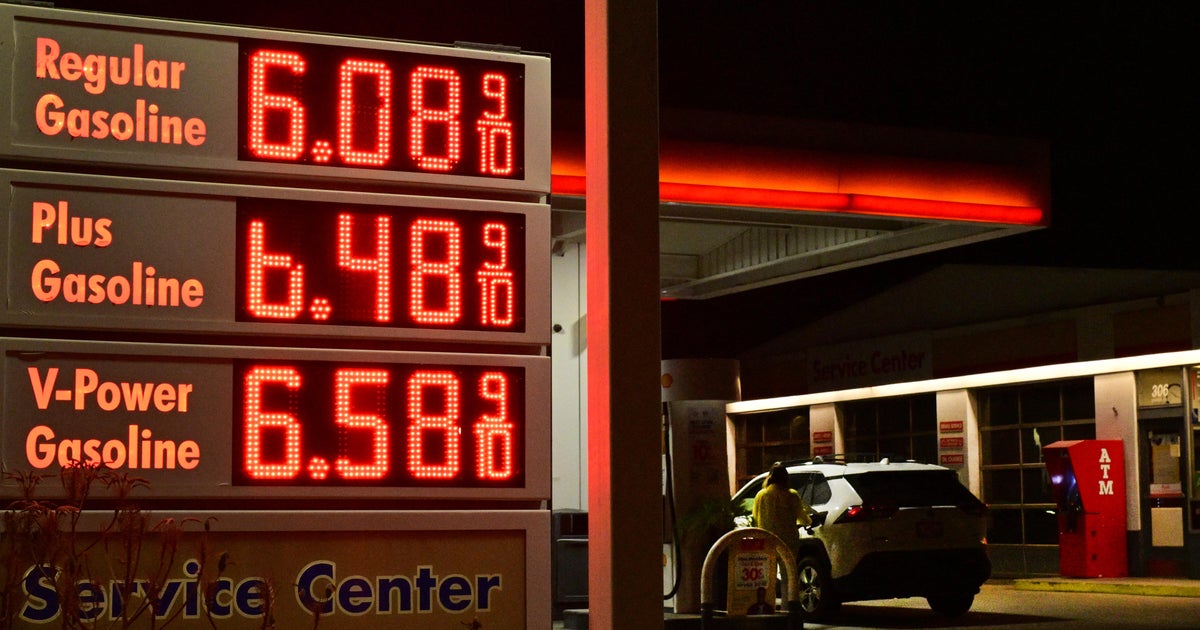
For years, California politicians have pointed fingers at oil companies, accusing them of price gouging to explain why residents pay significantly more at the pump than drivers anywhere else in America. Governor Gavin Newsom led the charge when gas prices hit $6 per gallon, convening a special legislative session dedicated to investigating alleged corporate profiteering. The state’s Democratic supermajority passed laws designed to cap oil company profits and force transparency in their accounting. However, after a comprehensive six-month investigation by CBS News California, the reality turns out to be far more complex than the political soundbites suggested. The truth involves a web of state policies, environmental regulations, unique fuel requirements, and market dynamics that have created a perfect storm of high costs. Most surprisingly, after more than two years of investigation, state officials have admitted they found no evidence of illegal price gouging. Instead, California now faces an even more troubling situation: two major refineries have shut down, eliminating nearly 20% of the state’s gasoline production capacity, and the state is increasingly dependent on overseas refineries—particularly in Asia—to supply its unique fuel blend, creating new vulnerabilities that could make prices even more volatile in the future.
Breaking Down the California Gas Premium
Understanding why Californians pay so much more requires looking at the detailed breakdown of what makes up each gallon of gas. Approximately 45% of gas costs are consistent nationwide, including the global price of crude oil and the 18-cent federal tax. It’s the remaining 55% where California diverges dramatically from the rest of the country. The state’s special gasoline blend—formulated to meet strict air quality standards—adds 10-15 cents per gallon in refining costs. California’s state excise tax of 61 cents per gallon is among the highest in the nation, compared to a national average far lower. The state’s Cap-and-Trade program adds another 23 cents per gallon, while the Low Carbon Fuel Standard contributes an additional 14 cents. Underground storage fees tack on 2 more cents, and state and local sales taxes add approximately 2% to the final price. Distribution and refining costs, which are higher in California due to labor, energy, and operational expenses, account for roughly 28% of every gallon. When gas reaches $6 per gallon, these California-specific costs add up to approximately $20 extra every time an average driver fills their tank compared to what they’d pay in states like Nevada or Arizona. Beyond these identifiable costs, UC Berkeley economist Severin Borenstein has identified what he calls a “mystery surcharge”—an unexplained price gap that appeared around 2015 following a major refinery outage and has persisted ever since, adding yet another layer of cost that researchers struggle to explain through normal market mechanisms.
The Political Narrative Shifts After Finding No Price Gouging
The political conversation around California gas prices has undergone a significant transformation. After the 2023 special legislative session on price gouging resulted in new laws requiring oil companies to open their books and capping refinery profit margins during price spikes, state officials have quietly acknowledged they cannot prove illegal price gouging occurred. California’s Natural Resources Secretary Wade Crowfoot, when pressed by CBS News investigators, said the state “identified certain dynamics that were creating those price spikes” but would not “be in a position to point a finger” at oil companies for gouging consumers. This represents a remarkable shift from years of Governor Newsom and other Democratic leaders making oil company greed the centerpiece of their explanation for high gas prices. The second law, which actually capped profit margins, has since been paused, suggesting the state recognizes it may have gone too far. Industry representatives like Andy Walz, president of Chevron, noted the irony: “I’ve been talking about this for years, OK? What it took was two refineries to close, and then they said, ‘Oh, maybe they’re not price gouging.'” Republican Senator Brian Jones from San Diego observed that “the beginning of the shift” came when “that report came back and Gov. Newsom couldn’t prove that there’s price gouging.” Industry leaders argue that profit caps fundamentally misunderstand the refining business. Tolly Graves, manager of the Chevron Richmond refinery, explained that “those good months are the only way we make a profit… if you cap the good months but don’t support the bad ones, it creates an unviable business.” The CBS investigation reveals that state leaders are now privately—and increasingly publicly—acknowledging they need to incentivize oil companies to maintain operations in California rather than continue policies that drive them away.
Why Refineries Are Leaving California
The departure of two major refineries—Valero in the San Francisco Bay Area and Phillips 66 in the Wilmington area near Los Angeles—has removed hundreds of jobs and nearly one-fifth of California’s gasoline production capacity. These closures came in the wake of the political pressure and new regulations following the price gouging special session, though the reasons for leaving are multifaceted. At the Chevron Richmond refinery, one of the state’s remaining facilities that produces enough gas for one in five cars in Northern California and about 60% of the jet fuel from Sacramento to San Jose, industry leaders outlined the challenging business environment. “California is a tough place to do business for refiners,” Graves explained, pointing to higher labor costs, energy expenses, and regulatory compliance that all contribute to production costs ultimately passed to consumers. California’s special gasoline blend requires specialized equipment and processes that took “billions of dollars of investment,” according to Brian Hubinger, senior manager of Chevron government affairs. He noted that “only a handful of refineries outside of California can actually make California gasoline,” which limits the state’s supply options. Beyond the immediate costs, the long-term policy uncertainty created by California’s aggressive transition away from fossil fuels makes it difficult for companies to justify major capital investments. “It costs us hundreds of millions a year just to stay in business,” Graves said. “Things have to change for us to be willing to invest in a refinery in California.” The state operates as what experts describe as an “energy island”—with no major pipelines bringing gasoline from other states—meaning fewer in-state refineries directly translate to tighter supply and more pressure on prices, especially during outages or periods of high demand. The result is a shrinking industrial base that the state is now scrambling to figure out how to maintain while simultaneously pursuing aggressive decarbonization goals.
The Foreign Fuel Dependence and Environmental Irony
As California loses domestic refining capacity, the state is increasingly turning to overseas refiners, particularly in Asia, to produce its special gasoline blend. This creates a profound irony for a state that prides itself on environmental leadership. While Asian refineries can technically produce California’s low-carbon fuel specification, they don’t have to adhere to the same strict environmental standards that California imposes on its domestic refineries. This means the fuel California imports to meet its clean air standards may actually be produced with more pollution than if it were made locally. “There is less pollution associated with the gasoline that’s produced in California,” Secretary Crowfoot acknowledged. Beyond the production pollution, there’s the environmental cost of shipping millions of gallons of gasoline halfway around the world across the Pacific Ocean. The transportation itself generates significant emissions, undermining some of the environmental benefits California seeks through its special fuel requirements. Moreover, this dependence on distant suppliers creates serious supply vulnerabilities. Tankers from Asia can take weeks to reach California, meaning any disruption—whether from refinery outages, shipping delays, or geopolitical conflicts—can quickly tighten supply and spike prices. “If a refinery has a problem they didn’t anticipate, that’s going to spike prices, that’s going to hurt Californians, and it’s going to be three weeks before we can get resupply from somewhere else,” Walz explained. The current Middle East conflict is highlighting exactly this concern. China has already stopped exporting fuel due to shortages in Asia, and global crude oil prices are rising, affecting California more severely than other states due to its isolation and limited supply alternatives. Industry representatives have long warned that outsourcing refining increases the risk of price spikes, and recent events are validating those predictions in real-time.
The Path Forward: Balancing Climate Goals With Affordability
California now finds itself at a crossroads, trying to balance its ambitious climate goals with the immediate need to maintain reliable and affordable fuel for millions of residents who still depend on gasoline-powered vehicles. The political conversation has shifted from blaming oil companies to acknowledging the role of state policies in creating high prices. However, changing course isn’t simple. Proposed regulatory changes to California’s Cap-and-Invest program, which the oil industry warns could make refining in California even more expensive relative to overseas production, remain under consideration. The challenge is that many of the factors driving high prices—the special fuel blend, Cap-and-Trade, the Low Carbon Fuel Standard—are core components of California’s environmental strategy. Backing away from these programs would represent a major policy reversal and potentially undermine the state’s climate commitments. Yet continuing on the current path risks pushing more refineries out of the state, increasing dependence on foreign suppliers, and making prices even more volatile and expensive. For everyday Californians like Sirena Lopez, who commutes two hours each way for work, the debate is more than academic. “There was one time I filled up about $100… and I was like… I don’t know what I’m doing right now,” she shared. Despite high prices, demand remains relatively steady as most Californians have little choice but to continue driving. State Senator Jones suggested that voters may eventually demand change: “I think if the voters figure out that the problem is policy, they’re going to say, ‘Hey, I shouldn’t be paying this much. Why is Nevada a dollar cheaper?'” With a new governor to be elected soon, California’s energy and environmental policies—and by extension, gas prices—could shift significantly. The coming years will test whether the state can successfully manage the transition to clean energy without imposing unsustainable costs on working families in the meantime, or whether the pursuit of environmental goals will continue to make California an increasingly expensive place to live and work.