



The Forgotten Pioneers: Honoring South Carolina’s First Eight Black Congressmen
A Legacy Rediscovered
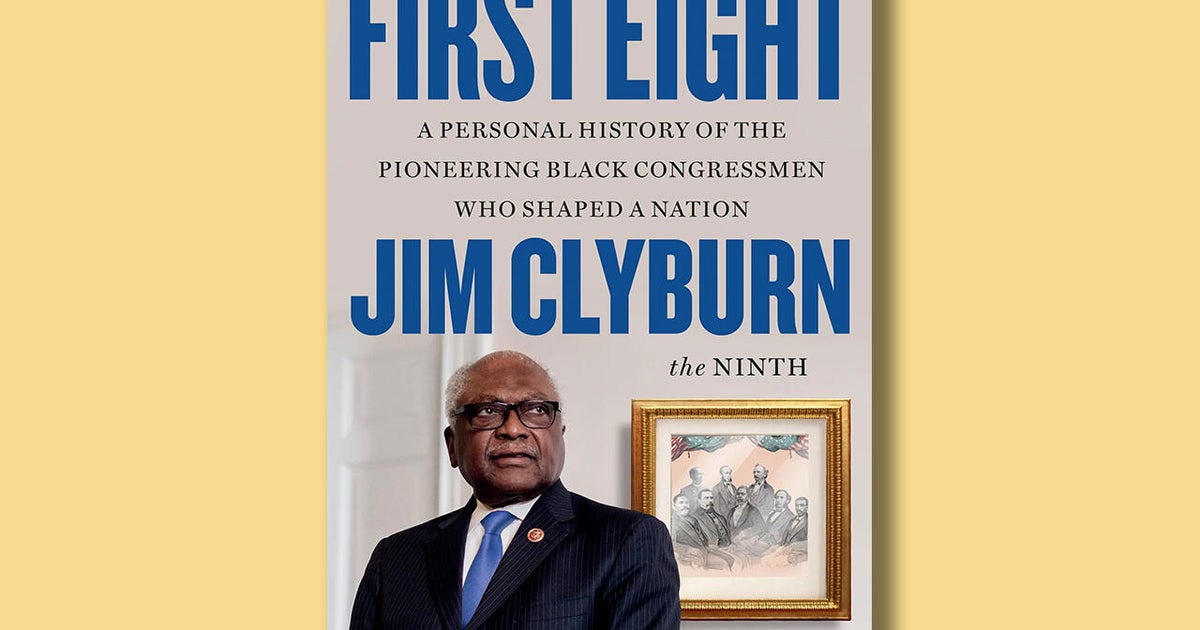
When Congressman Jim Clyburn became House Majority Whip in 2007, one of his first acts was to hang eight elegant black-and-white portraits in his conference room. These weren’t just decorative pieces—they represented the shoulders upon which he stood. The portraits depicted the first eight Black men elected to Congress from South Carolina, pioneers whose stories had been nearly erased from American memory. When visitors asked about these distinguished faces staring down from the walls, many were shocked to learn that Clyburn wasn’t the first Black representative from South Carolina. Their surprise didn’t catch him off guard. After all, nearly a century had passed since the last of these eight men, George Washington Murray, had served in Congress. That conversation crystallized what Clyburn had known for most of his life: these stories needed to be told. In his book “The First Eight: A Personal History of the Pioneering Black Congressmen Who Shaped a Nation,” Clyburn responds to that surprised inquiry with his characteristic style—playful yet purposeful: “Oh no. Before I was first, there were eight.”
These eight men—Richard Harvey Cain, Robert Brown Elliott, Robert Carlos De Large, Alonzo Jacob Ransier, Thomas Ezekiel Miller, Joseph Hayne Rainey, Robert Smalls, and George Washington Murray—represented four million newly emancipated Black Americans during and after the Civil War. They pursued America’s promise of equality while facing extreme opposition, displaying what Clyburn describes as “little malice and much charity.” Their legacies of resistance and resolve, promise and purpose, faith and fortitude continue to inspire Clyburn’s work in Congress today. But understanding their achievements requires understanding the turbulent era in which they lived and the diverse paths that brought them to power.
Different Roads to the Same Destination
One of the most fascinating aspects of the First Eight is how their varied backgrounds shaped their approaches to public service. Clyburn has always believed that people can be no more or no less than their life experiences allow them to be, and these eight men proved that truth in remarkable ways. They shared the common experience of being born before the Civil War, when America was bitterly divided over slavery, but their younger, formative years differed dramatically, creating unique perspectives that would inform their work in Congress.
Two of the eight—Richard Harvey Cain and Robert Brown Elliott—were Northerners who hadn’t grown up in slave states. They arrived in South Carolina as adults, having been spared the direct experience of what Clyburn calls “the nation’s original sin.” Another group—Robert Carlos De Large, Alonzo Jacob Ransier, and Thomas Ezekiel Miller—had the fortune of growing up in South Carolina with free Black parents. As people of mixed race (referred to in that era as “mulattos,” a term Clyburn acknowledges causes uneasiness today), they enjoyed certain privileges that their paternity provided in the complex racial hierarchy of the antebellum South.
The remaining three—Joseph Hayne Rainey, Robert Smalls, and George Washington Murray—shared what was the more common Black experience in pre-Civil War South Carolina: they were born into slavery. Yet even within this shared experience, their paths to freedom differed remarkably. Rainey gained his freedom through purchase, Smalls through a daring escape (he would become the only bona fide Civil War hero among the eight), and Murray through emancipation. Despite these diverse backgrounds and different experiences, each man rose to the top of his profession and occupied a unique place in American history during the Reconstruction Era, that turbulent period when America attempted to reinvent its political and social structures to reflect the Declaration of Independence’s proclamation that “all men are created equal.”
The Reconstruction Era Through a South Carolina Lens
Clyburn tells the story of Reconstruction through a distinctly South Carolina perspective, and it’s a longer timeline than many Americans might expect. In parts of his home state, Reconstruction came early with the arrival of Union troops in late 1861, and it didn’t end until federal troops departed in 1877. This period gave African Americans their first opportunity to serve in political office, and over those years, the First Eight emerged as leaders among South Carolina’s Black majority. While most served in Congress during Reconstruction itself, three—Smalls, Miller, and Murray—were elected in the post-Reconstruction era, though Smalls had also served earlier during Reconstruction.
All eight were Republican lawmakers, working against fierce opposition from what many called Conservative Democrats or Southern Democrats. However, Clyburn refuses to use these terms, seeing them as insults to his conservative Democratic friends and his proud Southern family members. Instead, throughout his book, he refers to their opponents as “Redeemer Democrats,” a name that accurately reflects their mission: redeeming what they saw as the rightful antebellum social order of white supremacy. The valiant efforts of the First Eight couldn’t ultimately stop the violence and fraud deployed by these Redeemers, but their legacy remained.
This history naturally raises questions for modern readers: Why were the First Eight Republicans? And given the history of the Redeemers, why is Clyburn, the ninth Black congressman from South Carolina, a Democrat? The answer reveals a fascinating transformation in American politics. In the nineteenth century, the Republican and Democratic parties held very different beliefs than they do today. Founded in 1854 in the lead-up to the Civil War, the Republicans were the anti-slavery party of Abraham Lincoln, composed mostly of Northern abolitionists, while Democrats found most support in the pro-slavery South. Naturally, after the Civil War and well into the twentieth century, most Black Americans, including Clyburn’s parents, identified as Republicans, remaining loyal to the “party of Lincoln.” The ideological transformation began under Democratic President Franklin Delano Roosevelt, accelerated under President Harry Truman—who became the first president to address the NAACP’s National Convention—and continued through President Lyndon Baines Johnson’s Great Society programs, which included Medicare, Medicaid, and the landmark Civil Rights Act of 1964, Voting Rights Act of 1965, and Fair Housing Act of 1968. Today, the civil and political rights for Black Americans that were founding principles of the Republican Party are championed by Democrats, which is why most African Americans now identify with the Democratic Party.
Heroes of Varying Stature
While all eight men made significant contributions, Clyburn acknowledges that some emerged as more significant than others. By his estimation, Robert Smalls lived the most consequential life, not just of the eight, but of any South Carolinian in memory. As the only bona fide Civil War hero of the group and one of only two Black delegates to both the 1868 Constitutional Convention (which granted Black political and civil rights) and the 1895 Convention (which revoked them), Smalls’s life story is extraordinary. Then there’s Joseph Hayne Rainey, whose eloquence and status as the first Black man elected to the U.S. House of Representatives made him a man of great significance. Robert Brown Elliott, whose oratory resonated even more deeply than Rainey’s, was revered throughout the country. These three—Smalls, Rainey, and Elliott—rose to national prominence, and their stature naturally results in more attention in Clyburn’s book, though he emphasizes that the lived experiences of the other five also provide valuable lessons.
Throughout the book, Clyburn grapples with the language of the era. Words like “Negro,” “Colored,” and “mulatto” were common identifiers in the nineteenth and early twentieth centuries but engender uneasiness today. The vilest slur directed at the First Eight and their constituents was the N-word, which Clyburn, due to his visceral aversion, chooses not to spell out fully. He’s also intentionally minimized the use of the term “slave,” which he believes dehumanizes people who were held in bondage against their will. Instead, he refers to them as “the enslaved,” recognizing their humanity and speaking to the condition forced upon them. Following new style guidelines, he capitalizes “Black” (now associated more with culture and race than simply skin color) and lowercases “white.” After fifty-eight years of marriage to a librarian, Clyburn became a stickler for grammar and happily adopted this new usage.
A Personal Journey Informed by History
Clyburn’s dedication to telling the stories of the First Eight stems from his own life experiences. Like all of us, the First Eight weren’t perfect, but they rose to the challenges of their time, determined to demonstrate by example that race doesn’t define one’s humanity. They knew that until America lived by its founding principle of “liberty and justice for all,” the country couldn’t achieve its democratic ideals. This understanding resonates deeply with Clyburn’s personal journey.
His life has been grounded in faith and fortitude. His father, a fundamentalist minister, and his mother, a civic-minded beautician, provided a foundation grounded in biblical principles and insisted he could be successful despite being born under Jim Crow. Both adhered to his father’s philosophy of leading by precept and example, and they practiced what they preached. Their teachings led Clyburn to join the NAACP at age twelve. As a college student, he naturally resisted laws that stripped civil rights from those who looked like him, becoming a founding member of the Student Non-Violent Coordinating Committee (SNCC) and a student protest leader in the late 1950s and early 1960s. The incarcerations and arrests he accrued during this period only strengthened his dedication to the cause.
In his first professional job as a high school history teacher in Charleston, Clyburn found the resolve to tell American history accurately, not through the lens of textbooks that sought to diminish and exclude African American achievements. The hard-won successes of the movements he served—the passage of the 1964 Civil Rights Act, the 1965 Voting Rights Act, and the 1968 Fair Housing Act—provided the faith and promise that he could one day serve in public office. This assurance helped fulfill his political purpose: to do everything in his power to ensure that the greatness of America is accessible and affordable to all.
Breathing Hope Into the Future
Like his eight predecessors, Clyburn has encountered opposition and setbacks along his journey. South Carolina’s history hasn’t always been positive—some of it has been very unpleasant for him and many others, especially those who look like him. But history is what it is, and Clyburn believes that complete history should be told. As he tells the history of the First Eight, who paved the way for him and countless others, he never loses sight of South Carolina’s state motto: “While I breathe, I hope.”
This motto encapsulates the spirit of both the First Eight and Clyburn himself. These pioneering congressmen faced seemingly insurmountable obstacles—the violence and fraud of Redeemer Democrats, the betrayal of Reconstruction’s promises, and the systematic dismantling of Black political power in the South. Yet they persisted, leaving a legacy that would inspire future generations. Their stories, nearly lost to time, remind us that progress is neither linear nor permanent. The rights they fought for were won, lost, and had to be won again. The political power they wielded was stripped away and took a century to reclaim.
By bringing these stories back into public consciousness, Clyburn performs a vital service not just to the memory of these eight men, but to all Americans seeking to understand our complicated history. The First Eight demonstrated that Black Americans were ready for citizenship, leadership, and full participation in democracy the moment they were free to do so. They proved that the racist justifications for slavery and segregation were lies. They showed that given the opportunity, Black Americans could govern wisely, speak eloquently, and lead courageously. Their legacy lives on not just in the portraits on Clyburn’s wall, but in every Black elected official who followed in their footsteps, standing on shoulders that too many Americans never knew existed. In remembering them, we remember that the fight for equality is ongoing, that setbacks are temporary, and that while we breathe, we must never stop hoping—and working—for a more perfect union.