
Car Bomb Attack in Northern Ireland Raises Security Concerns
A Shocking Wake-Up Call for the Community
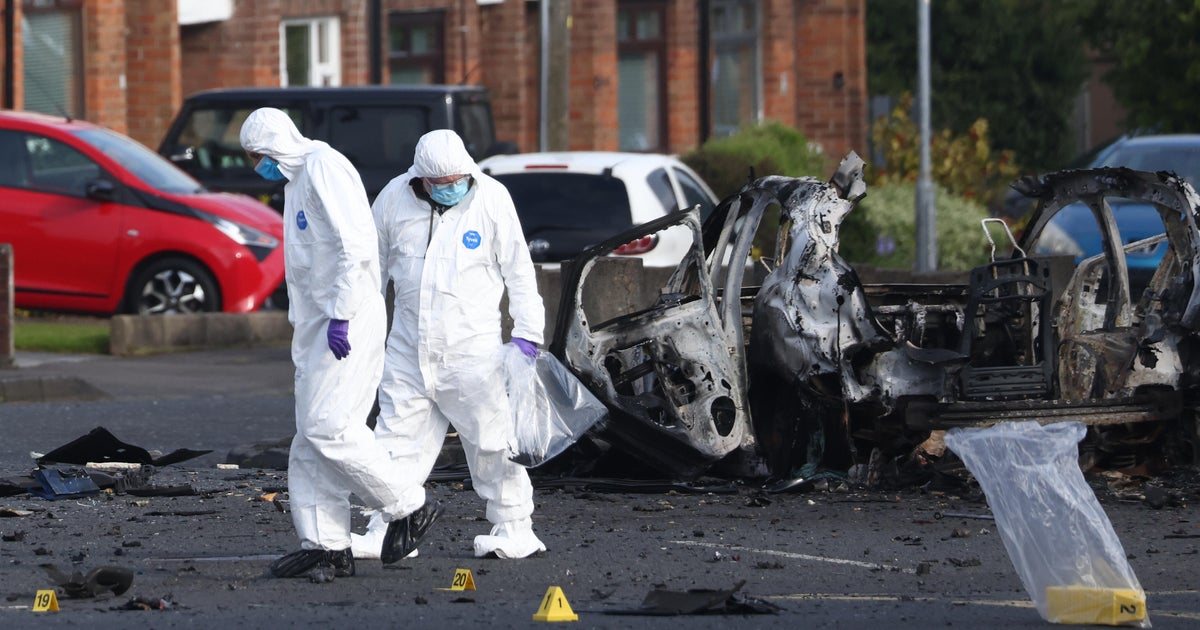
Residents of Dunmurry, a town situated on the outskirts of Belfast in Northern Ireland, woke up to alarming news on Sunday morning when police declared a major security alert following reports of a car bomb explosion near a local police station. The incident, which occurred on Saturday night, sent shockwaves through the community and prompted immediate action from the Police Service of Northern Ireland (PSNI). As a precautionary measure, authorities evacuated nearby homes and cordoned off the surrounding area, urging members of the public to stay away while they conducted their investigation. The attack has raised serious concerns about the resurgence of violence in a region that has worked hard to maintain peace over the past two decades.
Sorcha Eastwood, a member of the United Kingdom Parliament representing Langan Valley, an area southwest of Belfast, expressed her distress and concern about the incident. Speaking publicly about the attack, she emphasized the potential for catastrophic casualties given the location and timing of the explosion. “It is distressing and disturbing to wake up to the news that a car bomb exploded outside Dunmurry police station last night,” Eastwood stated. She went on to describe the gravity of the situation, noting that the car bomb was left in a busy area surrounded by residential housing, small businesses, and numerous people who would have been out and about on a typical Saturday night, either working or socializing. The lawmaker expressed profound relief that, by what she called “the grace of God,” there were no casualties reported from this potentially deadly attack. Her words captured the collective sentiment of a community grateful for avoiding tragedy while simultaneously disturbed by the return of such violent tactics.
Pattern of Attacks and Limited Information
As of Sunday, police authorities have not released any information regarding the motive behind the Dunmurry attack, leaving the community and the broader public to speculate about who might be responsible and why they targeted this particular location. The lack of immediate answers has only added to the anxiety felt by residents who remember all too well the dark days of sectarian violence that plagued Northern Ireland for decades. The investigation is ongoing, and authorities are working diligently to piece together the circumstances surrounding the explosion and identify those responsible. The PSNI’s reluctance to share details at this early stage is likely due to the sensitive nature of the investigation and the need to preserve the integrity of the evidence-gathering process.
This recent attack in Dunmurry is not an isolated incident, raising further concerns about a potential pattern of violence targeting police installations in Northern Ireland. Just last month, police reported another attempted attack on a PSNI station in Lurgan, located approximately 20 miles (32 kilometers) southwest of Dunmurry. In that incident, authorities described the device as a “crude but viable” improvised bomb that was used in what they characterized as an attempted attack on law enforcement. The circumstances of the Lurgan incident were particularly disturbing: two masked men stopped a delivery driver going about his daily work, forcibly placed an explosive device in the trunk of his car, and then held him at gunpoint, compelling him to drive the device to the police station. This calculated act of intimidation and violence put an innocent civilian’s life at risk while attempting to carry out an attack on police. Fortunately, authorities were able to respond appropriately, conducting a controlled explosion of the device after evacuating approximately 100 homes in the surrounding area, preventing potential casualties and property damage.
Understanding the Historical and Political Context
To fully comprehend the significance of these recent attacks, it’s essential to understand the historical context of violence in Northern Ireland. Police have indicated that the Lurgan attack was likely carried out by what they term “dissident Republican groups” – factions that have refused to accept the peace process that brought an end to decades of conflict in the region. In their statement, police characterized the attack as a “pathetic attempt to remain relevant and provoke fear,” suggesting that these groups are desperately trying to maintain their presence and influence in a society that has largely moved beyond the violence that once defined it. These dissident groups, though smaller and less organized than the paramilitary organizations that operated during the height of the Troubles, still pose a security threat and demonstrate a willingness to use violence to make their political points.
The conflict in Northern Ireland, often referred to as “the Troubles,” represents one of the most challenging periods in modern British and Irish history. For decades, the region was torn apart by violence between Republican groups, who opposed British rule and sought a united Ireland, and Loyalist groups, who wanted Northern Ireland to remain part of the United Kingdom. The conflict claimed thousands of lives and left deep scars on communities across the region. The breakthrough came with the 1998 Good Friday Agreement, also known as the Belfast Agreement, which established a framework for peace and power-sharing governance in Northern Ireland. This historic accord largely ended the sustained violence that had characterized the region for so long, creating new institutions and processes designed to address the political, social, and cultural divisions that had fueled the conflict. The agreement was the result of years of patient negotiation involving the British and Irish governments, political parties in Northern Ireland, and, crucially, representatives of paramilitary organizations on both sides.
The Fragile Peace and Ongoing Challenges
While the Good Friday Agreement successfully brought an end to the organized, large-scale violence that had plagued Northern Ireland, it did not completely eliminate the threat of terrorism or resolve all the underlying tensions that continue to exist within the society. Dissident Republican groups – those who reject the peace process and the political compromises it represents – continue to carry out sporadic attacks, though these are generally smaller in scale and less frequent than the violence experienced during the Troubles. These groups view themselves as the true inheritors of the Republican tradition and see the mainstream Republican movement’s participation in the peace process as a betrayal of their fundamental principles. Their continued existence and willingness to use violence represents one of the ongoing challenges to lasting peace in Northern Ireland, requiring constant vigilance from security services and continued commitment to the peace process from political leaders and communities.
The recent attacks in Dunmurry and Lurgan serve as sobering reminders that, despite more than two decades of relative peace, the underlying issues that fueled the conflict in Northern Ireland have not been completely resolved. Brexit and the contentious debate over the Northern Ireland Protocol have added new complications to an already complex political situation, with some suggesting that these contemporary political tensions may be emboldening dissident groups. The protocol, which was designed to prevent a hard border between Northern Ireland and the Republic of Ireland following Britain’s exit from the European Union, has proven controversial among some Unionist communities who see it as creating barriers between Northern Ireland and the rest of the United Kingdom. While mainstream political parties continue to work through these issues via democratic processes, dissident groups opposed to any British presence in Northern Ireland may see current uncertainties as an opportunity to try to destabilize the peace.
Community Resilience and the Path Forward
Despite these concerning incidents, there is reason for cautious optimism about Northern Ireland’s future. The communities affected by these recent attacks have shown remarkable resilience, and the response from political leaders across the spectrum has been uniformly condemnatory of the violence. The fact that these attacks are now considered shocking news, rather than routine occurrences as they once were, demonstrates how far Northern Ireland has come since the dark days of the Troubles. The overwhelming majority of people in Northern Ireland, regardless of their political views on the region’s constitutional status, support the peace process and reject violence as a means of achieving political ends. This broad-based commitment to peace, combined with effective policing and continued political engagement, provides the foundation for addressing the ongoing security challenges posed by dissident groups.
Moving forward, maintaining peace in Northern Ireland will require continued effort from all stakeholders. Security services must remain vigilant against the threat posed by dissident groups while avoiding heavy-handed tactics that could alienate communities. Political leaders must continue working to address the legitimate concerns of all communities in Northern Ireland through democratic means, demonstrating that political processes can deliver results and that violence is both counterproductive and unnecessary. Communities themselves play a crucial role in maintaining peace by refusing to provide support or safe haven to those who would return to violence and by continuing to build the cross-community relationships that have developed since the Good Friday Agreement. The attacks in Dunmurry and Lurgan are troubling, but they need not represent a return to the past. Instead, they can serve as reminders of what is at stake and why continued commitment to the peace process is essential for everyone who calls Northern Ireland home.