


The 56-Year Quest for Justice: The Murder of Mary Kay Heese
A Small Town’s Lost Innocence
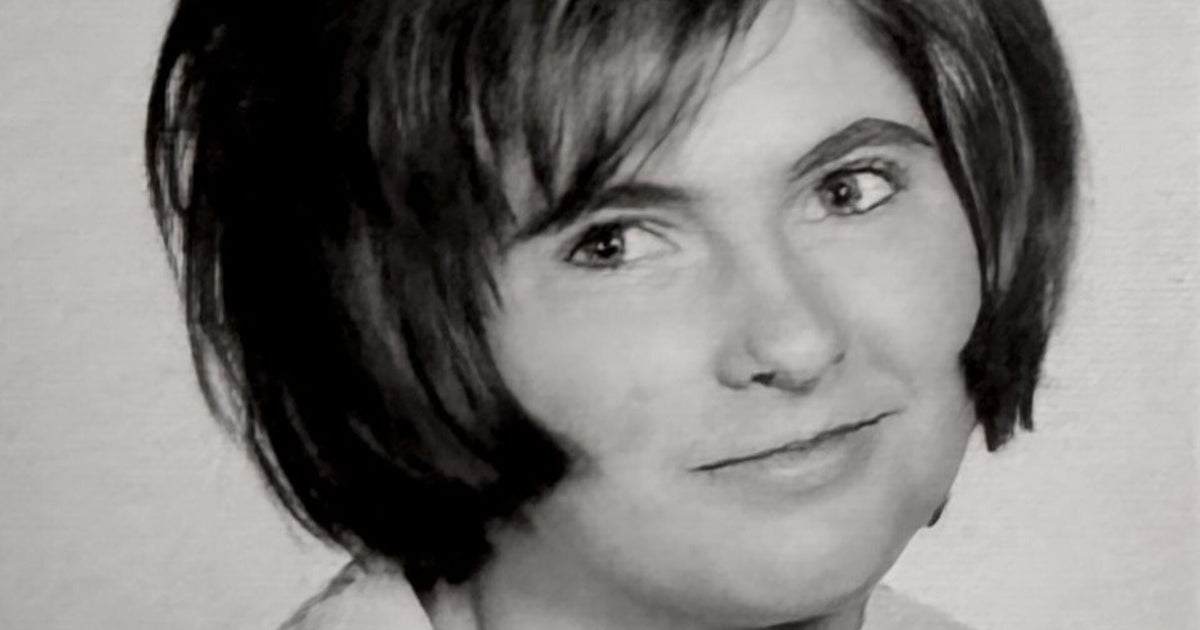
On March 25, 1969, the quiet farming community of Wahoo, Nebraska—a place known more for its cattle and cornfields than violent crime—was forever changed when 17-year-old Mary Kay Heese never came home from school. What happened that spring evening would become Nebraska’s longest unsolved murder case, hanging like a dark cloud over the community for more than five decades. “I look at this case as where the community lost its innocence,” said Jennifer Joakim, Saunders County attorney. “Where people were told we’re not going into Wahoo. You’re not going out alone.” The shy high school junior, who just wanted to fit in with her classmates and find a date to the upcoming Sadie Hawkins dance, became the victim of a brutal killing that would haunt her family and investigators for generations. Her murder wasn’t just the loss of a promising young life—it was the moment an entire community realized that evil could strike anywhere, even in the heartland of America.
When Mary Kay failed to return home that evening, her parents reported her missing, triggering a massive search effort that brought together Boy Scouts, church groups, school organizations, and local law enforcement. The search continued until just before midnight when a local farmer discovered Mary Kay’s school books and purse stacked neatly on a road near a field. Inside the books was her name, and when police returned to the location, they made a devastating discovery—Mary Kay’s bloodied body lying in a ditch by the roadside. The crime scene told a horrific story: her shoes were found in the road, along with tire tracks from a car and shoeprints that investigators believed belonged to the killer. The frozen ground had preserved footprints showing that Mary Kay had fled from a vehicle and run for her life, her strides indicating desperate attempts to escape. She had been beaten, punched in the jaw, and stabbed 14 times in what investigators would later describe as a crime of rage. No murder weapon was found at the scene, and though she hadn’t been sexually assaulted, investigators believed that’s where the attack was headed before Mary Kay tried to escape.
A Promising Life Cut Short
Mary Kay Heese was described by her cousins, Kathy Tull and Mark Miller, as a vibrant girl “full of life” who always looked out for the younger cousins in their family. At just 17, she was active in 4-H, practiced baton twirling hoping to become a majorette, and desperately wanted to be part of the social scene at school. But Mary Kay lived under the watchful eye of a strict father, which made normal teenage experiences challenging. She was so shy that a group of girls at school would help her put on makeup and change clothes at the beginning of the day so she could fit in socially, then she’d change back before going home. Just a week before her death, Mary Kay had written a letter to her cousin Jerry, asking him to be her date to the Sadie Hawkins dance—a poignant reminder of how ordinary teenage concerns were on her mind in her final days.
The impact of Mary Kay’s murder on her family was immediate and devastating. Kathy Tull, who was nine at the time, remembers being picked up early from school the day Mary Kay’s body was found and taken to her cousin’s house in Wahoo. “When we went in, it was just—you could hear her wailing,” Kathy recalled of Mary Kay’s mother, Dorothy. “It’s the kind of pain you feel across the room.” The murder didn’t just destroy the Heese family; it changed the entire community. Children who had enjoyed freedoms typical of small-town life suddenly found themselves restricted, their parents desperate to protect them from an unknown killer who might still be among them. “Everything changed. What our parents allowed us to go do,” Mark Miller remembered. “We lost so many different things because of it, our parents wanting to overprotect us.” Yet the cruel irony wasn’t lost on investigators—despite having a protective father, despite being a cautious girl, Mary Kay still fell victim to violence, suggesting she may have known and trusted her killer.
The Initial Investigation and a Suspect Emerges
The 1969 investigation, handled by multiple law enforcement agencies including the newly formed Nebraska State Patrol investigative unit, focused on the theory that Mary Kay had gotten into a car with two men. A witness reported seeing her around 5 p.m. at a street corner, entering a vehicle with two dark-haired males. Investigators believed the men were driving to an area known locally as “The Grove,” a popular parking and party spot for local teenagers. When Mary Kay realized their intentions, she fled the car, and one of the men chased her down and killed her. The key question that puzzled everyone was why Mary Kay, normally so cautious, would get into a car with strangers. The answer investigators developed was simple but tragic: she knew these men. This theory led them to question virtually every male who could have crossed paths with Mary Kay, using the then-revolutionary crime-solving tool of polygraph tests to screen suspects.
One name that kept surfacing was Joseph Ambroz, a 22-year-old who had moved to Wahoo while on parole after being convicted of forgery and escaping from custody. He had written a bad check, escaped from a small county jail, was caught in California, and served about three years before relocating to Wahoo where he worked at a slaughterhouse. Ambroz had been seen talking to Mary Kay around town in the weeks before her murder—they both frequented The Wigwam Café. He had a reputation for mingling with high school girls and having a temper. Most significantly, he drove a white-over-blue 1956 Chevy, the same type of car that a witness reported seeing leaving the area near the crime scene at a high rate of speed on the night of the murder. When questioned, Ambroz denied any involvement and said he had an alibi—he was with his friend Wayne Greaser that night. Both men were polygraphed, and the results seemed to support their innocence. However, during his pre-polygraph interview, Ambroz admitted to buying alcohol for minors and having sex with minors, which violated his parole. He was immediately sent to jail for a parole violation but not charged with Mary Kay’s murder—a decision that would haunt the case for decades.
Decades of Frustration and Failed Leads
Looking back, the initial investigation was plagued with problems that would prove costly. Cars weren’t checked for blood evidence. Suspects’ shoe sizes weren’t compared to the shoeprints found at the scene. The lack of coordination between multiple agencies meant there was no clear lead investigator, and investigators relied too heavily on polygraph results. “This was the beginning of the State Patrol. Because before that they just gave tickets for speeding,” explained Richard Register, deputy county attorney. “And so these people were thrown into this new investigative unit.” The case went cold for three decades until 1999, when the creation of the Nebraska State Patrol Cold Case Unit brought renewed attention to Mary Kay’s murder. Sergeant Bob Frank took on the case, and “48 Hours” cameras followed his investigation as he scoured old case reports and noticed that Joseph Ambroz and Wayne Greaser kept appearing in witness statements—and more troubling, that people claimed both men had admitted to the homicide.
Frank had a significant advantage over the 1969 investigators: advances in forensic science, particularly DNA testing. He carefully examined Mary Kay’s belongings, hoping to find fingerprints or DNA that could identify her killer. The theory was that Mary Kay had left her books and purse in the car, and the killer, not wanting to be linked to her, had dumped them at the scene—meaning the killer’s fingerprints or DNA might be on those items. Frank tested the schoolbooks (including one ironically titled “Building a Successful Marriage”), her gloves, and her clothing that had been cut off during the autopsy. Despite the careful work, no usable fingerprints were found, and DNA testing led nowhere. Still, Frank pressed forward. In September 1999, he traveled to Orange Park, Florida, where Ambroz was living, to question him. During the interview, Ambroz gave a different account of his whereabouts on the night of the murder than he had in 1969, this time not mentioning being with Wayne Greaser, who had died by suicide in 1977. When Frank implied they had found DNA at the scene and suggested Ambroz wore the same size shoe (9 1/2) as the print found at the crime scene, Ambroz cooperated fully, giving blood for DNA testing and submitting to another polygraph. But again, nothing incriminating was found, and prosecutors felt there wasn’t enough evidence to move forward. The case went cold once more.
A Facebook Page and an Underwater Search
In 2015, Ted Green became the criminal investigator for the Saunders County Attorney’s Office and inherited the case that had frustrated investigators for nearly five decades. Green painstakingly collected reports from all the different agencies, finding memos and statements that had never been properly filed. He began reinterviewing witnesses and tracking down people who had been named in old reports. What he learned disturbed him—witnesses told him that Ambroz had been seen watching Mary Kay twirl her baton in her driveway and had expressed wanting to have sex with her. Another person came forward saying they had seen Ambroz and Wayne Greaser arguing on the night of the murder about “some girl.” A co-worker of Ambroz reported that after the murder, Ambroz had said, “I can do six months, but I can’t do life”—which Green interpreted as Ambroz knowing he was going back to jail for a parole violation but couldn’t risk a life sentence for attempting to sexually assault Mary Kay. Green believed Ambroz killed her to keep her from reporting him.
While Green worked methodically through old evidence, Josh Eberhardt, a friend of Mary Kay’s cousin Kathy Tull, decided to take a different approach. In 2019, he set up a Facebook page tipline, hoping to bring attention to the decades-old case and jog people’s memories. “The way that I could feel their pain when I spoke with them, I couldn’t let it go,” Eberhardt explained. His emotional posts about Mary Kay generated tips, most of which went nowhere, until someone came forward with information about a reservoir not far from the murder scene. The tipster had heard stories about men taking apart a car matching the description of Joseph Ambroz’s white-over-blue 1956 Chevy and pushing it into the water shortly after Mary Kay’s murder. For Green, this was a crucial lead—he had always wondered what happened to the car witnesses reported seeing Mary Kay enter. Over the next five years, Green worked to determine what was at the bottom of the reservoir, eventually bringing in an underwater search and recovery dive team called Adventures with Purpose. They found bits of metal and fiber consistent with a car’s interior, but without draining the reservoir—which wasn’t feasible—they couldn’t prove the materials came from Ambroz’s car.
The Exhumation and Final Push for Justice
With the reservoir search inconclusive, investigators made a bold decision in 2024: they would exhume Mary Kay’s body and perform another autopsy using modern forensic techniques. “The first autopsy was not a quality autopsy, or at least by today’s standards,” Jennifer Joakim explained. For Kathy Tull, who had stayed in close contact with Green throughout his investigation and had promised her Aunt Dorothy before her death in 2007 that she would never stop fighting for justice, the decision was difficult but necessary. “It was hard,” Kathy said. “Anything that maybe would get the answers we were looking for, but it was a hard choice.” After 55 years in the ground, Mary Kay’s body was remarkably well-preserved, allowing pathologists to examine her knife wounds in greater detail. What they discovered was chilling: the manner in which Mary Kay was stabbed was consistent with how slaughterhouse workers are taught to kill animals—the angle and technique matched exactly. For Green, this was another piece connecting Joseph Ambroz, who had worked on the kill floor of a slaughterhouse, to the murder.
In 2021, Green traveled to Ohio to interview Ambroz once more. According to Green, when asked about witness reports of blood on his car around the time of the murder, Ambroz admitted there had been blood on the left rear fender because he’d hit a deer or rabbit. But Green didn’t believe this explanation—an animal strike wouldn’t put blood on that specific location. Green theorized that Ambroz had pinned Mary Kay against the car trunk while stabbing her, and the blood was hers. Combined with the shoeprint evidence (Ambroz wore size 9 1/2 shoes matching the print at the scene, and the pattern matched prison-issued shoes he could have been wearing while on parole), the witness statements about Ambroz’s interest in Mary Kay, the slaughterhouse connection, and the interview inconsistencies, Green finally felt he had enough. In 2023, he presented his findings to the county attorney. Prosecutors knew it would be challenging—there was no murder weapon, no DNA evidence directly linking Ambroz to the killing, and they were running out of time as witnesses aged and died. But they decided to take the case before a grand jury, which quickly indicted Joseph Ambroz for first-degree murder. The then-77-year-old was arrested on November 18, 2024, in Oklahoma.
A Controversial Ending
For Mary Kay’s family, the arrest was a moment they thought might never come. “Thrilled to death that finally, finally Mary Kay will have justice,” Mark Miller said. Kathy Tull felt she had finally kept her promise to Aunt Dorothy to never stop fighting. But their hopes for justice would soon be disappointed. In July 2025, after months of pre-trial hearings where Ambroz appeared frail and on oxygen, prosecutors announced they had reached a plea deal—not for first-degree murder as charged, but for conspiracy to commit first-degree murder. As part of the deal, Ambroz pleaded no contest, meaning he didn’t have to provide any details about the murder or admit guilt. The deal also named the deceased Wayne Greaser as the other person conspiring to kill Mary Kay. Kathy and Mark say they weren’t consulted about the deal, and they were devastated. “The family never got the chance to say no,” Mark said bitterly. Ted Green was so disgusted that he retired immediately after the plea hearing. “There’s no justice for Mary Kay, there’s no justice for the family,” Green said. “And no answer.”
County attorney Jennifer Joakim defended the controversial decision, explaining that as they prepared for trial, the case was getting weaker. There were chain of custody issues with evidence that had passed through so many hands over the decades, key witnesses had died, and testimony might be deemed inadmissible. “We had to analyze the case and the evidence,” Joakim said. “It was important to get the conviction.” But because the murder occurred in 1969, sentencing guidelines from that era had to be applied—and a conspiracy to murder conviction in 1969 carried only two years of prison time. Due to Nebraska’s Good Time sentencing reduction law, Ambroz’s sentence was cut in half, and with time served, he was released on November 15, 2025. He had spent less than a year behind bars. Joseph Ambroz’s attorney stated that his client maintained his innocence and only took the plea bargain due to health issues, fearing he might not live until trial to clear his name. At his sentencing on August 27, 2025, when given the opportunity to speak, Ambroz said nothing. “His thing was he didn’t want to die in jail. He didn’t want to die in prison,” Kathy Tull said angrily. “Mary Kay didn’t want to die that day either.” For the family of Mary Kay Heese, the quest for justice after more than 56 years remains heartbreakingly incomplete—a vibrant 17-year-old girl who just wanted to fit in and go to a dance was taken from them, and the man they believe responsible walked free after serving mere months, never having to explain what really happened on that terrible night in 1969.