

Brazil’s Revolutionary Payment System Pix Goes Global: A Game-Changer in International Finance
Introduction: A Payment Revolution That Started in Brazil
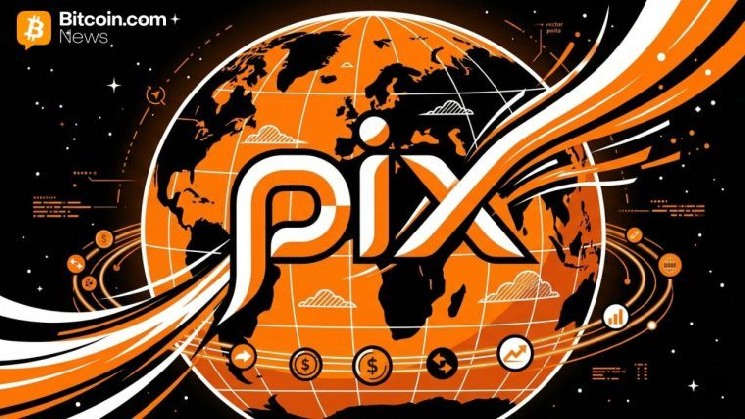
In a move that could fundamentally reshape how money moves across borders, Brazil’s Central Bank has announced ambitious plans to expand Pix, the country’s wildly successful instant payment system, into international markets. What started as a domestic initiative in November 2020 has grown into a phenomenon that serves over 175 million users and has processed an astounding 200 billion transactions. Now, Brazilian financial authorities are setting their sights beyond their borders, aiming to connect this revolutionary payment network with other countries around the world. This expansion isn’t just a technical upgrade—it represents a potential paradigm shift in global finance that has already caught the attention of major international players, including the United States government, which has expressed concerns about how Pix might disrupt the traditional payment ecosystem dominated by American financial giants.
Understanding Pix: Brazil’s Financial Success Story
To appreciate the significance of Pix’s international expansion, it’s essential to understand what makes this payment system so remarkable. Pix isn’t just another payment app—it’s a comprehensive instant payment network created and managed by Brazil’s Central Bank that has fundamentally transformed how Brazilians handle money. Unlike traditional banking transfers that could take hours or even days, Pix transactions happen instantly, 24 hours a day, seven days a week, including holidays. What’s more revolutionary is that these transactions come with zero fees for individual users, making it accessible to everyone from wealthy business owners to everyday workers. This combination of speed, convenience, and cost-effectiveness has led to near-universal adoption among Brazilian adults, making it arguably one of the most successful payment system launches in modern financial history. The system works seamlessly across different banks and financial institutions, eliminating the silos that traditionally made money transfers complicated and expensive. Whether you’re splitting a restaurant bill with friends, paying a street vendor, or sending money to family members in another state, Pix has become the go-to solution for Brazilians of all economic backgrounds.
The International Expansion Plan: Connecting the World Through Instant Payments
The Central Bank’s vision for “International Pix” represents an ambitious leap from domestic success to global influence. While Pix is already available in limited capacity in countries like Argentina, the United States, and Portugal, these implementations have been somewhat fragmented and unofficial. The new initiative aims to create a standardized, permanent framework that would interconnect national instant payment systems across different countries, allowing individuals and businesses to complete cross-border payments and remittances with the same ease they currently enjoy domestically. Imagine being able to send money from Brazil to Colombia, Argentina, or even further afield with the same instant finality and minimal cost that Pix users enjoy today—that’s the vision driving this expansion. This approach would fundamentally change how international remittances work, an industry that currently generates billions in fees for traditional financial intermediaries. For the millions of people who regularly send money across borders to support family members or conduct business, this could mean substantial savings and dramatically improved convenience. The Central Bank’s plan isn’t just about extending Brazil’s technological reach; it’s about creating a new model for international financial cooperation that prioritizes efficiency and accessibility over the profit margins of established payment networks.
The American Concern: Disrupting Financial Giants and Dollar Dominance
The international expansion of Pix hasn’t gone unnoticed in Washington, and the reaction has been far from welcoming. The Office of the United States Trade Representative (USTR) recently released a report that essentially frames Pix as an unfair competitive threat to private payment companies, particularly American giants like Visa and Mastercard. The USTR’s concern centers on the fact that Pix offers instant settlement with zero fees, a combination that traditional payment networks simply cannot match while maintaining their profit-driven business models. These companies have built massive global empires by charging fees on transactions, and Pix’s government-backed, fee-free model threatens to undermine that entire structure. However, the American concerns likely run deeper than just protecting corporate interests. An internationalized Pix could set a precedent for other countries to develop their own settlement systems independent of U.S.-controlled financial infrastructure. This has implications for American economic influence worldwide, particularly the dollar’s role as the dominant currency for international transactions. When countries can settle payments directly through interconnected national systems like Pix, it reduces reliance on dollar-denominated transactions and the SWIFT network that has long been a tool of American foreign policy. The United States has historically used its control over international financial systems to enforce sanctions and exert diplomatic pressure, so the emergence of alternative systems represents not just an economic challenge but a geopolitical one as well.
Brazilian Political Support: Defending Pix as National Pride
Despite—or perhaps because of—the international criticism, Pix has become a rallying point in Brazilian politics, with leaders across the spectrum defending the system as a symbol of Brazilian innovation and sovereignty. President Luiz Inácio Lula da Silva, commonly known as Lula, has made the defense of Pix a centerpiece of his campaign messaging as he seeks re-election. His stance is clear and uncompromising: Pix belongs to Brazil and the Brazilian people, and no amount of external pressure will force changes to a system that provides such valuable service to citizens. This political positioning resonates deeply with Brazilians who have experienced firsthand how Pix has democratized access to financial services and reduced the costs associated with everyday transactions. For a country that has long struggled with economic inequality and financial exclusion, Pix represents a rare success story of government innovation that directly benefits ordinary people rather than just enriching financial institutions. Lula’s defense of Pix taps into broader themes of national sovereignty and resistance to foreign economic pressure, positioning Brazil as a country willing to chart its own course in financial innovation regardless of what traditional powers prefer. This political backing provides crucial support for the Central Bank’s internationalization plans, signaling that Brazil won’t back down from its ambitious vision despite facing criticism from the United States and concerns from established financial interests.
Regional Enthusiasm: Colombia and Beyond Want In
Brazil’s neighbors are watching the Pix phenomenon with great interest, and some are eager to join the revolution. Colombian President Gustavo Petro has been particularly vocal in his support for Pix’s internationalization, explicitly proposing that Colombia should be the next country to adopt the system. Petro’s enthusiasm goes beyond simple financial efficiency; his comments reveal a broader political dimension to the adoption of alternative payment systems. In his public statement requesting that Brazil extend Pix to Colombia, Petro also criticized the Office of Foreign Assets Control (OFAC), the U.S. Treasury department that administers economic sanctions, calling its list “no longer useful.” This suggests that for Petro and potentially other Latin American leaders, adopting systems like Pix represents not just a technical upgrade but an assertion of independence from U.S.-dominated financial infrastructure and the political leverage it provides. The appeal of Pix for countries like Colombia is multifaceted: it promises reduced costs for remittances (a crucial source of income for many Latin American families), increased financial inclusion for populations traditionally underserved by banking systems, and reduced dependence on foreign payment networks that charge substantial fees. If Colombia and other countries successfully integrate with an international Pix network, it could create a powerful regional payment bloc that fundamentally changes the financial landscape of Latin America. This regional cooperation model offers an alternative to the current system where international payments flow through U.S. and European financial institutions, with all the fees and political complications that entails.
Conclusion: The Future of International Payments Hangs in the Balance
The internationalization of Pix represents far more than a technical evolution of a payment system—it’s potentially a watershed moment in the global financial order. What Brazil has created is a proof of concept that government-operated, fee-free instant payment systems can achieve massive scale and universal adoption when designed with users rather than corporate profits as the primary consideration. As this model expands internationally, it challenges fundamental assumptions about how cross-border payments must work and who should control and profit from them. The stakes are enormous: for developing countries, it offers a path toward financial sovereignty and reduced transaction costs that could free up billions of dollars currently extracted by international payment networks. For established financial powers, particularly the United States, it represents a threat to both corporate interests and the geopolitical leverage that comes from controlling key financial infrastructure. The coming years will reveal whether Brazil’s vision of interconnected national payment systems can overcome the considerable political and economic obstacles in its path. What’s already clear is that Pix has demonstrated that alternatives to the traditional payment infrastructure are not just possible but can be superior in terms of cost, speed, and accessibility. Whether the world moves toward this new model or the established powers successfully contain and limit its expansion will have profound implications for global finance, international commerce, and the economic relationships between nations for decades to come.