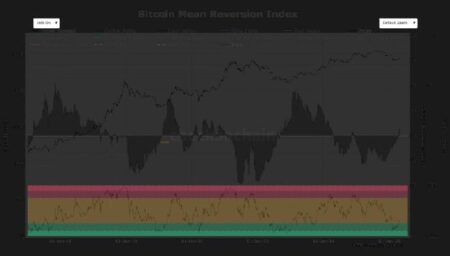




Bitcoin Sentiment Hits Four-Year Low: Could This Signal a Market Bottom?
Understanding the Current Market Pessimism
The cryptocurrency market has been experiencing significant turbulence recently, and Bitcoin, the flagship digital asset, hasn’t been immune to these challenges. As Bitcoin’s price has declined, something perhaps even more telling has happened beneath the surface: investor sentiment has plummeted to levels not seen since 2021. This dramatic shift in how people feel about Bitcoin isn’t just about temporary price movements—it represents a fundamental change in market psychology that could have important implications for where we’re headed next.
Matrixport, a well-respected cryptocurrency analytics firm, recently published findings that paint a stark picture of current market conditions. Their research shows that the overall mood among Bitcoin investors has soured considerably, with pessimism spreading throughout the market like a dark cloud. What makes this particularly noteworthy is that we haven’t seen sentiment this negative in four years, dating back to some of the darkest days of previous market cycles. When experienced market watchers see sentiment drop to such extreme levels, they pay attention—because history has shown that these moments of maximum pessimism often coincide with significant market bottoms. It’s the classic contrarian indicator: when everyone feels hopeless about an asset, that’s often when the best buying opportunities present themselves.
The Fear and Greed Index Tells a Story
To understand what’s really happening in the Bitcoin market, Matrixport relies on its proprietary Fear and Greed Index, a sophisticated tool designed to measure the emotional temperature of cryptocurrency investors. This isn’t just simple guesswork or gut feelings—it’s a data-driven approach that quantifies whether investors are being driven by fear or greed at any given moment. Right now, the index is flashing signals that suggest fear is firmly in control, with the market reaching what technical analysts call “oversold” conditions.
What does oversold actually mean in practical terms? Essentially, it suggests that sellers have been so aggressive in dumping their Bitcoin holdings that prices have fallen beyond what fundamentals might justify. It’s like a rubber band stretched too far in one direction—eventually, it has to snap back. Matrixport’s analysis indicates that sellers are beginning to show signs of exhaustion, having pushed prices down relentlessly for an extended period. However, and this is crucial, the firm stops short of declaring that we’ve definitively reached the absolute bottom. Markets rarely make it that easy to call turning points with precision.
The specific technical signal that Matrixport is watching involves the 21-day moving average of their sentiment indicator. In plain English, they’re tracking the average sentiment over the past three weeks and looking for a specific pattern. When this moving average drops below zero—indicating sustained negative sentiment—and then begins to curve upward again, it historically suggests that the worst of the selling pressure has passed. According to their latest data, we’re witnessing exactly this scenario unfolding right now, which adds credibility to the idea that market conditions might be stabilizing.
Why Negative Sentiment Can Actually Be Positive
There’s a famous investment saying attributed to Baron Rothschild: “Buy when there’s blood in the streets.” While dramatic, this wisdom captures an important market truth—the best investment opportunities often appear when things look their bleakest. When sentiment reaches extremely negative levels, as it has now with Bitcoin, it can actually signal that most of the bad news has already been priced in. Everyone who was going to panic and sell has likely already done so, leaving primarily committed long-term holders and bargain hunters.
However, Matrixport and other analysts are careful to include an important caveat in their analysis: just because sentiment is extremely negative doesn’t mean prices can’t go lower in the near term. Markets can remain irrational longer than many investors expect, and oversold conditions can become even more oversold before a reversal occurs. This is the tricky part about trying to catch a falling knife, as traders say. The fact that sentiment is terrible and the market appears oversold doesn’t automatically mean tomorrow will bring better prices—there could be further pain ahead before any meaningful recovery takes hold.
What makes the current situation particularly interesting is the historical pattern that analysts have identified between sentiment extremes and Bitcoin price movements. Time and time again throughout Bitcoin’s relatively short history, periods of maximum fear and negativity have preceded significant rallies. The challenge, of course, is that you never know for certain that you’re at maximum fear until after the fact, when prices have already started recovering. It requires patience and conviction to invest when everything feels hopeless, which is precisely why most people struggle to do it successfully.
The Relationship Between Sentiment and Price Action
Matrixport’s research highlights something that experienced cryptocurrency traders have long understood: there’s a cyclical relationship between how people feel about Bitcoin and where its price goes. These two factors feed into each other in a continuous loop. When prices are rising, sentiment improves, which brings in more buyers, which pushes prices higher, which further improves sentiment—and the cycle continues upward. Conversely, when prices fall, sentiment sours, leading more people to sell, which pushes prices down further, creating even more negative sentiment in a vicious downward spiral.
The key insight from the current data is that we may be approaching an inflection point in this cycle. After an extended period of declining prices and deteriorating sentiment, the relationship between these factors suggests we’re nearing a potential reversal. This doesn’t mean a reversal is guaranteed or imminent, but rather that the conditions are forming where a change in direction becomes increasingly possible. It’s like watching storm clouds gather—you know rain is likely coming, but you can’t predict the exact moment the first drops will fall.
Understanding this cyclical nature helps explain why so many seasoned investors pay close attention to sentiment indicators alongside traditional price charts and technical analysis. Sentiment provides context that pure price data cannot. Two identical price levels can mean very different things depending on whether you’re reaching that price on the way up with optimistic sentiment or on the way down with pessimistic sentiment. Right now, with Bitcoin at current levels and sentiment at four-year lows, the context suggests we’re in the pessimistic phase of the cycle—which historically has been a better time to accumulate than to panic sell.
What This Means for Different Types of Investors
For long-term Bitcoin believers who see cryptocurrency as a transformative technology rather than just a speculative asset, current conditions might actually be viewed as opportunity. These investors tend to welcome periods of negative sentiment because it allows them to accumulate more Bitcoin at lower prices. They’re thinking in terms of years or decades rather than weeks or months, so short-term price fluctuations and sentiment swings are less concerning. If you believe Bitcoin will eventually reach significantly higher values, buying when everyone else is fearful makes logical sense.
However, for traders and those with shorter time horizons, the situation requires more caution. Even if the current sentiment levels do signal that a bottom is forming, the timing remains uncertain. Prices could continue falling for days, weeks, or even months before any sustained recovery begins. Traders need to manage their risk carefully, perhaps waiting for more concrete confirmation that a trend reversal is underway before committing significant capital. The difference between catching a falling knife and making a successful bottom-fishing trade often comes down to patience and proper risk management.
For those completely new to cryptocurrency or sitting on the sidelines, the current environment presents both opportunity and danger. On one hand, extreme negative sentiment and four-year low readings suggest that much of the fear and bad news may already be reflected in current prices. On the other hand, there’s no guarantee that we’ve seen the worst, and catching a falling market can be psychologically difficult for inexperienced investors. The standard advice applies with even greater force in these conditions: never invest more than you can afford to lose, and if you’re going to enter the market during uncertain times like these, consider dollar-cost averaging rather than trying to time a perfect entry point.
Looking Forward: Important Considerations and Disclaimers
As we navigate these uncertain market conditions, it’s crucial to maintain perspective and remember several important principles. First, while sentiment indicators and technical analysis can provide valuable insights, they’re not crystal balls. No indicator, no matter how sophisticated or historically accurate, can predict the future with certainty. Markets are influenced by countless variables—regulatory changes, macroeconomic conditions, technological developments, and even random events that nobody can foresee.
Second, the disclaimer at the end of the Matrixport report deserves emphasis: this is not investment advice. Analysis and commentary about market conditions, sentiment, and potential turning points are interesting and potentially useful for informing decisions, but they shouldn’t be blindly followed as instructions for what to do with your money. Every individual has different financial circumstances, risk tolerance, investment goals, and time horizons. What makes sense for one person might be completely inappropriate for another.
The cryptocurrency market has always been characterized by extreme volatility and dramatic sentiment swings. Bitcoin has “died” hundreds of times according to critics, yet it has always recovered and eventually reached new heights. Whether this pattern will continue indefinitely is unknown, but the historical precedent provides some context for current conditions. Extreme negative sentiment has appeared many times before in Bitcoin’s history, and each time, those who maintained conviction or took advantage of the pessimism were eventually rewarded. Whether this time will follow the same pattern remains to be seen, but the signals suggest we may be setting up for another chapter in Bitcoin’s ongoing story of boom, bust, and recovery. The coming weeks and months will reveal whether current sentiment levels truly do mark a turning point, or whether more patience will be required before any meaningful recovery takes hold.