



Latino Voters Take Center Stage as GOP Fights to Hold Senate Control in 2026 Midterms
Conservative Groups Rally Behind Republican Candidates in Crucial Swing States
As the 2026 midterm elections heat up, the battle for Latino voters has emerged as a defining factor that could determine which party controls the Senate. With Republicans showing signs of losing ground among Latino communities after making significant gains in 2024, conservative grassroots organizations are stepping up their efforts to shore up support for GOP Senate candidates in pivotal races. The LIBRE Initiative Action, a prominent conservative-leaning Latino political organization, has announced its endorsement of Republican Senator Jon Husted in Ohio and former Republican National Committee Chair Michael Whatley in North Carolina’s Senate race. These endorsements signal the critical importance both parties are placing on Latino voters, who represent one of the fastest-growing demographic groups in America and could very well decide whether Republicans maintain their Senate majority or Democrats manage to flip crucial seats. The stakes couldn’t be higher, with Democrats viewing North Carolina as one of their best opportunities to capture a Republican-held seat and Republicans desperate to hold the line in states where they’ve traditionally been strong. In Ohio particularly, Democrats are hoping to reclaim a seat they lost in 2024, looking to send former Senator Sherrod Brown back to Washington after years of Republican dominance in what was once considered a reliable swing state.
Economic Concerns Drive Latino Voter Engagement Strategy
According to Daniel Garza, senior adviser to the LIBRE Initiative Action, the organization’s strategy centers squarely on economic issues that resonate most deeply with Latino communities across these battleground states. “In every poll that we’ve seen and everywhere we go, the economy continues to be number one for the voting Latino citizen,” Garza explained in an interview ahead of the endorsement announcement. The organization plans to emphasize bread-and-butter concerns that affect Latino families daily—jobs, inflation, utility costs, and the overall affordability of living. Garza argued that Latino voters don’t want elected officials who will increase the tax burden, impose additional employee mandates, or add regulations on energy production and healthcare that ultimately drive up costs for families already struggling with high prices. The LIBRE Initiative Action’s approach involves voter education, community engagement, and grassroots outreach, with particular emphasis on one-on-one conversations that Garza says have proven especially effective in reaching and persuading Latino voters in past elections. The organization recognizes that both North Carolina and Ohio have rapidly growing Latino populations that could prove decisive in competitive races where margins of victory are often razor-thin. Garza emphasized the potential impact of Latino voters not just in these two states but across the Midwest and South: “I really feel that the wild card is going to be the Latino voters in states like Michigan, Ohio and North Carolina, and to a certain extent in Georgia. They’re going to play hard and we are going to make sure we do everything to mobilize them.”
Warning Signs for Republicans: Latino Support Shows Signs of Erosion
While Republicans are working hard to retain the gains they made with Latino voters in recent years, there are troubling signs for the GOP that suggest the tide may be turning back toward Democrats. Donald Trump won an impressive 48% of Latino voters nationwide in the 2024 presidential election, representing a 12-point increase from 2020, according to verified voter data from the Pew Research Center. This shift represented a significant breakthrough for Republicans among a demographic group that had historically leaned heavily Democratic. However, recent polling data shows most Latinos now disapprove of Trump’s handling of both the economy and immigration—two issues of paramount importance to these communities. Since November 2024, elections across the country have revealed a pattern of high Latino turnout that has increasingly benefited Democratic candidates, suggesting the Republican gains of 2024 may have been temporary rather than representing a lasting realignment. In Texas, which held the first major primary contest of the 2026 midterm cycle, new voters participating in Democratic primaries were disproportionately Latino, and their turnout skewed heavily Democratic. The 2025 gubernatorial race in New Jersey provided even more evidence of this trend, with every county voting more Democratic than in the 2024 presidential election. Particularly telling was the performance in the ten counties where Latinos make up at least 20% of the population—Democrats swept all of them, actually expanding on their 2024 margins and even flipping counties that Trump had won just months earlier. A similar pattern emerged in Virginia’s gubernatorial race, where Hispanic voters swung decisively toward Democratic Governor Abigail Spanberger, who captured 67% of their vote statewide. In Manassas and Manassas Park, areas that are more than 40% Latino and where Trump had made large gains in 2024, voters turned out strongly for Spanberger in 2025, signaling a rapid reversal of Republican momentum.
North Carolina: A Battleground Where Every Vote Counts
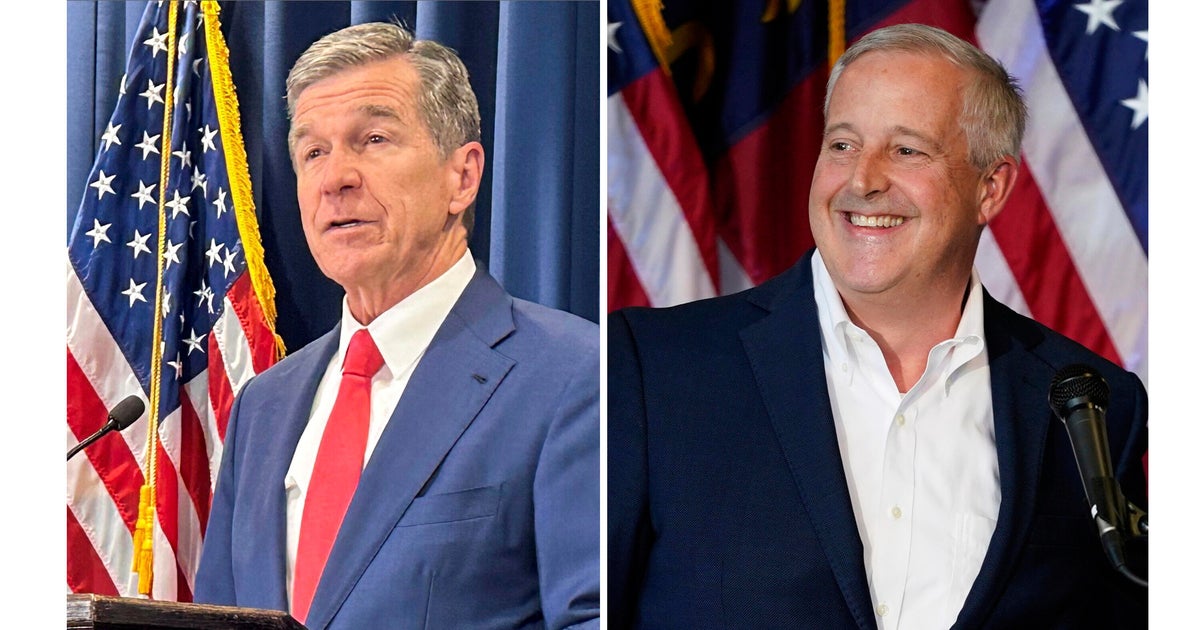
The North Carolina Senate race represents one of the most competitive and closely watched contests of the 2026 cycle, pitting Trump-endorsed former RNC Chair Michael Whatley against former Governor Roy Cooper in a state with a rapidly growing Latino population. North Carolina is home to more than 1.1 million Latino residents as of the 2020 Census, representing a 40% increase from just a decade earlier, according to University of North Carolina figures. These voters are most heavily concentrated in Mecklenburg County, which includes Charlotte, but their presence is felt throughout the state. Making up more than 10% of North Carolina’s population, Latino voters could prove decisive in what is expected to be a razor-thin race. Whatley, who won the Republican primary with Trump’s backing, is emphasizing economic themes in his campaign, telling CBS News that North Carolinians “want better jobs, they want bigger paychecks, they want lower costs and they want their communities and their kids to be safe.” He’s banking on Trump’s track record in the state—the former president carried North Carolina in three different elections—and his own experience working on those campaigns to deliver victory. Cooper, by contrast, brings extensive statewide electoral experience, having won election to statewide office six times as both governor and attorney general. He’s positioning himself as a problem-solver focused on practical issues like lowering costs and making life more affordable for working families, while painting Whatley as “an out-of-touch D.C. insider” and “big oil lobbyist who is only looking out for himself and his well-connected friends.” The contrast between a Washington operative and a homegrown governor with deep roots in the state will likely define this race.
Ohio: Can Democrats Reclaim Lost Ground in a Reddening State?
Ohio presents a different challenge for both parties, with Republicans defending a seat they’ve held but facing a potentially formidable Democratic challenger in former Senator Sherrod Brown. The Buckeye State is home to nearly 600,000 Latinos, making up around 5% of the state’s population—a smaller percentage than North Carolina, but still a significant voting bloc that has almost tripled over the last twenty-five years. Approximately 235,000 Ohio Latinos are registered to vote, according to LIBRE estimates, and they’re spread throughout major cities including Cincinnati and Cleveland. Senator Jon Husted is running to defend his seat after being appointed by Ohio Governor Mike DeWine in 2025 to replace JD Vance, who resigned to become vice president. He’s widely expected to face Brown, who served three terms in the Senate before losing in 2024 to Senator Bernie Moreno, who became the first Latino to represent Ohio in the Senate. Ohio has increasingly trended Republican in recent years, with Trump winning the state by 11 percentage points in 2024, and the state hasn’t elected a Democratic governor since 2006. However, Democrats view this as a potential pickup opportunity, particularly given Brown’s strong record and name recognition throughout the state. With Republicans holding only a slim majority in the Senate, the battle for this seat will be intensely competitive, and both left- and right-leaning organizations are working overtime to mobilize as many voters as they possibly can.
The Broader Battle: Competing Visions for Latino America
The fight for Latino voters in these Senate races reflects broader competing visions for how the community should be mobilized and what issues should take priority. On the Republican side, groups like the LIBRE Initiative Action are emphasizing economic opportunity, lower taxes, less regulation, and job creation as the path to prosperity for Latino families. They argue that Democratic policies increase costs, create bureaucratic obstacles for small businesses, and ultimately hurt the very communities they claim to help. On the Democratic side, organizations like Voto Latino are working to mobilize Latino voters by criticizing Trump’s economic policies and highlighting what they see as misplaced priorities by the administration and congressional Republicans. After Trump described rising gas prices amid conflict with Iran as “a very small price to pay,” Voto Latino issued a sharp rebuke, stating: “He is proving once again how out of touch he is with the economic reality people have faced over the past year under his failed economic policies. Families are asking a simple question: why are congressional Republicans moving faster to fund foreign conflicts than to address the cost-of-living crisis right here at home?” The outcome of these Senate races will serve as a temperature check not just for Trump’s policies but for which party’s message resonates more strongly with Latino voters—an increasingly influential constituency whose support neither party can afford to take for granted as America’s demographics continue to shift.