


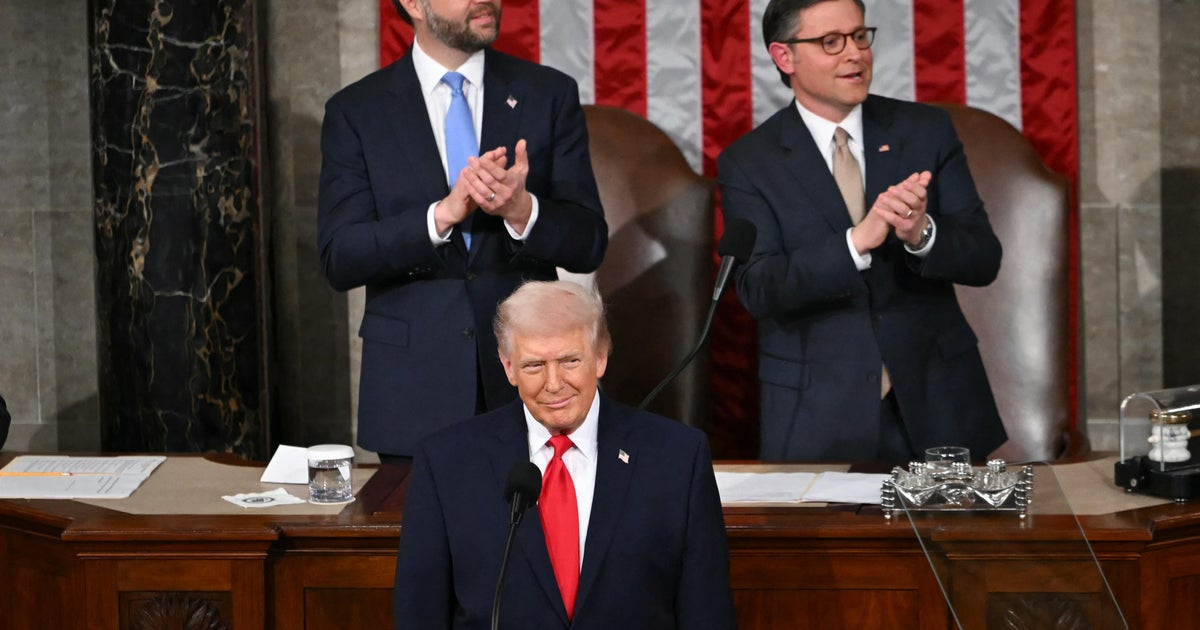

Fact-Checking President Trump’s 2026 State of the Union Address
Introduction: A Night of Bold Claims and Political Theater
President Trump delivered his 2026 State of the Union address on Tuesday night, making sweeping declarations about his administration’s accomplishments on everything from crime reduction to economic performance and foreign policy achievements. CBS News conducted a comprehensive fact-check of the president’s major claims, as well as examining statements made by Virginia Governor Abigail Spanberger in her Democratic response. The results paint a complex picture where some presidential claims hold water, others stretch the truth considerably, and several prove demonstrably false. Understanding the reality behind these political statements matters because they shape public perception and policy debates on issues affecting millions of Americans—from grocery prices to immigration enforcement to healthcare access.
The fact-checking effort examined claims across multiple policy areas, revealing a pattern where President Trump often took credit for positive trends that began before his administration, exaggerated figures beyond what evidence supports, or presented selective statistics that told only part of the story. At the same time, some of his assertions proved accurate, particularly regarding crime statistics. This thorough analysis helps citizens distinguish between legitimate achievements and political spin, providing the context necessary for informed civic engagement during a politically charged period.
Crime and Immigration: Mixed Results on Border Security Claims
President Trump’s assertion that murder rates experienced their largest decline in recorded history proved accurate according to preliminary data. Independent researchers at the Council on Criminal Justice found a strong possibility that the 2025 homicide rate dropped to approximately 4 per 100,000 residents—potentially the lowest since 1900. However, researchers noted that this decline began in 2022, predating Trump’s second term, and the causes remain unclear, possibly involving changes in criminal justice policies, technology use, and broader social and economic trends rather than any single administration’s actions.
On immigration, Trump’s claim that “zero illegal aliens have been admitted to the United States” in the past nine months proved only partially true and required significant clarification. While Customs and Border Protection reported zero releases of migrants by Border Patrol along the southern border during this period, this statistic doesn’t tell the complete story. Some migrants initially arrested by Border Patrol and transferred to Immigration and Customs Enforcement custody could be released by that agency, though the administration has restricted bond eligibility. Additionally, Border Patrol numbers don’t account for migrants who enter surreptitiously without being caught—so-called “got-aways”—making it unclear how many people have successfully crossed the border undetected.
The data does show that illegal border crossings have plummeted to the lowest level since 1970 in fiscal year 2025, representing a significant decrease. However, thousands of migrants continue crossing illegally each month, with approximately 6,000 apprehensions by Border Patrol in January alone. This demonstrates that while enforcement has intensified and deterrence may have increased, the claim of zero illegal entries oversimplifies a complex situation and ignores categories of migrants not captured in the specific statistic cited.
Economic Claims: Job Numbers, Investment Figures, and Consumer Prices
Trump’s assertion that “more Americans are working today than at any time in the history of our country” is technically accurate but highly misleading. Preliminary Bureau of Labor Statistics data shows roughly 158.6 million people employed as of January 2026, which exceeds all previous records. However, this figure naturally increases as population grows—about 157 million were employed when President Biden left office just a year earlier. Economists don’t rely on raw employment numbers for meaningful comparisons; instead, they examine the labor force participation rate, which has remained essentially flat at 62.5% in January 2026, identical to December 2024 under Biden. Meanwhile, unemployment actually ticked upward under Trump from 4.1% to 4.3%, suggesting labor market conditions haven’t substantially improved and may have slightly weakened.
The president’s claim of securing “$18 trillion in new investment” proved false and unsupported by evidence. While foreign direct investment during Biden’s four years did total less than $1 trillion, CBS News found no evidence that commitments or new investments approach the $18 trillion figure Trump cited. That amount would represent nearly 60% of total U.S. GDP—an extraordinary and implausible figure. Even the administration’s own list of major investment commitments totaled only $9.6 trillion as of November, and that figure appears exaggerated and includes investments announced during the Biden presidency. Federal data shows corporate investment levels remain similar to last year, with U.S. companies on track to invest over $5 trillion in 2025—substantial but nowhere near the claimed figures.
Regarding consumer prices, Trump’s claim that gas prices are “now below $2.30 a gallon in most states” proved false. While prices have dropped from the June 2022 national peak of $5.02 to $2.95 according to AAA data, only Oklahoma had average prices around $2.30 as of late February. According to GasBuddy, which tracks approximately 150,000 stations nationwide, only the cheapest 10% of stations had gas priced at $2.30, and just eight stations nationwide sold gas for under $2. Trump’s specific mention of $1.85 gas in Iowa also proved inaccurate—AAA reported Iowa’s average at $2.50, not $1.85. On egg prices, however, Trump was accurate: Bureau of Labor Statistics data shows retail egg prices down about 59% from their March 2025 peak of $6.23 per dozen. Yet his broader claim that prices for chicken, butter, fruit, hotels, automobiles, and rent are “lower today than when I took office by a lot” was misleading, as data shows relatively flat changes for these items, and overall grocery costs increased 2.4% from the previous year.
Tariffs, Taxes, and Trade: Controversial Economic Policies
Trump’s repeated assertion that tariffs are “paid for by foreign countries” and will “take a great financial burden off the people that I love” is misleading and contradicts substantial economic research. The Federal Reserve Bank of New York published analysis finding that over 90% of Trump’s 2025 tariffs were passed onto U.S. consumers and businesses as higher costs. From January through August of last year, U.S. importers bore 94% of tariff costs, decreasing slightly to 86% by November. Even a Harvard Business School study that the president cited found U.S. consumers paid roughly 43% of tariff-induced border costs after seven months, with the remainder absorbed mostly by U.S. firms—not foreign countries as Trump claims.
The president’s suggestion that tariff revenue could offset or replace income taxes faces mathematical impossibility. According to the Peterson Institute, even if a president imposed 50% tariffs on all imports, the income generated would represent less than 40% of income tax revenue. Historians studying U.S. trade note that tariffs haven’t been viewed as a primary revenue source since income taxes were introduced in 1913. Income taxes generate over $2 trillion annually according to the Treasury Department, while 2024 tariff collections represented just 1.7% of the more than $4.9 trillion in total federal revenue. The Congressional Research Service confirms tariffs haven’t accounted for much more than 2% of federal revenue in the last 70 years, making Trump’s vision of tariff-funded government a historically unsupported fantasy.
Governor Spanberger’s counter-claim in the Democratic response that Trump’s tariff policies resulted in $1,700 in higher costs for American families reflects estimates from Democratic lawmakers on the Joint Economic Committee, who calculated American consumers paid more than $231 billion in tariff costs between February 2025 and January 2026—averaging roughly $1,745 per family. However, this figure remains inconclusive as no settled methodology exists for quantifying tariff impacts on consumers. The nonpartisan Tax Foundation offered a different estimate, calculating that Trump tariffs amounted to an average tax increase of $1,000 per household in 2025. While the exact figure remains debatable, the direction is clear: American families, not foreign countries, bear substantial costs from tariff policies.
Healthcare, Fraud, and Voting: Exaggerations and Rare Phenomena
Trump’s claim about prescription drug prices under his “Most Favored Nation agreements” proved misleading. It’s true that U.S. prescription drug prices significantly exceed other countries—RAND Organization research showed U.S. prices averaged 2.8 times higher than in 33 other nations through 2022, with brand-name drugs averaging 4.22 times as much. Trump did sign an executive order threatening regulatory action against drug companies failing to lower costs for Medicare or Medicaid recipients. However, health policy experts note scant public details laying out the full scope of these MFN agreements, including which drugs are included and how prices are determined. Most importantly, it’s unclear how these deals would extend to all Americans as Trump claimed, making his assertion that Americans will now pay “the lowest price anywhere in the world for drugs” unsupported speculation rather than accomplished fact.
Regarding the Minnesota fraud case, Trump’s claim that “members of the Somali community have pillaged an estimated $19 billion from the American taxpayer” proved misleading. The $19 billion figure refers to total federal funds supporting over a dozen state-run programs in Minnesota since 2018—not the amount actually lost to fraud. A top prosecutor in December 2025 suggested total fraud could be $9 billion or more, but investigations continue. While more than 90% of people charged in major fraud cases announced before December 2025 were of Somali descent according to the U.S. Attorney’s Office, this represents just 82 individuals—a tiny fraction of Minnesota’s Somali community of over 107,000 people. Prosecutors identified the mastermind behind Feeding Our Future, Minnesota’s biggest fraud scheme, as Aimee Bock, a white woman. Trump’s phrasing suggested collective community guilt for fraud committed by a small number of individuals from that community.
Trump’s claim that the “SAVE AMERICA Act” must be passed because “the cheating is rampant in our elections” due to illegal alien voting proved false. Multiple studies demonstrate that noncitizen voting in federal elections, while illegal, is exceptionally rare. The conservative Heritage Foundation’s database includes only 85 cases involving noncitizen voting allegations over two decades from 2002 to 2023. The nonpartisan Brennan Center for Justice found only 30 suspected noncitizen voting cases among 23.5 million votes cast across 42 jurisdictions in 2016. State audits reinforce this rarity: Georgia found 20 noncitizens among 8.2 million registered voters, while Texas identified 2,724 potential noncitizens among 18.6 million registered voters. Noncitizens who vote risk deportation and prison time, and registration requires attestation under penalty of perjury plus documentation like driver’s license or social security numbers, making fraud difficult and rare despite political rhetoric suggesting otherwise.
Foreign Policy, Social Issues, and Government Operations
Trump’s claim of having “ended 8 wars” in his first ten months proved misleading and overstated his record. While he helped broker ceasefires, several cited conflicts aren’t full-scale wars, and many remain unresolved. The Ethiopia-Egypt dispute over a hydroelectric dam has remained diplomatic rather than military. The Rwanda-Democratic Republic of Congo peace deal announced in June hasn’t stopped violence, with armed groups killing over 140 civilians in eastern Congo in July according to Human Rights Watch. Thailand and Cambodia agreed to a ceasefire after fighting killed at least 35 people, but required a second ceasefire in December, which both sides have since accused each other of violating. The India-Pakistan ceasefire ended their latest flare-up, but experts say calling the long-running Kashmir dispute settled is a significant stretch. Serbia still doesn’t recognize Kosovo’s independence despite economic normalization efforts. Trump deserves credit for diplomatic engagement, but claiming these complex, ongoing conflicts as “ended wars” exaggerates accomplishments.
Trump’s suggestion that states “rip children from their parents’ arms and transition them to a new gender against the parents’ will” proved misleading. No states have laws allowing them to take custody of minors and provide gender transition surgeries without parental input. Most medical care for minors, including gender-affirming care, requires parental consent according to the American Academy of Pediatrics. Thirty-five states don’t force school staff to inform families if their minor child is transgender, which differs substantially from government-forced transitions. Trump referenced the Sage Blair case, where school counselors allegedly didn’t inform her family about sessions where they discussed her gender identity. According to the lawsuit, counselors supported her use of different pronouns but didn’t “rip” her from parents or transition her against their will as Trump claimed. The case remains ongoing in federal court.
Regarding inflation, Trump’s claim that Biden “gave us the worst inflation in the history of our country” proved false. Under Biden, year-over-year inflation peaked at 9.1% in June 2022—the highest monthly rate in about 40 years but not ever. The 1970s and early 1980s saw inflation between 12% and 14%. By Biden’s departure, inflation had eased to about 3%. Trump’s claim of driving “core inflation down to the lowest level in more than five years” at 1.7% in late 2025 used an uncommon metric excluding food and energy, and the source for his 1.7% figure remains unclear—Federal Reserve data showed core inflation at 2.6% in both November and December 2025. Finally, Trump’s claim that “nobody’s getting paid” at the Department of Homeland Security during the partial shutdown proved misleading, as many DHS personnel receive pay from budget authorities beyond annual appropriations, including fee revenue and previously enacted legislation like the $170 billion immigration enforcement allocation Trump himself signed into law.