


Trump Administration Extends Jones Act Waiver to Combat Rising Fuel Costs Amid Iran War
A Strategic Move to Address Energy Market Disruptions
In response to ongoing global energy challenges stemming from the conflict with Iran, President Trump has decided to extend the waiver of the Jones Act for an additional 90 days, according to White House press secretary Taylor Rogers. This decision comes as the administration continues its efforts to keep fuel prices under control while the war enters its second month. The Jones Act, a century-old maritime law, mandates that any goods transported between American ports must be carried exclusively on ships that are built in the United States, fly the American flag, and are operated by U.S. crews. The President first suspended these requirements on March 18, implementing a 60-day waiver designed to provide relief as the conflict disrupted global oil markets. With Iran’s involvement in the war cutting off approximately one-fifth of the world’s oil supply, energy costs have skyrocketed, creating significant economic pressure on American consumers and businesses alike. The extension, which officially takes effect at midnight Eastern Time on May 18, represents the administration’s continued commitment to addressing these unprecedented supply chain challenges through flexible policy responses.
Positive Results Drive Decision to Extend Relief Measures
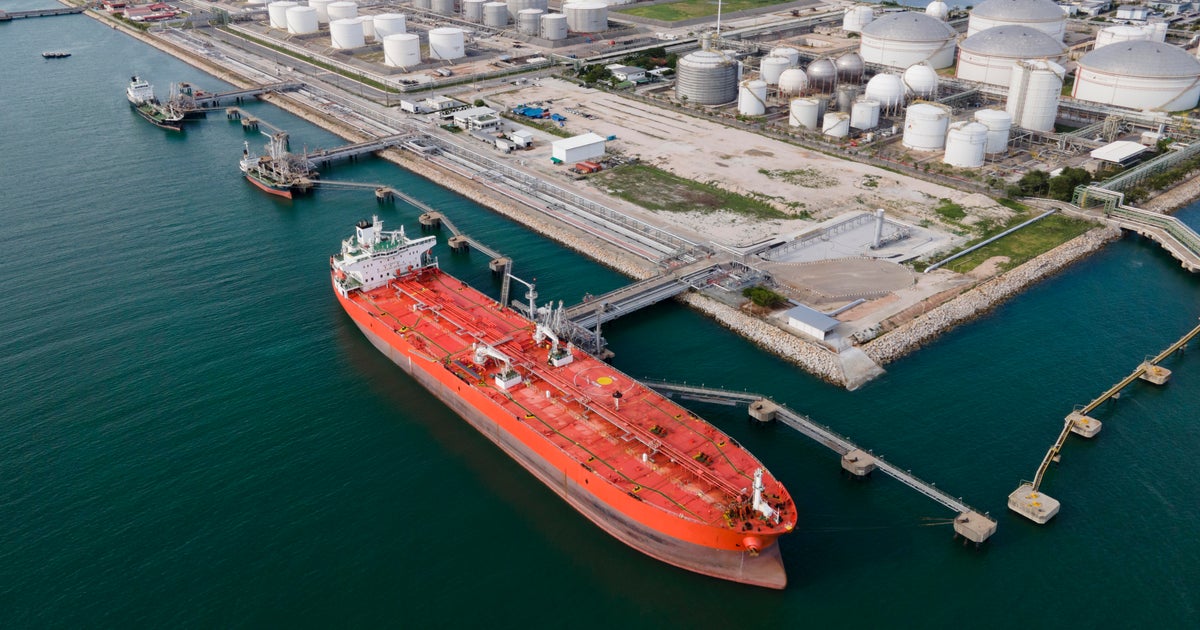
According to the White House, the decision to extend the waiver wasn’t made arbitrarily but was based on concrete evidence of its effectiveness during the initial period. Press Secretary Rogers emphasized that new data collected since the original waiver was implemented revealed significantly improved supply chain performance, with substantially more fuel and other essential goods reaching U.S. ports at faster rates than would have been possible under normal Jones Act restrictions. The administration views this extension as providing crucial certainty and stability not just for the American economy but for global markets as well, which remain volatile due to the ongoing conflict. Rogers further explained that the Trump Administration has implemented multiple strategic actions to address short-term disruptions in energy markets, and this waiver extension serves as a vital component of that broader strategy. The goal is to ensure that critical energy products, industrial materials, and agricultural necessities continue flowing to where they’re needed most. The White House has released impressive statistics demonstrating the waiver’s impact: more than 40 tankers have either already utilized the Jones Act waiver or are scheduled to do so in the coming weeks. This has resulted in a remarkable increase of over 70% in shipping capacity between U.S. ports, enabling more than 9 million barrels of American oil to reach domestic destinations that might otherwise have faced shortages or significantly higher prices.
Expert Support: Addressing an Outdated Law
The waiver and its extension have garnered support from various policy experts who have long argued that the Jones Act, while perhaps well-intentioned when originally enacted, has become outdated and actually contributes to unnecessarily high shipping costs in the modern era. Colin Grabow, who serves as associate director at the Herbert A. Stiefel Center for Trade Policy Studies at the Cato Institute, a libertarian think tank known for its free-market perspectives, provided his analysis to CBS News. Grabow suggested that the administration’s decision to extend the waiver indicates they believe the policy is working effectively and delivering tangible benefits to the country. He explained the fundamental economic logic behind the waiver: by suspending the Jones Act’s restrictions, the number of ships available to transport goods between American ports increases dramatically. This expanded capacity naturally leads to more competitive pricing and improved efficiency. Under normal circumstances, when the Jones Act is fully enforced, the limited number of vessels that meet its strict requirements creates a bottleneck effect, making it substantially more expensive to move goods along American coastlines and between domestic ports. This increased cost ultimately gets passed along to consumers in the form of higher prices for everything from gasoline to groceries.
Industry Pushback: Concerns About Long-Term Consequences
Despite the administration’s positive assessment and support from free-market advocates, the waiver extension has faced significant opposition from domestic maritime industry stakeholders who worry about the long-term implications for American shipbuilding and shipping sectors. The American Offshore Maritime Association issued a strongly worded statement on Friday expressing their concerns and criticisms. Aaron Smith, the organization’s president, argued that the initial waiver has failed to deliver on its promise of reducing gasoline prices for American consumers, pointing out that prices have actually increased in every U.S. market since the waiver was implemented. Smith contended that while fuel prices continue rising, the primary beneficiaries of the waiver have been NATO countries that have refused to support U.S. military operations in the current conflict. This, he suggested, represents a troubling dynamic where America weakens its own maritime industry to benefit foreign interests that aren’t reciprocating with support in times of need. Smith didn’t mince words in his assessment, stating bluntly that the waiver extension “sells out our American maritime industry and the foundation of our Navy to benefit oil traders and foreign shippers.” He emphasized that the current moment, with global tensions running high and supply chain security more important than ever, should be a time when the United States strengthens its maritime capacity rather than undermining it. The domestic shipping industry views the Jones Act not just as protectionist legislation but as essential infrastructure that maintains America’s shipbuilding capabilities and ensures a robust merchant marine that can support military operations when needed.
Part of a Broader Strategy to Manage Energy Crisis
The Jones Act waiver extension doesn’t exist in isolation but rather represents one component of a comprehensive strategy the Trump administration has deployed to manage energy prices amid the severe disruptions caused by the Iran war. The administration has taken several dramatic steps to increase oil supply and moderate prices for American consumers and businesses. In March, President Trump authorized the release of 172 million barrels of oil from the U.S. Strategic Petroleum Reserve, one of the largest such releases in American history. This emergency reserve, maintained in underground salt caverns along the Gulf Coast, exists precisely for situations like this where sudden supply disruptions threaten economic stability. By flooding the market with millions of additional barrels, the administration hoped to offset some of the supply lost due to the conflict. Additionally, in a move that raised eyebrows among some foreign policy observers, the United States temporarily lifted sanctions on the purchase of Russian oil that same month. This controversial decision reflected the administration’s prioritization of immediate energy price relief over longer-term geopolitical considerations, though it sparked debate about whether it sent the wrong message to adversaries. These various measures demonstrate the administration’s willingness to utilize multiple policy levers simultaneously to address what they view as an unprecedented energy emergency.
The Critical Challenge: Reopening the Strait of Hormuz
While the Trump administration’s various interventions have provided some relief and increased domestic oil availability, energy experts consistently emphasize that none of these measures can fully substitute for addressing the core problem: the restricted flow of oil through the Strait of Hormuz. This narrow waterway, located between the Persian Gulf and the Gulf of Oman, serves as one of the world’s most critical energy chokepoints, with roughly one-fifth of global oil supplies normally passing through it. The ongoing conflict has severely disrupted tanker traffic through the Strait, with shipping volumes remaining well below prewar levels despite some attempts to maintain limited operations. Security concerns, insurance costs, and direct threats to vessels have all contributed to the dramatic reduction in traffic. Experts agree that until the Strait of Hormuz can be fully reopened to normal tanker traffic, oil prices will remain elevated regardless of whatever domestic policy adjustments the administration implements. This reality places significant pressure on diplomatic and potentially military efforts to resolve the conflict or at least establish secure shipping corridors. The situation illustrates the fundamental interconnectedness of global energy markets and the limits of purely domestic policy responses when faced with international supply disruptions. As the war stretches into its second month with no clear resolution in sight, the Trump administration continues walking a tightrope between providing short-term economic relief through measures like the Jones Act waiver while managing the longer-term strategic implications of weakening certain domestic industries and the geopolitical complexities of a conflict that shows no signs of ending soon.