



Trump’s Challenge to Birthright Citizenship Returns to the Supreme Court
A Historic Legal Battle Over American Identity
The Supreme Court has once again taken center stage in one of the most contentious debates of our time: whether children born on American soil to undocumented or temporary residents automatically deserve citizenship. This isn’t just a dry legal argument—it strikes at the very heart of what it means to be an American. The case follows President Donald Trump’s executive order issued on day one of his second term, which seeks to end what has long been known as birthright citizenship. This policy has guaranteed that nearly every baby born within U.S. borders becomes an American citizen, regardless of their parents’ immigration status. For many families, this represents hope and opportunity; for others, it’s become a flashpoint in the ongoing immigration debate that has divided the nation for years.
What makes this moment so significant is that birthright citizenship isn’t some recent invention or political compromise—it’s been woven into the fabric of American law for more than a century. The principle itself comes from a Latin legal concept called “jus soli,” which translates to “right of soil.” Essentially, it means that where you’re born matters more than who your parents are. While this might seem like common sense to Americans who’ve grown up with this system, it’s actually fairly unusual on the global stage. Understanding how we got here, and why this matters so much, requires looking back at one of the darkest and most transformative periods in American history.
The Civil War Legacy That Shaped Modern Citizenship
The story of birthright citizenship in America is inseparable from the story of slavery and the Civil War. After the brutal conflict ended, the nation faced a fundamental question: what would happen to the millions of formerly enslaved people? The 14th Amendment to the Constitution, ratified in the aftermath of the war, provided a clear answer. Its opening words are unambiguous: “All persons born or naturalized in the United States and subject to the jurisdiction thereof, are citizens of the United States.” This wasn’t just legal language—it was a promise. The amendment ensured that former slaves and their children would be recognized as full citizens with all the rights that entailed, overturning the infamous Dred Scott decision that had declared Black people could never be citizens.
But the reach of this amendment extended far beyond its immediate post-war purpose. In the late 1800s, a landmark case firmly established that birthright citizenship applied to the children of immigrants as well. Wong Kim Ark was born in San Francisco to Chinese parents who were living in the United States. After traveling abroad, he was shockingly denied reentry into the country of his birth. Wong fought back, taking his case all the way to the Supreme Court. In 1898, the Court ruled decisively in his favor, determining that the 14th Amendment grants citizenship to everyone born on American soil, regardless of their parents’ legal status or national origin. There are only a tiny handful of exceptions today—for instance, children born to foreign diplomats serving in the United States don’t automatically receive citizenship. Otherwise, if you’re born here, you’re an American. That’s been the rule for well over a century, shaping the lives of millions of families and defining part of what makes America unique.
How the Rest of the World Handles Citizenship
When you zoom out and look at the global picture, America’s approach to citizenship is actually quite unusual. Only about three dozen countries around the world guarantee citizenship based simply on where a child is born, and nearly all of these nations are in the Americas—places like Canada, Mexico, Brazil, and Argentina. The vast majority of the world’s countries follow a completely different principle called “jus sanguinis,” or “right of blood.” Under this system, a child’s citizenship depends on their parents’ citizenship, not their birthplace. You could be born in Paris, Tokyo, or London, but if your parents aren’t citizens of France, Japan, or the United Kingdom, you won’t automatically become one either.
Take Europe, for example. None of the 27 member states of the European Union grant automatic, unconditional citizenship to children born on their soil to foreign citizens. The same pattern holds across much of Asia, the Middle East, and Africa. Many countries have developed complex hybrid systems that consider multiple factors—parenthood, residency length, ethnicity, and other criteria—to determine a child’s citizenship status. Australia provides an interesting case study in how these policies can change. Until 1986, Australia practiced birthright citizenship much like the United States. But that year, the country changed course. Children born in Australia after August 1986 could only become citizens if at least one parent was already an Australian citizen or held permanent residency status.
Germany offers an example of movement in the opposite direction. For most of its modern history, German citizenship was tightly tied to German ancestry—you basically needed a German parent to become a German citizen, even if you were born in Germany. But in 2024, the country liberalized its laws significantly. Now, children born in Germany to non-German parents can automatically receive German citizenship if just one parent has been legally living in the country for more than five years with unlimited residency rights. The German government explained that research showed children with immigrant backgrounds had better educational outcomes and life prospects when they received citizenship earlier. This reflects a growing recognition in some countries that inclusive citizenship policies can benefit society as a whole, though this view is far from universal.
The Legal Argument and What Comes Next
So what’s the argument being made by those who support President Trump’s executive order? They’re focusing on five specific words in the 14th Amendment: “subject to the jurisdiction thereof.” These five words have become the center of an intense constitutional debate. Supporters of birthright restrictions argue that this phrase creates an exception—that it means the United States can deny citizenship to children born to women who are in the country illegally or on temporary visas. Their interpretation suggests that people who aren’t legally supposed to be in the country aren’t fully “subject to the jurisdiction” of the United States in the way the amendment requires.
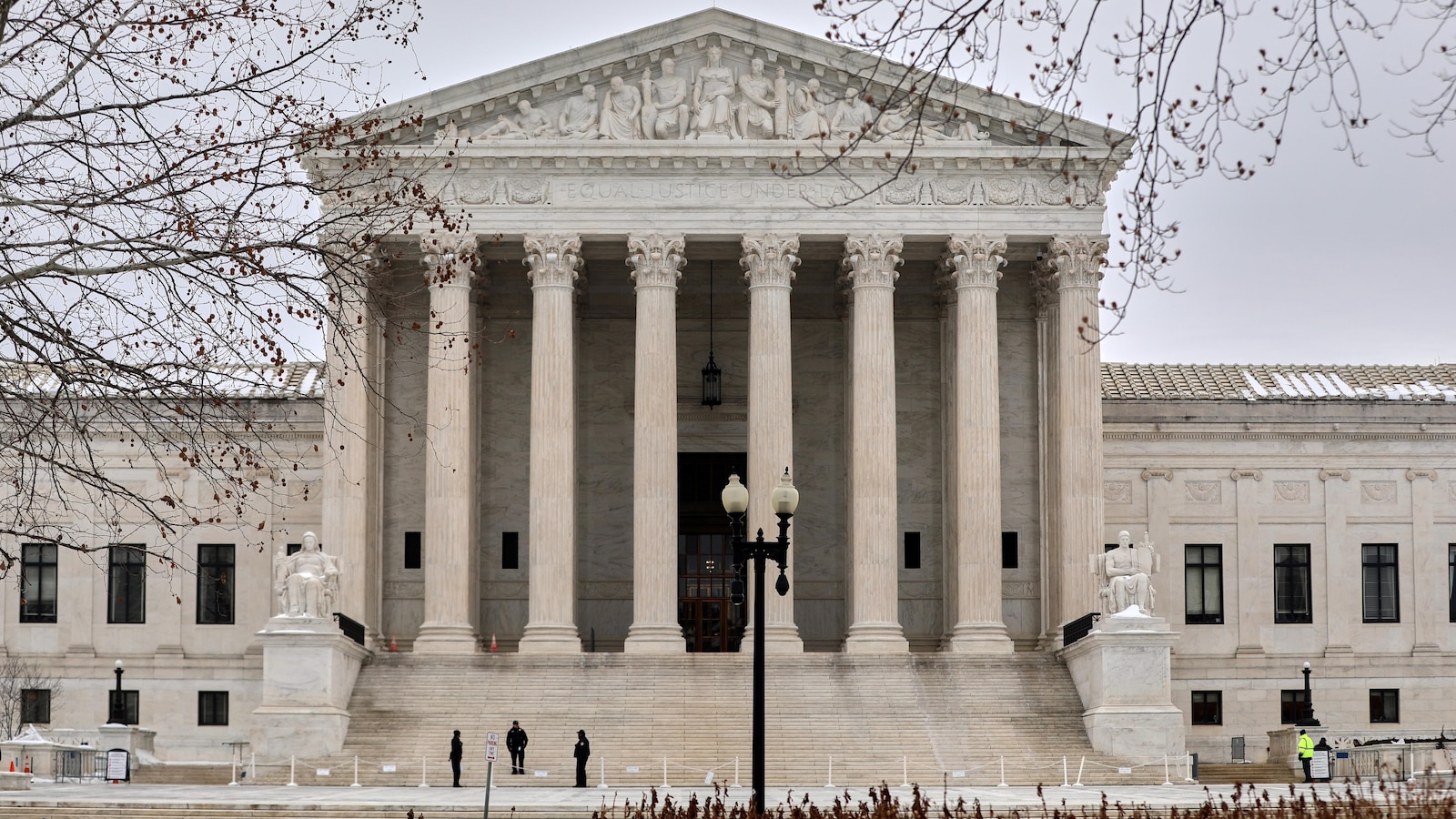
However, this reading has faced significant skepticism from legal experts and judges alike. So far, the courts haven’t been friendly to the administration’s position. The executive order has been repeatedly blocked by lower courts, with judges finding the arguments unconstitutional or contrary to existing federal law. The case that reached the Supreme Court on Wednesday originated in New Hampshire, where a U.S. district judge ruled that the order “likely violates” both the Constitution and federal law. That word “likely” is important in legal terms—it suggests the judge found the government’s position weak enough to warrant immediately stopping the policy while the case proceeds. Multiple other courts across the country have reached similar conclusions, creating a clear pattern of judicial resistance to changing this long-established principle.
The Human Impact Behind the Headlines
While the legal arguments play out in courtrooms, real families hang in the balance. Consider what this policy would mean in practical terms: a child born in a hospital in Houston or New York City might not be considered an American citizen if their mother doesn’t have the right paperwork. These aren’t abstract scenarios—they’re lives disrupted, families thrown into uncertainty, and children whose fundamental identity and future opportunities would be called into question. For generations, birthright citizenship has provided a clear, simple answer to a complicated question. It’s meant that regardless of how someone’s parents came to this country, their children born here start life as Americans with all the rights and responsibilities that entails.
The stakes extend beyond individual families to touch on broader questions about American identity and values. Is America a place where your circumstances at birth determine everything, or a place where new beginnings are possible? Does the “American Dream” include the children of immigrants, or does it have boundaries and restrictions? These aren’t questions with easy answers, and Americans of good faith disagree deeply about them. Some see birthright citizenship as an essential part of America’s character—a reflection of the country’s immigrant history and its promise of opportunity. Others view it as a policy that encourages illegal immigration and needs reform. As this case moves through the courts, it will force not just judges but all Americans to grapple with these fundamental questions about who we are as a nation and what principles should guide us into the future.