

Rebuilding in Harm’s Way: Tennessee Hospital’s Risky New Location Raises Concerns
A Community’s Healthcare Lifeline Faces Another Potential Disaster
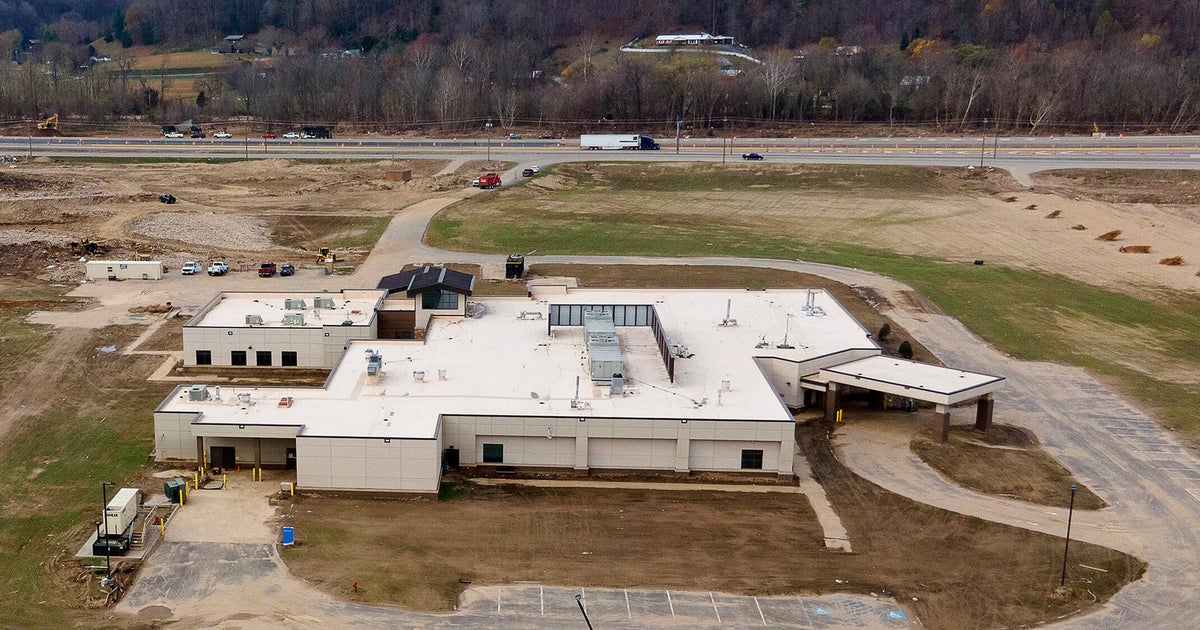
When Hurricane Helene tore through Appalachia in September 2024, the images were haunting: seventy terrified patients and hospital staff huddled on a rooftop, surrounded by raging floodwaters, waiting desperately for helicopter rescue. The 10-bed Unicoi County Hospital in Tennessee had become an island in a deadly torrent, with up to 12 feet of water swallowing the facility that had cost $30 million to build just six years earlier. Now, as Ballad Health moves forward with a $44 million plan to rebuild this critical community resource, troubling questions emerge about whether history is being set up to repeat itself. According to sophisticated flood modeling that goes far beyond outdated government maps, the proposed new location—a field behind a Walmart about seven miles from the destroyed hospital—sits squarely in a flood zone that could see several feet of water in storms far less severe than Helene. For a community that lived through one hospital disaster, the possibility of another is almost too much to bear.
The Numbers Tell a Worrying Story About the New Site
The proposed location for the rebuilt Unicoi County Hospital might look like ordinary farmland, but advanced climate data reveals a more troubling reality. Two leading climate data companies, Fathom and First Street, have analyzed the site using sophisticated computer models and detailed terrain information that represents the cutting edge of flood prediction science. Their assessment is sobering: a so-called “100-year flood”—an event that’s actually more common and less intense than what Hurricane Helene delivered—could submerge much of the hospital site under more than two feet of water. Oliver Wing, chief scientific officer at Fathom, was blunt in his evaluation: “The proposed site is so obviously a flood plain geomorphologically. You don’t need a model to see that.” Even more concerning, Wing’s analysis suggests the new location may actually be more prone to flooding than the original hospital site, calling it “very risky” for development due to its proximity to a nearby creek and potential storm runoff cascading down from the mountains to the west. While the flooding at the new site would likely be less powerful than what devastated the original hospital, the fundamental vulnerability remains—a concerning prospect for a facility meant to serve as a healthcare sanctuary during emergencies.
The Gap Between Old Maps and New Realities
At the heart of this controversy lies a fundamental problem with how America assesses flood risk. The Federal Emergency Management Agency (FEMA) has been the nation’s primary authority on flood mapping for fifty years, and its maps generally determine which buildings must be designed with flood protections. But FEMA’s maps for Unicoi County, last updated in 2008, don’t identify the proposed hospital site as a flood hazard zone at all—a designation that would allow the facility to be built with minimal flood defenses. The problem is that FEMA’s maps are often incomplete, outdated, and fail to account for climate change’s impact on extreme weather events. This is where companies like Fathom and First Street fill a critical gap, using advanced modeling techniques that major developers, insurance companies, and government agencies increasingly rely upon for accurate risk assessment. Nationwide, FEMA maps miss much of the flood risk that these newer models identify, creating a dangerous disconnect between perceived safety and actual vulnerability. Chad Berginnis, executive director of the Association of State Floodplain Managers, warned that Ballad Health shouldn’t ignore the sophisticated data from Fathom and First Street just because FEMA’s outdated maps suggest otherwise, especially given what the community has already endured.
Building Standards That Match the Stakes
If Ballad Health proceeds with the Walmart site, experts say the hospital must be built to withstand the worst-case scenarios—not just what happened during Helene, but what could happen in future extreme weather events that climate change is making more common. The American Society of Civil Engineers has established standards recommending that hospitals be elevated sufficiently to survive a 1,000-year flood, similar to what Helene produced in this region. According to those professional engineering standards and Google Earth elevation data, meeting this recommendation at the Unicoi site could require raising the ground level by at least 8 feet, and potentially as much as 18 feet, before construction even begins. That’s a massive earthwork project that would add significant costs to the $44 million budget. Berginnis acknowledged the financial implications but framed it in stark terms: “It’s going to require some elevation, and there is going to be some cost. But, my God, you just lost your dang hospital.” The question becomes whether Ballad Health and its partners—including FEMA, which is contributing $7.4 million to the rebuild—will commit to these higher standards or opt for a cheaper approach that leaves the community vulnerable once again.
A Monopoly’s Responsibility to an Underserved Community
The stakes of these decisions extend beyond engineering and construction costs to the fundamental healthcare access of an entire region. Ballad Health, which owns Unicoi and 19 other hospitals across Tennessee and Virginia, operates as the nation’s largest state-sanctioned hospital monopoly, providing the only option for hospital care for most residents across a 29-county region of Appalachia. This means families like Angel Mitchell’s—who experienced the terrifying helicopter rescue firsthand with her ailing mother—have essentially nowhere else to turn for emergency care. Mitchell expressed her frustration pointedly: “We want to go somewhere to heal, not somewhere to worry.” The monopoly status creates a troubling dynamic where residents must accept whatever Ballad decides, even if that means returning to a facility in a flood-prone area. In their announcement of the reconstruction, Ballad emphasized the emotional significance of the project, with Chief Operating Officer Eric Deaton calling it “a long-awaited step toward healing” and noting that “rebuilding Unicoi County Hospital is about more than bricks and mortar. It’s about keeping care close to home for people who have been through so much.” But the company has remained notably silent on specific questions about the flood risk at the new site and what defenses are being planned, offering only a brief statement that they’re working with geotechnical professionals, Zurich Insurance Group, and a prominent Nashville architecture firm.
Lessons Unlearned and a Community’s Uncertain Future
The tragedy is that all of this feels grimly familiar. The original Unicoi County Hospital was built along a bend of the Nolichucky River despite FEMA having labeled that area a flood zone for decades. Mountain States Health Alliance, which later became Ballad Health, began construction in 2017 knowing the flood risk but believing levees would provide adequate protection. Alan Levine, who led Mountain States and now heads Ballad, defended that decision in a 2024 interview: “I feel like everything we did when we built it was done the right way.” Hurricane Helene proved that confidence tragically misplaced. Now, Ballad is moving forward with land purchase and construction plans for the new site, with work expected to begin in spring and take two years to complete. The approximately 15 acres of farmland behind the Walmart is being purchased from the family of Tennessee state Representative Renea Jones, a Republican whose district includes both hospital sites—a connection first reported by local media and confirmed by public records, though Jones declined to be interviewed about the sale or the property’s flood risk. As construction approaches, the fundamental questions remain unanswered: Will this hospital be built to truly withstand the extreme weather that climate change is making more common? Will Ballad invest in the elevation and protections that experts recommend? And will the people of Unicoi County receive the safe, reliable healthcare facility they deserve, or will they find themselves holding their breath every time storm clouds gather over the mountains?