
U.S. and Iran Escalate Naval Tensions with Series of Ship Seizures
Latest American Interdiction in the Indian Ocean
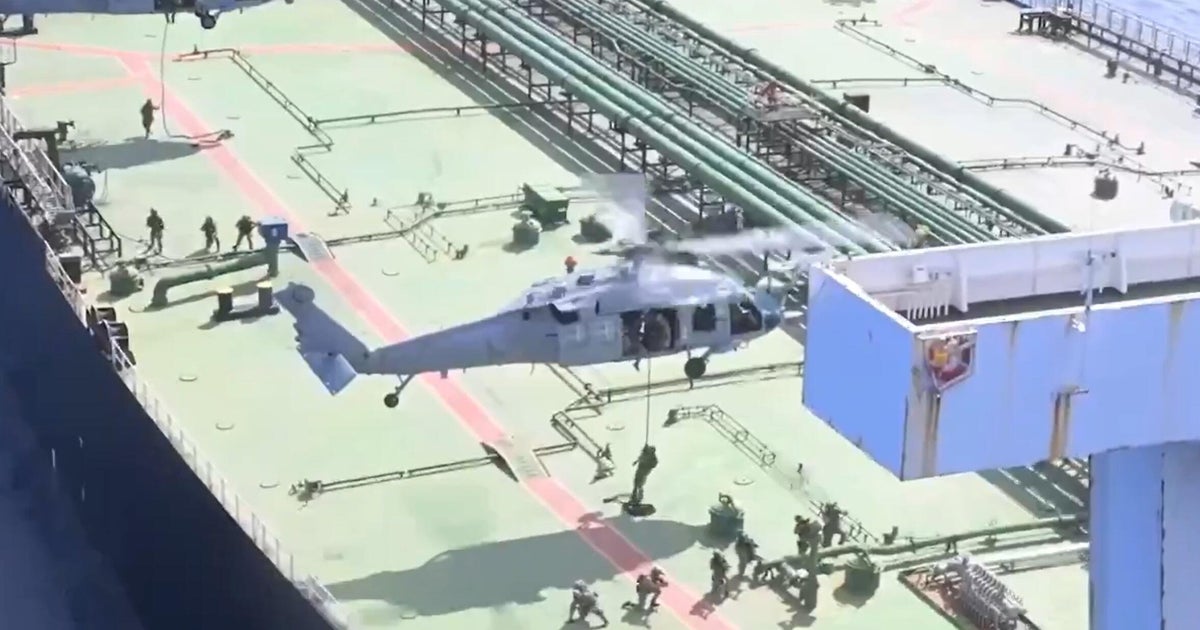
The ongoing maritime confrontation between the United States and Iran has intensified with yet another vessel seizure, as U.S. military forces boarded what they described as a “stateless” tanker with Iranian connections in the Indian Ocean. On Thursday, the Defense Department announced that American forces had conducted an overnight maritime interdiction operation targeting the M/T Majestic X, a sanctioned vessel allegedly transporting oil from Iran. This operation took place far from the traditionally contested waters of the Strait of Hormuz, signaling an expansion of the geographic scope of these enforcement actions. The military released dramatic video footage showing U.S. forces rappelling from a helicopter onto the deck of the massive oil tanker, illustrating the precision and boldness of the operation. According to the Defense Department’s statement shared on social media, this action represents part of America’s commitment to disrupting what it characterizes as illicit networks supporting Iran’s economy. The military emphasized its determination to continue global maritime enforcement operations and interdict vessels providing material support to Iran, regardless of where these ships operate around the world.
Pattern of Tit-for-Tat Maritime Operations
This latest seizure is just one episode in an escalating series of ship interdictions that have characterized U.S.-Iranian relations in recent days, with both nations engaging in what appears to be a calculated campaign of maritime retaliation. The boarding of the M/T Majestic X came immediately after Iranian forces seized two commercial vessels in the strategically vital Strait of Hormuz on Wednesday, raising concerns about the safety of international shipping lanes. Just a day before the Majestic X operation, the Pentagon had announced that U.S. forces interdicted another Iran-linked vessel, the M/T Tifani crude oil tanker, described as “stateless” and “sanctioned,” in the Indo-Pacific Command’s area of responsibility, which encompasses the Indian Ocean region. This rapid succession of maritime interdictions by both sides has created a dangerous pattern of provocation and counter-provocation on the high seas, threatening to destabilize one of the world’s most critical waterways for global energy supplies. The operations highlight the increasingly aggressive postures both nations are adopting in their ongoing confrontation, with each seizure seemingly designed to send a message to the other side about their determination to protect what they view as their national interests and international rights.
Filipino Seafarers Caught in the Crossfire
The human dimension of this maritime conflict became clearer when Philippine government officials confirmed that fifteen Filipino sailors aboard the two ships seized by Iran were safe but being held in Iranian custody. On Thursday, the country’s Department of Migrant Workers issued a statement revealing that ten Filipino seafarers were aboard the Epaminondas and five more were on the MSC Francesca—the two vessels that Iran’s Islamic Revolutionary Guard Corps claimed to have seized on Wednesday. This statement marked the first confirmation from a non-Iranian source that the IRGC had indeed captured these ships for allegedly breaching what Iran describes as its blockade of the Strait of Hormuz. The Philippine government agency assured concerned families that the sailors were “safe and unharmed” and that their relatives had been informed and were receiving government support during this difficult time. The statement also noted that both ships were currently positioned in the vicinity of the Iranian coastline, suggesting they had been brought into Iranian territorial waters. This situation underscores the real human cost of these geopolitical confrontations, as ordinary merchant sailors from third countries find themselves unwitting pawns in a high-stakes game between major powers, separated from their families and uncertain about their futures while their vessels remain under foreign military control.
Iran’s Aggressive Display of Force
The Iranian Revolutionary Guard Corps released propaganda footage on Wednesday that appeared to document their seizure operations, showing masked fighters conducting what they clearly intended as an intimidating display of military capability. The video showed IRGC forces speeding toward the MSC Francesca in an armed fast boat, with fighters then climbing a ladder up the ship’s hull to board the commercial vessel. Additional footage depicted another weapons-laden speedboat approaching the cargo ship Epaminondas, followed by clips of armed IRGC soldiers aboard a vessel, opening doors and ascending stairs with rifles at the ready, though the specific vessel they were boarding wasn’t entirely clear from the footage. This carefully produced and distributed video material represents more than just documentation of military operations; it serves as a calculated propaganda tool designed to demonstrate Iran’s willingness and capability to enforce what it considers its maritime rights in the region. The imagery of masked, heavily armed fighters boarding commercial vessels sends a chilling message to shipping companies and nations that rely on the Strait of Hormuz for oil transportation, effectively showing that Iran has both the means and the resolve to disrupt international commerce if it believes its interests are being threatened. The professional quality of the footage and its rapid public release also suggests that these operations were planned not just as tactical military actions but as strategic communications efforts designed to shape international perceptions.
The Ceasefire That Wasn’t
The timing of these maritime confrontations is particularly striking given the recent announcement by President Trump that he was extending indefinitely a U.S.-Iran ceasefire, raising questions about what exactly such a ceasefire means when naval forces from both countries continue to seize each other’s vessels and those of their respective allies. Despite the announced ceasefire extension, Iran has adamantly refused to reopen the Strait of Hormuz to normal shipping traffic, maintaining what it describes as a defensive blockade of this critical waterway through which roughly one-fifth of the world’s oil supply typically passes. From Tehran’s perspective, the United States is the party violating any ceasefire agreement by maintaining what Iran characterizes as a naval blockade of Iranian ports and systematically interdicting Iranian-linked ships on the high seas. This fundamental disagreement about what constitutes compliance with the ceasefire arrangement highlights the fragility of any understanding between the two nations and suggests that different parties have dramatically different interpretations of what terms were actually agreed upon. The situation reveals the challenge of achieving meaningful de-escalation when basic trust is absent and when both sides view their actions as defensive responses to the other’s aggression rather than as provocations in their own right.
Implications for Global Shipping and Energy Security
The escalating maritime confrontation between the United States and Iran carries profound implications that extend far beyond the bilateral relationship between these two long-time adversaries, potentially affecting global energy markets, international shipping, and the broader rules-based international order. The Strait of Hormuz, where Iran has seized multiple vessels, represents one of the world’s most critical maritime chokepoints, and any sustained disruption to shipping through this narrow passage could send shockwaves through global oil markets and contribute to energy price volatility that would affect consumers worldwide. Insurance rates for ships transiting these waters are likely to increase substantially as the risk assessment changes, potentially raising the cost of goods transported through the region and contributing to inflationary pressures in importing countries. Beyond the immediate economic consequences, these confrontations raise fundamental questions about freedom of navigation, the definition of international waters versus territorial seas, and the extent to which nations can enforce their own interpretations of maritime law. The involvement of third-country nationals like the Filipino sailors caught up in these seizures adds another layer of complexity, as their home countries must navigate the diplomatic challenge of securing their citizens’ release without taking sides in a conflict that doesn’t directly involve them. As both the United States and Iran continue to demonstrate their willingness to interdict vessels far from their own shores, the international community watches nervously, hoping that this dangerous game of maritime chess doesn’t escalate into something far more destructive that could threaten not just regional stability but global economic security as well.