
Prince Harry Makes Surprise Visit to Ukraine Amid Global Security Concerns
A Royal Show of Solidarity at a Critical Moment
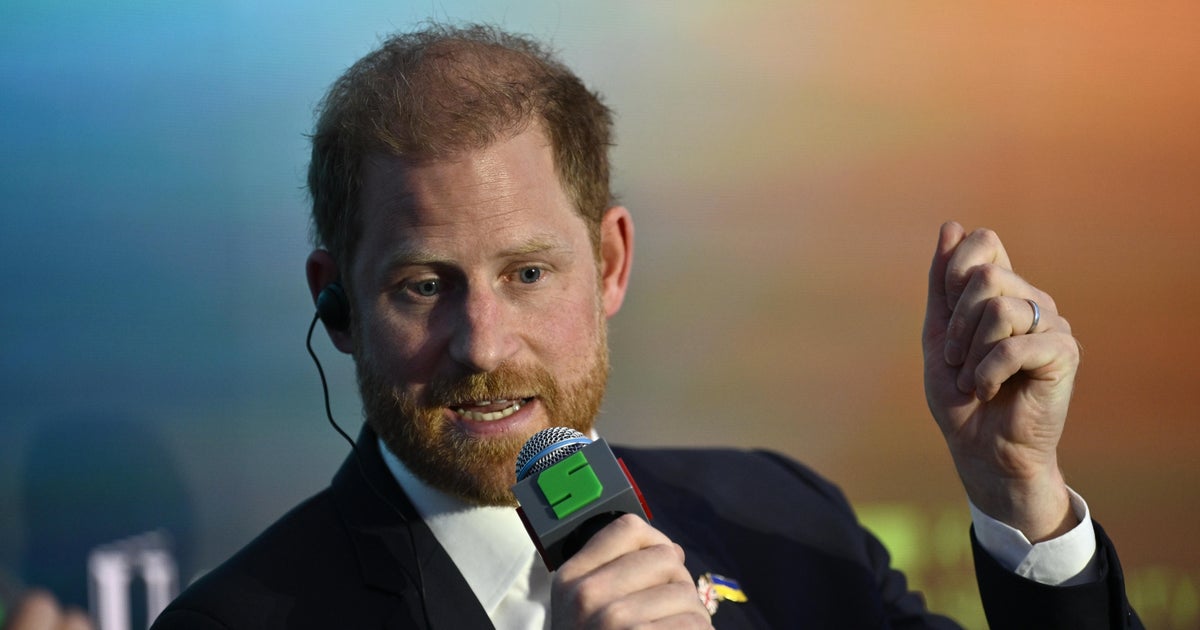
Prince Harry, the Duke of Sussex and younger son of King Charles III, arrived unexpectedly in Ukraine this Thursday, marking his third visit to the war-torn nation since Russia launched its full-scale invasion in 2022. Speaking at the Kyiv Security Forum, Harry delivered a passionate address emphasizing Ukraine’s critical role in defending not just its own sovereignty, but Europe’s entire eastern border. His surprise appearance comes at a particularly significant time, as international attention has begun shifting away from the ongoing conflict in Ukraine toward escalating tensions in the Middle East. The prince’s visit serves as a high-profile reminder that the war in Ukraine continues to rage, with implications that extend far beyond the country’s borders. His presence in Kyiv underscores the continued commitment of prominent international figures to stand with Ukraine, even as the conflict approaches its fifth year and global focus becomes increasingly divided among multiple international crises.
Calling Out American Leadership and Treaty Obligations
During his address at the security forum, Prince Harry made pointed remarks about the United States’ unique responsibility toward Ukraine, referencing historical commitments that make American support particularly crucial. The prince reminded attendees that when Ukraine voluntarily surrendered its nuclear weapons in the 1990s following the collapse of the Soviet Union, the United States was among the nations that provided security assurances guaranteeing Ukraine’s sovereignty and territorial integrity. This reference to the Budapest Memorandum of 1994 carried significant weight, as Harry argued that America’s support for Ukraine isn’t simply an act of charity or goodwill, but rather the fulfillment of binding international treaty obligations. He characterized the current moment as a test of American leadership on the global stage, emphasizing that U.S. involvement is essential not just for Ukraine’s survival, but for maintaining global security and strategic stability more broadly. His comments appeared designed to galvanize continued American support at a time when domestic political debates in the United States have increasingly questioned the scale and duration of aid to Ukraine. By framing American assistance as a matter of honoring commitments rather than optional generosity, Harry attempted to reframe the conversation around U.S. involvement in terms of credibility and international law rather than political preference.
Acknowledging Europe While Calling for Greater Urgency
While praising European nations for their substantial support of Ukraine’s defense efforts, Prince Harry emphasized that the current level of assistance, though meaningful, must be accelerated to meet the urgent demands of the ongoing conflict. He acknowledged that Europe has “stood up in profound ways” and that Ukrainian forces and civilians recognize and appreciate this support, which has been instrumental in helping the country resist Russian aggression for more than four years. However, Harry stressed that the challenge now facing Ukraine’s allies is not simply to maintain their current level of support, but to “match endurance with speed.” This call for increased urgency reflects the reality on the ground in Ukraine, where military needs continue to evolve and the human cost of the war mounts daily. The prince’s remarks suggest that while the long-term commitment from European nations has been commendable, the pace of weapons deliveries, ammunition supplies, and other critical support must increase to give Ukraine the tools it needs to defend itself effectively. His message appeared directed at European policymakers who may have settled into a pattern of steady but incremental support, reminding them that Ukraine’s needs are immediate and that delays in providing assistance have real consequences measured in lives lost and territory threatened.
Framing the Conflict as an Ideological Battle for Democracy
Prince Harry characterized the war in Ukraine as far more than a regional territorial dispute, instead describing it as a fundamental ideological confrontation between liberal democratic values and authoritarian aggression. He drew sharp distinctions between Ukraine’s commitment to international law and respect for human life versus Russia’s flagrant violations of both, citing the forcible deportation of tens of thousands of Ukrainian children to Russia as a particularly egregious example of Moscow’s disregard for humanitarian principles. The prince explained that under international law, the forcible transfer of children from one national group to another isn’t merely a war crime—when conducted with the intent to destroy a people’s identity, it can constitute an act of genocide. This powerful framing elevated the conversation beyond military strategy and geopolitics to fundamental questions about human rights, the protection of the most vulnerable, and the preservation of national and cultural identity. By highlighting this specific atrocity, Harry made the conflict personal and moral rather than abstract and political. His comments reflected a broader Western narrative that presents the war in Ukraine as a test case for whether international rules and norms can be enforced against powerful nations that choose to violate them, and whether democratic nations have the will to defend the principles they claim to uphold.
Personal Connections and Humanitarian Mission
Following his address at the security forum, Prince Harry’s itinerary included visits that reflected both his personal initiatives and his family’s historical connection to humanitarian work in conflict zones. He planned to meet with Ukrainian participants in the Invictus Games Foundation, an organization he founded to support wounded, injured, and sick military personnel and veterans through adaptive sports and competitive challenges. The Invictus Games have become one of Harry’s signature charitable endeavors, providing a platform for service members who have sacrificed for their countries to demonstrate resilience, find community with others who share similar experiences, and work toward physical and psychological recovery. His meeting with Ukrainian participants acknowledges the particular struggles of soldiers fighting an ongoing, existential war for their nation’s survival. Additionally, Harry scheduled a visit to the Halo Trust, a mine-clearing charity that his late mother, Princess Diana, famously championed during her lifetime. Diana’s 1997 visit to Angola, where she walked through a minefield being cleared by the Halo Trust, became one of the most iconic images of her humanitarian work and helped galvanize international support for landmine removal efforts. By visiting the same organization in Ukraine, Harry honors his mother’s legacy while addressing a pressing contemporary need—Ukraine has become one of the most heavily mined countries in the world since the Russian invasion, with vast areas rendered dangerous and uninhabitable by explosive devices that will threaten civilians for generations without extensive clearing efforts.
Competing Crises and the Challenge of Sustained Global Attention
Prince Harry’s visit to Ukraine comes amid warnings from Ukrainian President Volodymyr Zelenskyy about the dangers of allowing global attention to shift away from Russia’s ongoing aggression. In a recent interview with CNN’s Christiane Amanpour, Zelenskyy expressed concern about what he termed a “big risk” in delaying efforts to end the war in Ukraine until conflicts in other regions, particularly involving Iran and the Middle East, are resolved. This concern reflects a fundamental challenge facing Ukraine as the war extends into its fifth year: maintaining international focus, political will, and material support as other crises compete for attention and resources. The global community’s capacity to respond to multiple simultaneous emergencies is limited, and there are legitimate fears in Kyiv that as newer conflicts emerge, the war in Ukraine may be treated as an ongoing situation rather than an urgent crisis requiring immediate action. Prince Harry’s high-profile visit serves as a countermeasure to this trend, reminding international audiences that the situation in Ukraine remains critical and that the outcome of this conflict will have lasting implications for global security architecture, international law, and the willingness of nations to defend the principle that borders cannot be changed by force. His presence in Kyiv sends a message that prominent international figures have not forgotten Ukraine’s plight and that support from democratic nations must continue regardless of other challenges facing the world. As someone who served in the British military and has dedicated much of his post-royal life to supporting veterans and promoting humanitarian causes in conflict zones, Prince Harry brings both personal credibility and media attention to Ukraine’s ongoing struggle for survival and sovereignty.