


Trump Administration Settles Surveillance Lawsuit with Former Campaign Aide Carter Page for $1.25 Million
A Resolution Years in the Making
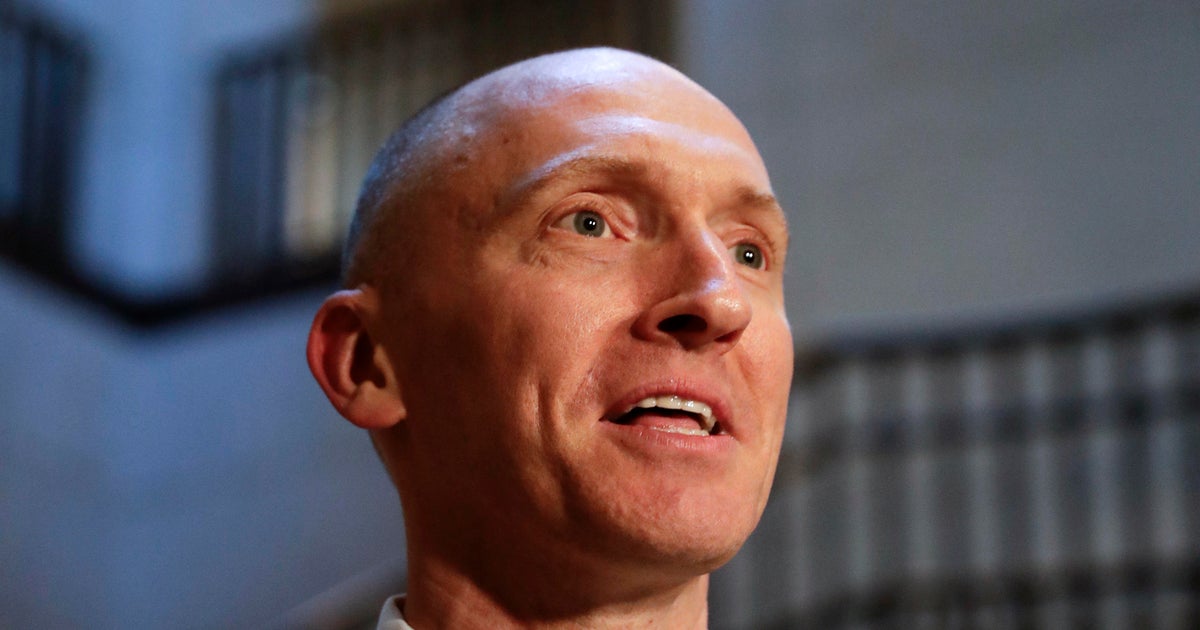
In a significant development that closes one chapter of the controversial Russian election interference investigation, the Trump administration has agreed to pay former campaign adviser Carter Page $1.25 million to settle his lawsuit over FBI surveillance conducted during the 2016 presidential election probe. The settlement, announced this week through a Supreme Court filing by Solicitor General D. John Sauer, addresses Page’s claims that he was subjected to unlawful government monitoring based on flawed evidence and politically motivated reasoning. While Page had sued not only the U.S. government but also several prominent former FBI officials individually—including ex-Director James Comey and former Deputy Director Andrew McCabe—this particular settlement only covers his claims against the government entities themselves under the PATRIOT Act, leaving his allegations against individual officials unresolved for now.
The case represents one of the most contentious legacies of the FBI’s Russia investigation, highlighting concerns about civil liberties, government overreach, and the politicization of law enforcement agencies. Page, who was never charged with any crime despite being subjected to extensive surveillance, had long maintained that he was unfairly targeted because of his association with Donald Trump’s 2016 campaign. His lawsuit, originally filed in November 2020, alleged that the FBI knowingly used false and misleading information to obtain warrants to monitor his communications and activities. The settlement comes as the current Trump administration has made dismantling what it calls the “weaponization of government” a central priority, and officials were quick to frame this agreement as vindication for Page and a warning against future abuses of surveillance powers.
The FBI’s Surveillance of Carter Page
Carter Page’s involvement with the Trump campaign was relatively informal—he served as a foreign-policy adviser during the 2016 race—but it was enough to place him squarely in the crosshairs of the FBI’s investigation into alleged Russian interference and possible coordination with Trump associates. Between October 2016 and 2017, the FBI obtained four separate warrants under the Foreign Intelligence Surveillance Act (FISA) to conduct electronic surveillance on Page. FISA warrants are issued by a special court and are intended for monitoring individuals suspected of being agents of foreign powers, reflecting the serious nature of the allegations the FBI was pursuing at the time.
However, the foundation upon which these warrants were built would later be revealed as deeply problematic. The applications relied heavily on what became known as the “Steele dossier,” a collection of opposition research memos compiled by Christopher Steele, a former British intelligence officer who had been hired to investigate Trump’s possible connections to Russia. The dossier contained explosive and salacious allegations about then-candidate Trump, but many of its claims have never been substantiated, and its reliability has been thoroughly discredited in the years since. The FBI’s decision to use this unverified material as a central component of its case for surveilling an American citizen would become one of the most criticized aspects of the entire Russia investigation, raising fundamental questions about the bureau’s standards for evidence and its respect for Americans’ constitutional rights.
The Inspector General’s Damning Findings
The true extent of the FBI’s failures in the Page surveillance case came to light when the Justice Department’s internal watchdog, the Office of the Inspector General, conducted a thorough examination of how the bureau had handled the warrant applications. The inspector general’s report identified an astonishing 17 “significant errors and omissions” in the initial 2016 application and the three subsequent renewal requests. These weren’t minor procedural mistakes or paperwork errors—they were substantial problems that called into question the entire basis for monitoring Page’s communications.
The inspector general’s findings were particularly critical of the FBI’s reliance on the Steele dossier, pointing out that the bureau had failed to adequately verify the information before presenting it to the FISA court as a justification for surveillance. The report revealed that FBI officials had omitted exculpatory information that might have undermined their case, failed to inform the court about problems with their sources, and continued to seek warrant renewals even as questions about the reliability of their evidence mounted. In the wake of these revelations, the FBI itself acknowledged that it should have ended its surveillance of Page much earlier than it did. This admission, combined with the inspector general’s detailed catalogue of errors, provided powerful support for Page’s contention that he had been subjected to unlawful monitoring—surveillance that invaded his privacy, potentially chilled his political activities, and marked him as a suspect in one of the most high-profile investigations in recent American history, all without sufficient justification.
The Legal Battle and Its Obstacles
When Carter Page filed his lawsuit in November 2020, he was seeking accountability and compensation for what he viewed as a gross violation of his civil rights. His complaint named not only the Justice Department and FBI as institutional defendants but also eight specific individuals, including some of the most recognizable names from the Russia investigation: James Comey, who led the FBI during the initial phases of the probe; Andrew McCabe, who served as deputy director; Kevin Clinesmith, an FBI lawyer who later pleaded guilty to altering an email used in a warrant application; and Peter Strzok and Lisa Page (no relation to Carter Page), two FBI officials whose anti-Trump text messages became a flashpoint in debates about political bias within the bureau.
Despite the compelling evidence of FBI misconduct documented by the inspector general, Page’s lawsuit faced significant legal hurdles. In 2022, U.S. District Judge Dabney L. Friedrich dismissed the case, and when Page appealed, the U.S. Court of Appeals for the District of Columbia affirmed that dismissal in 2024. The appellate court’s reasoning centered on the statute of limitations—essentially, the legal time limit for bringing such claims. The court ruled that too much time had passed between the alleged violations and Page’s lawsuit, barring his assertions against both the federal entities and the individual FBI personnel. This technical legal obstacle meant that the substantive questions about whether the surveillance was justified and lawful were never fully addressed in court. The settlement announced this week circumvents that problem, at least partially, by resolving Page’s PATRIOT Act claims against the government itself, though his allegations under FISA against the individual former officials remain unresolved by this agreement.
The Trump Administration’s Strong Statement
The Justice Department’s response to the settlement was notably forceful, with a spokesperson delivering a statement that went well beyond the usual dry legal language of such announcements. “No American should ever face covert and unlawful surveillance based on their political views,” the statement declared, framing the Page case as an egregious example of government overreach and political targeting. The statement characterized the investigation into Page—”a man never charged with a single crime”—as having “relied on inherently flawed and uncorroborated information, proving it was a political sham from the get-go.”
This rhetoric reflects the current administration’s broader narrative about the Russia investigation and what it describes as the “weaponization” of law enforcement and intelligence agencies for political purposes. The Justice Department spokesperson called the targeting of American citizens for political reasons “a severe violation of civil liberties” and positioned the settlement as part of a larger effort to provide justice to those who were “abused by rogue actors” within the government. The statement concluded by emphasizing that “this Department of Justice is committed to dismantling the weaponization of government and today’s settlement represents one of many initiatives” toward that goal. This framing transforms what might have been a routine legal settlement into a symbolic victory in the ongoing political battles over the Russia investigation, surveillance reform, and the proper boundaries of government power. For supporters of President Trump, the settlement serves as validation of long-standing complaints about the investigation; for critics, it may raise concerns about the politicization of the Justice Department itself and the precedent of paying substantial settlements in cases that were dismissed by courts.
Implications and Unfinished Business
The $1.25 million settlement represents a significant financial acknowledgment of wrongdoing, but it leaves important questions unresolved. Most notably, the agreement only addresses Page’s claims under the PATRIOT Act against the government entities themselves—it does not cover his allegations brought under FISA, nor does it resolve his claims against the individual former FBI officials he named in his lawsuit. This means that while Page has secured compensation from the government, the personal accountability of those who made the decisions to pursue and continue his surveillance remains an open question. Whether Page will continue to pursue those individual claims, and whether he might reach separate settlements with those defendants, remains to be seen.
The case also continues to reverberate through broader debates about surveillance reform, civil liberties, and the balance between national security and individual rights. The FBI’s errors in the Page case led to significant reforms in how FISA applications are prepared and reviewed, with additional oversight and verification requirements designed to prevent similar problems in the future. However, critics of the surveillance system argue that the Page case revealed fundamental flaws that cannot be fixed with procedural tweaks alone, and they continue to push for more substantial restrictions on the government’s ability to monitor Americans. As the dust settles on this particular settlement, the larger questions it raises about government accountability, political bias in law enforcement, and the protection of civil liberties in an age of powerful surveillance technologies remain as relevant as ever. For Carter Page, the settlement brings a measure of vindication and compensation for years of being caught in the crossfire of one of the most politically charged investigations in modern American history—even as the full story of what happened and why continues to be debated and interpreted through competing political lenses.