


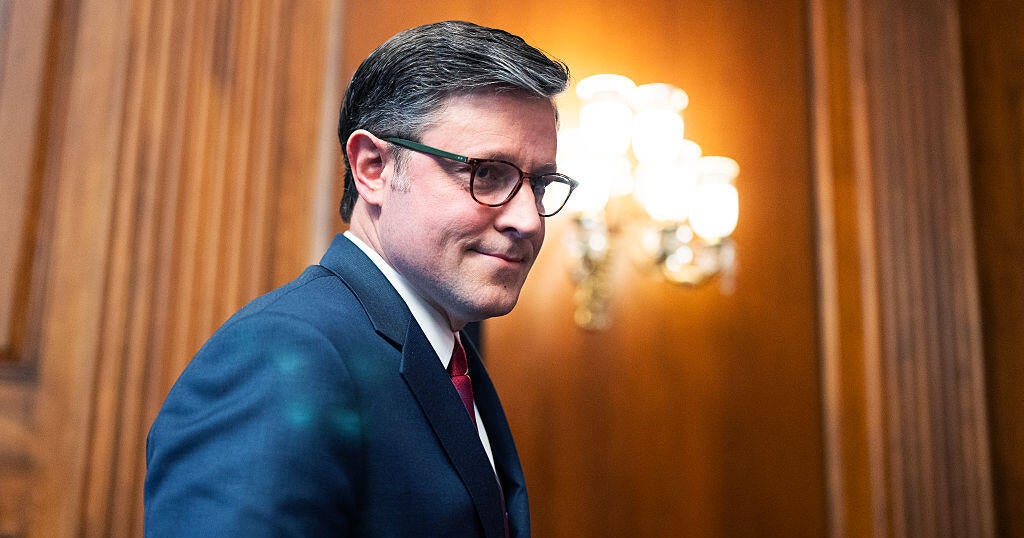

House Speaker Mike Johnson Discusses Economy, AI, and Immigration Ahead of State of the Union
Economy Shows Progress But Challenges Remain, Speaker Says
Just hours before President Trump delivered his State of the Union address, House Speaker Mike Johnson offered a cautiously optimistic assessment of the nation’s economic trajectory while acknowledging significant work still lies ahead. In a candid interview with CBS Evening News, Johnson painted a picture of an economy in recovery, though he was quick to admit that inflation hasn’t been “completely fixed yet.” His comments came as the administration prepared to highlight economic achievements during the president’s primetime address, even as public polling suggested most Americans remain unconvinced about the state of their financial well-being.
The Speaker’s perspective reflects the delicate balancing act Republicans face as they try to convince voters that their economic policies are working. Johnson emphasized that the Trump administration “inherited a real mess” when it took office, characterizing the Biden-era economy as a “disaster” that couldn’t be reversed overnight. He stressed that turning an economy around requires patience and time, noting that “you don’t flip a switch right after the election and it all just is fixed magically.” This messaging appears designed to manage expectations while still claiming credit for positive economic indicators, such as inflation gradually declining to 2.4% in the year ending January 2025 – a significant drop from the 9.1% peak experienced in mid-2022.
Despite Johnson’s upbeat tone, recent polling data reveals a stark disconnect between the administration’s economic narrative and public sentiment. According to a CBS News survey released the same day as the interview, only 37% of Americans believe the economy is in good shape. Perhaps more troubling for the administration, 60% of respondents felt that President Trump makes prices and inflation “sound better than they actually are.” This perception gap represents a significant political challenge as Republicans attempt to build support for their economic agenda and position themselves favorably heading into future elections. Johnson pointed to the tax savings from what he called the “big, beautiful bill” that passed last summer as evidence of tangible benefits for American households, yet these achievements seem not to have fully resonated with voters struggling with everyday expenses.
Tariff Troubles and Trade Policy Divisions
One of the most significant obstacles facing the administration’s economic strategy emerged last week when the Supreme Court delivered what Johnson called “a surprise” and “a great irritation to the president.” The high court ruled that many of Trump’s sweeping global tariffs were unlawful, dealing a major blow to a cornerstone of the president’s economic approach. The ruling forced Trump to quickly pivot, announcing new temporary global tariffs under different legal authority – but these come with a 150-day expiration date unless Congress acts to extend them. This development has exposed divisions within the Republican Party itself, with some GOP lawmakers joining Democrats in voting to roll back certain tariffs earlier in the month.
Johnson defended the president’s trade strategy despite these setbacks, arguing that “it’s inarguable that the president’s approach to trade policy has worked for the country.” He pointed to various trade deals the administration has negotiated with U.S. trading partners as evidence of success. However, the actual trade numbers tell a more complicated story. According to the U.S. Bureau of Economic Analysis, the United States imported $1.24 trillion more goods than it exported last year, marking the widest trade deficit for goods on record. Additionally, manufacturing employment – which tariffs are ostensibly designed to protect and grow – has actually shrunk slightly over the past year. When confronted with these figures, Johnson disputed them, maintaining that “America is back in many ways, and the economy is leading on that.”
The tariff debate reflects a fundamental tension in economic policy. President Trump maintains that these import duties are essential for reviving American manufacturing and combating unfair trade practices by foreign competitors. Many economists, however, warn that tariffs ultimately lead to slower economic growth and higher consumer prices as importers pass the increased costs along to shoppers. This economic reality may partly explain why public approval of the administration’s economic management remains modest despite some positive indicators. Johnson suggested that the president would use the State of the Union address to ask Americans for patience, reiterating the theme that economic transformation cannot happen overnight.
Artificial Intelligence: Opportunity or Threat?
Looking beyond immediate economic concerns, Speaker Johnson addressed growing public anxiety about artificial intelligence and its potential impact on American jobs. A CBS News poll earlier in the month found that 62% of U.S. adults expect AI to decrease job availability, reflecting widespread fear about technological displacement in the workforce. However, Johnson struck a notably calm tone on this issue, urging Americans “we shouldn’t freak out” about AI’s advancement. His message emphasized American resilience and problem-solving capacity, expressing confidence that “we’re [a] great country. We’ll figure this out, and we will stay ahead of China.”
Johnson’s approach to AI represents an attempt to thread the needle between acknowledging legitimate concerns and maintaining optimism about American innovation. He described Congress as “very vigilant about this, very sober-minded” but insisted that fear shouldn’t drive policy. This measured response contrasts with the more alarmist perspectives some lawmakers and commentators have expressed about AI’s disruptive potential. Proponents of AI technology argue that rather than simply eliminating jobs, the technology could trigger an economic boom by dramatically increasing worker productivity across numerous sectors. Johnson appears aligned with this more optimistic camp while still recognizing the need for appropriate oversight.
On the regulatory front, the Speaker revealed his preference for establishing a “federal framework” for AI safety rules rather than allowing what he called a “50-state patchwork” of individual and sometimes conflicting regulations. This position aligns with the Trump administration’s efforts to block certain state-level AI rules, reflecting a broader Republican preference for federal preemption in emerging technology regulation. The reasoning behind this approach centers on creating consistency for businesses developing and deploying AI technologies while preventing a confusing maze of varying state requirements that could stifle innovation. However, this federal approach raises questions about how quickly Congress can move to establish comprehensive AI regulations in a rapidly evolving technological landscape.
Immigration Enforcement: Success or Overreach?
Immigration policy has undergone a dramatic shift in public perception, presenting both opportunities and challenges for the Trump administration. When the president first took office last year, immigration ranked among his strongest issues, with most voters supporting mass deportation efforts targeting people in the country illegally. The administration has delivered on its promises in concrete ways: illegal crossings along the U.S.-Mexico border have plummeted over the past year, and the number of immigration detainees has surged as enforcement operations intensified nationwide.
However, public opinion has shifted noticeably in recent months, particularly following an immigration crackdown in Minneapolis that culminated in the fatal shooting of two U.S. citizens by federal agents. This incident drew bipartisan criticism and sparked broader concerns that immigration enforcement might be going too far. When asked about polling showing increased worry that immigration agents are overstepping, Johnson acknowledged “there’s a perception out there that it was overzealous, in some respect.” Yet he quickly defended the administration’s intentions, insisting that “the president’s intention has always been to rid the country of dangerous criminal illegals. That’s what they’ve accomplished.”
Johnson offered particular praise for White House border czar Tom Homan, who was dispatched to Minneapolis to take control of the situation after the fatal shooting. According to Johnson, Homan “brought calm to the situation, and restored common sense” when he began winding down the enforcement surge in the city. This incident highlights the delicate balance the administration must strike between demonstrating toughness on immigration – which remains popular with the Republican base – and avoiding the perception of excessive force that could alienate moderate voters. The challenge moving forward will be maintaining enforcement credibility while preventing high-profile incidents that generate negative headlines and shift public sentiment.
Iran Tensions and Hopes for Diplomatic Solutions
As President Trump prepared to deliver his State of the Union address, the administration found itself engaged in a high-stakes diplomatic scramble over Iran’s nuclear program. The president has been openly weighing military strikes against Iran unless the country agrees to significant curbs on its nuclear ambitions, creating uncertainty both domestically and internationally about potential military action. When asked directly whether he would support striking Iran, Speaker Johnson emphasized that the president has “emphasized the need for a diplomatic solution,” expressing hope “that the leaders of Iran will follow common sense.” He notably added that he doesn’t anticipate U.S. ground forces being deployed, suggesting any military action would be more limited in scope.
Johnson’s comments reflected the administration’s characterization of Iran as a destabilizing force in the Middle East and beyond. He called Iran “the great agitator” in the region and a “sponsor of terrorist organizations around the world,” using stark language to describe the Iranian regime as evil, anti-American, and fundamentally hostile to U.S. interests. “They hate America, they would like to kill all Americans,” Johnson stated bluntly. “They are an avowed enemy of us. If they were taken out, if that was changed, it would benefit America, it would benefit the world.” This rhetoric underscores the administration’s view that achieving “a stabilized region in the Middle East is certainly in America’s interest” and that Iran represents the primary obstacle to that stability.
The Iran situation exemplifies the complex foreign policy challenges facing the administration as it tries to project strength while avoiding entanglement in another protracted Middle Eastern conflict. The American public has historically shown limited appetite for new military interventions, particularly those that might expand beyond initial limited strikes into broader commitments. Johnson’s emphasis on diplomatic solutions and his statement ruling out ground forces suggest awareness of these political constraints. However, the administration’s tough rhetoric and the president’s public contemplation of military action create their own pressures, potentially boxing in policymakers if Iran doesn’t respond to diplomatic overtures. As the State of the Union approached, this delicate dance between diplomatic engagement and military threat represented one of several high-stakes issues competing for public attention alongside domestic economic and immigration concerns.