


Trump’s Iran War Optimism Meets Economic Reality: What It Means for Oil Prices and Your Wallet
A Fleeting Market Rally Amid Ongoing Uncertainty
President Trump’s Tuesday remarks to reporters suggesting the U.S. conflict with Iran could wrap up within two or three weeks initially sparked relief among investors. The statement temporarily eased global oil prices and gave stock markets a welcome boost as traders hoped for a quick resolution to the crisis. However, economists and energy experts are urging caution, warning that this optimism may be dangerously premature. The fundamental problem remains unchanged: unless Iran agrees to reopen the Strait of Hormuz—a critical chokepoint for global oil shipments—soon, crude prices could continue their alarming upward trajectory regardless of whether American military operations wind down. Nobel Prize-winning economist Paul Krugman didn’t mince words when speaking with CBS News, stating that “the scary scenarios are, unfortunately, extremely plausible.” He explained that it wouldn’t be difficult to envision oil reaching $150 per barrel, and a $200 scenario isn’t beyond the realm of possibility. For average Americans, this translates directly to pain at the pump, with gasoline prices already climbing to $4.06 per gallon on Wednesday—the highest level since August 2022. Bernard Yaros, lead U.S. economist at Oxford Economics, warns that if the strait remains closed, prices could easily surpass $4 per gallon and keep climbing, turning what was already an expensive commute into a genuine financial burden for millions of families.
Presidential Address Could Move Markets
All eyes turned to President Trump’s scheduled Wednesday night address to the nation regarding the Iran conflict, with energy experts noting that oil and gas prices would likely respond immediately to his remarks. Patrick De Haan, a petroleum analyst at GasBuddy, emphasized that the specifics of the president’s message would be crucial for market direction. “If the president just foregoes providing clarity or resolution on the Strait of Hormuz, we’re going to continue to see oil prices reacting to the reality,” De Haan explained. In the immediate term, he predicted that average U.S. gas prices could edge up to between $4.12 and $4.15 per gallon. However, the trajectory from there depends entirely on what Americans heard from their president. If Trump delivers what De Haan termed “good things”—presumably concrete steps toward reopening the strait or definitive progress toward ending the conflict—then that $4.12 to $4.15 range might represent a short-term peak, with prices potentially beginning to decline afterward. Conversely, vague statements or continued uncertainty would likely fuel further price increases. Earlier on Wednesday, Trump indicated that Iran wants a ceasefire, but he also made clear he could end U.S. military operations without necessarily securing the reopening of the strait, effectively leaving other countries to navigate Tehran’s control of this vital shipping lane—a prospect that offers little comfort to economists tracking oil markets.
The Strait of Hormuz: A Critical Bottleneck
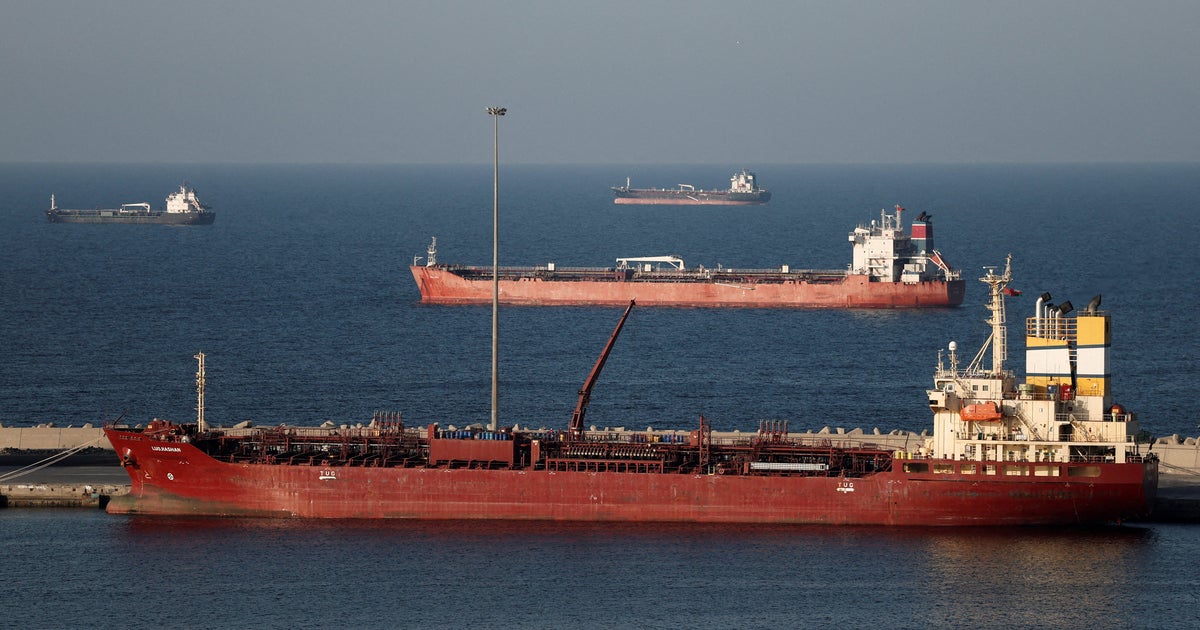
The Strait of Hormuz sits at the heart of this crisis, a narrow waterway through which approximately one-fifth of the world’s oil and natural gas supply passes daily under normal circumstances. Since the Iran conflict began in late February, maritime traffic through this critical passage has been dramatically altered. According to Lloyd’s List Intelligence, a maritime insights provider, more than 70% of ships currently transiting the strait are either owned by Iran, linked to Iranian interests, or sailing between Iranian ports—a stark departure from normal operations. Under typical conditions, roughly 20 million barrels of oil flow through the strait each day, supplying energy to countries around the world. Since the war’s outbreak, that volume has been slashed by as many as 16 million barrels—a staggering reduction that represents a massive disruption to global energy supplies. This bottleneck effect is precisely why economists like Krugman warn of dramatic price increases ahead. Because there are no direct substitutes for oil, and because demand for crude is what economists call “inelastic”—meaning people and businesses need it regardless of price—a prolonged closure of this narrow waterway would inevitably drive oil prices well beyond their recent highs of around $120 per barrel. Krugman identifies two key factors that would determine just how high prices might go: first, the actual volume of oil that could navigate the Persian Gulf region during the conflict, and second, how purchasers of crude would respond to these potentially much higher prices, including whether they might reduce consumption or seek alternatives.
Growing Risks for American Consumers
Bridget Payne, who heads oil and gas forecasting at investment advisory firm Oxford Economics, paints a sobering picture of what continued closure of the strait would mean for ordinary Americans. She expects oil prices to climb above $150 per barrel within weeks if the waterway remains too dangerous for commercial shipping to navigate safely. That benchmark would translate into significantly higher energy costs for consumers across the board—not just gasoline, but heating oil, electricity generated from natural gas, and the transportation costs embedded in virtually every product we buy. “At the speed we’re seeing prices grow, the pass-through impact on consumer prices becomes a lot worse the longer oil supply stays offline,” Payne explained to CBS News. While the Trump administration has taken steps to boost domestic oil supplies during the conflict—moves that have helped shield Americans from even sharper fuel price increases—Payne warns that such efforts have inherent limitations. “It’s no match for the scale that goes through the strait. It doesn’t come anywhere near touching how much has been lost,” she noted. The sheer volume of oil that normally flows through the Strait of Hormuz dwarfs what can be compensated for through increased domestic production or releases from strategic reserves. As the closure continues, the effectiveness of these mitigation measures diminishes, leaving consumers increasingly exposed to the full force of global supply disruptions and the resulting price spikes that follow.
No Return to Normal Even After Conflict Ends
Perhaps most troubling for long-term economic prospects is the assessment from analysts like Matt Bernstein of Rystad Energy, who believes that elevated oil prices are likely to persist even if the United States moves quickly to withdraw its forces from the region. “Even if the conflict did wind down in the next couple of weeks and that strait gradually reopened, what’s starting to become clear is there is no going back to pre-war normal,” Bernstein told CBS News. His reasoning centers on the fundamental change in risk calculations that this conflict has introduced to global oil markets. The geopolitical and financial risks associated with trade in the Persian Gulf region have been permanently elevated by this crisis. Shipping companies, insurance underwriters, and oil purchasers will all factor in higher risk premiums going forward, even after active hostilities cease. The memory of how quickly this vital shipping lane could be threatened or closed will influence business decisions and insurance costs for years to come. Bernstein’s analysis suggests that if the Strait of Hormuz “remains de facto closed and [oil] supply is still constrained, we’d be in a situation where there is no downward pressure on oil prices.” This creates a troubling scenario where even positive developments—such as a ceasefire or withdrawal of U.S. forces—might not deliver the relief to consumers that markets initially anticipated. The structural changes to global oil trade patterns, the increased risk premiums, and the potential for renewed conflict would all work to keep prices elevated well above pre-war levels, fundamentally altering the energy cost landscape for American households and businesses for the foreseeable future.
The Road Ahead: Uncertainty and Economic Consequences
As Americans await clearer signals from the Trump administration about the path forward, the economic consequences of the Iran conflict continue to mount. The gap between the president’s optimistic timeline for ending the war and the harsh realities of global oil markets highlights a critical challenge: military conflicts can be resolved through diplomacy or force, but the economic disruptions they create—particularly to something as fundamental as energy supplies—can persist long after the last shot is fired. For families already struggling with inflation and cost-of-living pressures, the prospect of sustained high gasoline prices represents another squeeze on household budgets. For businesses dependent on transportation or energy-intensive operations, rising fuel costs threaten profit margins and could force difficult decisions about pricing, employment, or investment. The broader economic implications extend to inflation rates, consumer confidence, and overall economic growth, as higher energy costs ripple through every sector of the economy. Energy experts will be parsing every word of presidential addresses and official statements, looking for concrete signs of progress toward reopening the Strait of Hormuz rather than vague assurances. Markets will continue to react volatilely to each new development, creating uncertainty for businesses trying to plan and consumers trying to budget. What remains clear is that President Trump’s two-to-three-week timeline, while welcomed by investors seeking good news, represents only the beginning of what could be a prolonged period of elevated energy prices and economic adjustment. The true test will be whether diplomatic efforts can secure not just an end to hostilities but also a genuine reopening of this critical waterway—and whether the geopolitical damage can be repaired enough to restore confidence in the stability of global oil supplies.