



The Sweet and Surprising Story of PEZ: From Anti-Smoking Aid to American Icon
A Mint with an Unlikely Beginning
If you grew up anywhere in America over the past seven decades, chances are you’ve owned at least one PEZ dispenser. Maybe it was a cartoon character that made you smile, or perhaps a superhero that matched your lunchbox. But behind that simple click and the little rectangular candy that popped out lies a fascinating story that spans continents, decades, and a complete reinvention of purpose. The journey of PEZ from a sophisticated European breath mint to a beloved children’s collectible is one of those rare business tales that involves failure, creativity, and an unexpected pivot that changed everything. What started as an adult product designed to combat smoking in 1920s Austria eventually became synonymous with childhood nostalgia in America, proving that sometimes the best success stories are the ones nobody could have predicted.
The origin story begins in 1927 with Eduard Haas III, an Austrian entrepreneur with a vision well ahead of his time. In an era when smoking was not only socially acceptable but practically ubiquitous, Haas created a peppermint candy he believed could serve as an alternative to cigarettes. He cleverly named his invention by taking the first, middle, and last letters from “PfeffErminZ,” the German word for peppermint, creating the snappy, memorable brand name PEZ. According to Shawn Peterson, who serves as both company historian and employee, the product was deliberately marketed as an anti-smoking device—a way to freshen breath and provide an alternative habit to lighting up a cigarette. This health-conscious approach was remarkably progressive for the 1920s, decades before the medical community would widely recognize the dangers of tobacco. Throughout Europe and other parts of the world, PEZ found a receptive adult audience, and Haas enjoyed considerable success with his innovative mint. The product was sophisticated, practical, and addressed a genuine need in the marketplace.
The American Flop and the Brilliant Pivot
When PEZ made its grand entrance into the American market in 1952, the company’s executives likely expected to replicate their European success. Instead, they encountered a resounding failure. American consumers simply weren’t interested in these little mints that came dispensed from a plain plastic cartridge. The product that had worked so well in Europe fell completely flat in the United States. The sophisticated adult positioning, the peppermint flavor, the utilitarian design—none of it resonated with American tastes. For many companies, this would have been the end of the story, a cautionary tale about international expansion gone wrong. But someone at PEZ had a stroke of genius that would not only save the American operation but transform the entire identity of the product.
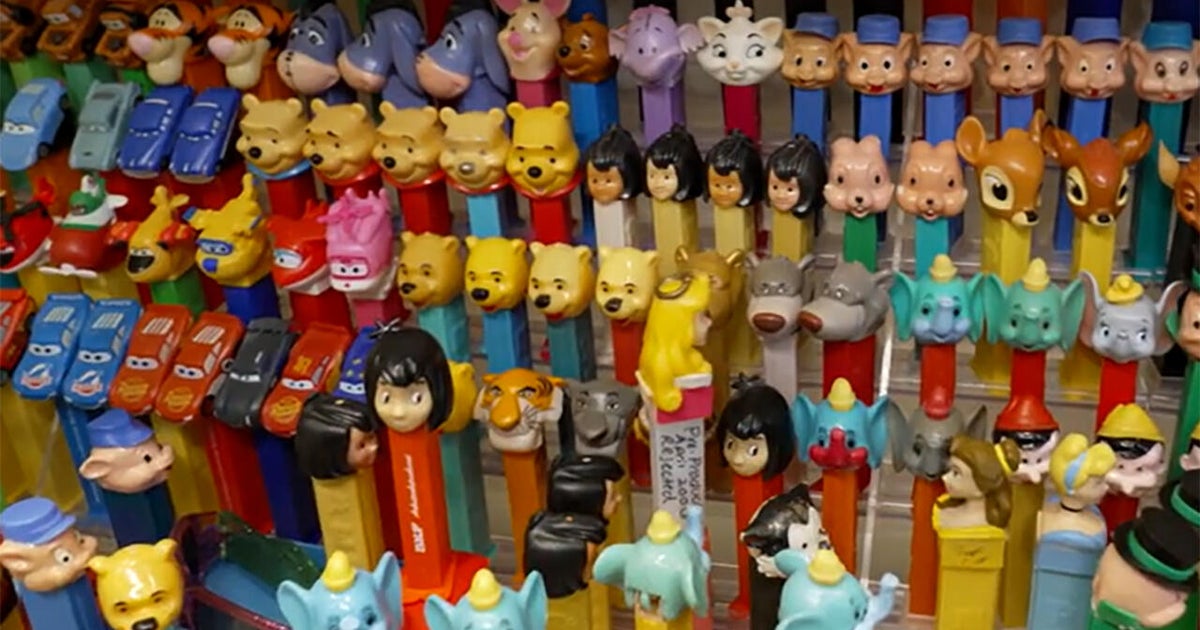
The solution was elegantly simple: if adults didn’t want the product, why not try marketing it to children instead? But this wasn’t just a matter of redirecting advertising. The company completely reimagined what PEZ could be. They added dimensional cartoon character heads to the top of the dispensers, transforming a mundane mint delivery system into a miniature toy. They switched from peppermint to fruit flavors that would appeal to younger palates. And critically, they shifted their entire marketing strategy to target kids rather than adults. The transformation was total and, as Peterson puts it, “it worked.” This might be one of the greatest pivots in American consumer product history—a complete 180-degree turn that didn’t just save a failing product but created an entirely new category of collectible candy dispensers.
A Candy Empire Built on Character
Today, PEZ’s American operations produce an astounding five billion candies annually from their headquarters in Orange, Connecticut. Those billions of tiny, pressed-sugar bricks are rolled together and paired with an ever-expanding universe of character dispensers that span every imaginable franchise, celebrity, and cultural phenomenon. The question of whether PEZ is primarily a candy or a toy has become genuinely difficult to answer, and perhaps that ambiguity is part of its enduring appeal. For most children, the candy is delightful, but the real attraction is the dispenser itself—the satisfying click, the tilted head, the parade of characters that can be collected, traded, and displayed. The candy delivers a momentary sweet pleasure, but the dispenser provides lasting entertainment and the thrill of ownership.
This toy-or-candy duality becomes even clearer when you meet collectors like Brian Trauman, who holds the Guinness World Record for the largest private collection of unique PEZ dispensers. When asked about the candy itself, Trauman admits, “I try the new candy flavors when they come out, but I don’t eat the candy.” For someone whose collection numbers 6,481 unique dispensers as of the end of 2024—and has grown by another 50 since—eating all the accompanying candy would indeed require multiple lifetimes. Trauman’s collection has become so valuable that he recently turned down an offer in the high six figures to sell it. What began as a children’s novelty item has evolved into a serious collectible market, where rare dispensers can command prices that would astound anyone unfamiliar with the passionate world of PEZ collecting.
The Holy Grail and the Presidential Connection
Even with a collection approaching 6,500 unique dispensers, Trauman still has his white whale—a dispenser so rare and historically significant that it represents the Holy Grail of PEZ collecting. The story involves President John F. Kennedy and a diplomatic visit that created one of the most sought-after pieces in the PEZ universe. During a visit to Linz, Austria—the headquarters of PEZ—Kennedy was presented with gifts from the company, including a donkey PEZ dispenser, a Bozo the Clown dispenser, and a Golden Glow (a dispenser without a character head). However, because the dispensers came with candy, and sitting presidents cannot accept food gifts, the items were returned to PEZ. The mystery lies in whether everything was returned or just the candy itself, and what happened to those precise dispensers afterward. The uncertainty surrounding these presidential PEZ dispensers has elevated them to legendary status among collectors.
The story took a dramatic turn when Shawn Peterson called Trauman with extraordinary news: one of the ultra-rare donkey dispensers, similar to the one gifted to JFK in 1961, had been located, and its owner was willing to sell. Trauman was prepared for this moment. “I’ve got a backpack at my feet here with $10,000 in cash,” he told Peterson, “would you be interested?” After a brief consultation with his wife, the owner agreed, and the deal was sealed with cold hard cash—ten thousand dollars exchanged for a small piece of plastic originally intended to deliver candy to children. This transaction perfectly encapsulates the transformation of PEZ from a simple candy delivery mechanism to a serious collectible with significant monetary value. The fact that this particular dispenser’s value stems from its potential connection to a beloved president adds historical gravitas to what might otherwise seem like an eccentric hobby.
Preserving Plastic History
The challenge facing collectors like Trauman and historians like Peterson is that most PEZ dispensers were given to children—precisely the demographic least likely to carefully preserve their possessions. Countless rare dispensers ended up lost in toyboxes, thrown away during moves, or broken during enthusiastic play. This destruction of the historical record has made the work of recovery and preservation all the more urgent and valuable. Both Trauman and Peterson have dedicated significant portions of their lives to scouring estate sales, online marketplaces, and personal collections to try and locate every single PEZ dispenser ever created. Peterson’s commitment runs so deep that he moved to Connecticut specifically to supervise the building of the PEZ Visitor Center, bringing his own valuable collection to put on public display.
Yet even after years of dedicated collecting and the creation of a comprehensive visitor center showcasing PEZ history, Peterson admits he’s still not done. “There’s still packages [showing] up,” he confesses, much to his wife’s dismay. “I don’t buy like I used to, but yeah, I’m still interested. There’s things out there that I’d like to have.” This ongoing quest speaks to the depth and complexity of PEZ’s history—despite producing a seemingly simple product for decades, the variations, limited editions, regional exclusives, and special releases have created a collector’s landscape so vast that even the company’s own historian hasn’t exhausted it. The PEZ Visitor Center in Orange, Connecticut now stands as a monument to this unlikely cultural phenomenon, a place where visitors can see the evolution from simple mint dispenser to cultural icon, and perhaps understand why some people are willing to pay five or six figures for what amounts to a collection of plastic toys. In preserving this history, Peterson and collectors like Trauman are doing more than just hoarding toys—they’re documenting a unique slice of consumer culture, a product that bridged the gap between candy and collectible, and in doing so, became an indelible part of American childhood.