


Ukraine Intensifies Strikes on Russian Oil Infrastructure in Strategic Campaign
Major Attacks Target Russia’s Economic Lifeline
In a significant escalation of its strategic military campaign, Ukraine launched a series of coordinated drone strikes on Sunday targeting critical Russian oil infrastructure across multiple locations. The attacks focused on Russia’s ability to export oil and generate revenue that funds its ongoing invasion of Ukraine. Among the primary targets was the port of Primorsk, Russia’s largest oil exporting facility on the Baltic Sea, which erupted in flames following a nighttime drone assault. The port, operated by the state-owned oil company Transneft and capable of processing hundreds of thousands of barrels daily, represents a crucial component of Russia’s economic infrastructure. Additionally, Ukrainian forces struck two tankers allegedly part of Russia’s “shadow fleet” – vessels used to circumvent Western sanctions and price caps imposed on Russian energy exports. These coordinated attacks demonstrate Ukraine’s evolving strategy of targeting the financial mechanisms that enable Russia’s military operations, marking a shift toward economic warfare alongside conventional military engagement.
Strategic Importance of Baltic Sea Operations
The drone strike on Primorsk carries particular significance given the port’s strategic location and operational capacity. Situated more than 620 miles from Ukraine, between the Russian-Finnish border and St. Petersburg, Russia’s second-largest city, the facility has become a recurring target, having been struck multiple times in March as well. Regional Governor Alexander Drozdenko confirmed the attack sparked a fire but reported no oil spill occurred, though he provided limited information about potential casualties or the extent of damage to port infrastructure. The distance of these strikes from Ukrainian territory demonstrates the increasing range and sophistication of Ukrainian drone capabilities. Primorsk, together with another major Baltic port, accounts for approximately 40 percent of Russia’s total oil exports, making it an invaluable asset in Russia’s energy export strategy. By targeting these facilities, Ukraine aims to disrupt the flow of oil revenue that directly finances Moscow’s military operations. The repeated strikes on Primorsk signal Ukraine’s determination to maintain pressure on Russia’s economic infrastructure, regardless of the technical challenges involved in conducting long-range operations deep inside Russian territory.
Ukraine Claims Multiple Successful Strikes
Ukrainian President Volodymyr Zelenskyy provided detailed accounts of the operation’s success, announcing that Ukrainian forces had destroyed several military and strategic targets while inflicting substantial damage on oil port infrastructure. In a Telegram post, Zelenskyy specifically highlighted the destruction of what Ukraine identifies as “one more Russian carrier of Kalibr missiles,” crediting Major General Yevhen Khmara with the successful operation at Primorsk port. According to the Ukrainian president, the strikes also damaged or destroyed a Karakurt-class missile ship, a patrol boat, and a tanker belonging to Russia’s shadow fleet – the network of vessels Moscow employs to evade international sanctions. In a separate announcement earlier on Sunday, Zelenskyy revealed that Ukrainian forces had struck two additional shadow fleet tankers near the entrance to Novorossiysk, Russia’s major Black Sea oil export port. “These tankers were actively used to transport oil. Now they won’t,” Zelenskyy stated, emphasizing the immediate impact of the operation. He credited the strikes to operations led by Andrii Hnatov, chief of Ukraine’s general staff. Moscow did not immediately respond to or acknowledge Zelenskyy’s claims regarding either set of strikes, maintaining its typical pattern of delayed or limited disclosure about successful Ukrainian attacks on Russian territory.
Escalating Campaign Against Russian Oil Revenue
These latest strikes represent an intensification of Ukraine’s sustained campaign against Russian oil export infrastructure, which has accelerated in recent weeks. Ukrainian officials have consistently argued that oil revenue constitutes the primary funding source for Moscow’s full-scale invasion, now entering its fifth year with no clear resolution in sight. By targeting the ports, tankers, and infrastructure that enable Russian oil exports, Ukraine seeks to diminish Russia’s financial capacity to sustain its military operations while simultaneously demonstrating to international partners that enforcement of sanctions requires active measures. The focus on Russia’s two main Baltic Sea ports, which together handle such a significant portion of Russian oil exports, reflects strategic planning aimed at creating maximum economic impact. The increased frequency of Ukrainian drone strikes against Russian oil tankers in recent weeks coincides with rising oil prices triggered by geopolitical instability in the Middle East, which has actually enhanced Russia’s financial gains from energy exports. By disrupting Russia’s ability to transport and sell oil, Ukraine aims to offset these windfall profits and reduce the resources available for continued military aggression. This economic warfare strategy represents a pragmatic recognition that degrading Russia’s financial capacity may prove as important as battlefield victories in determining the war’s ultimate outcome.
Civilian Casualties and Broader Military Exchanges
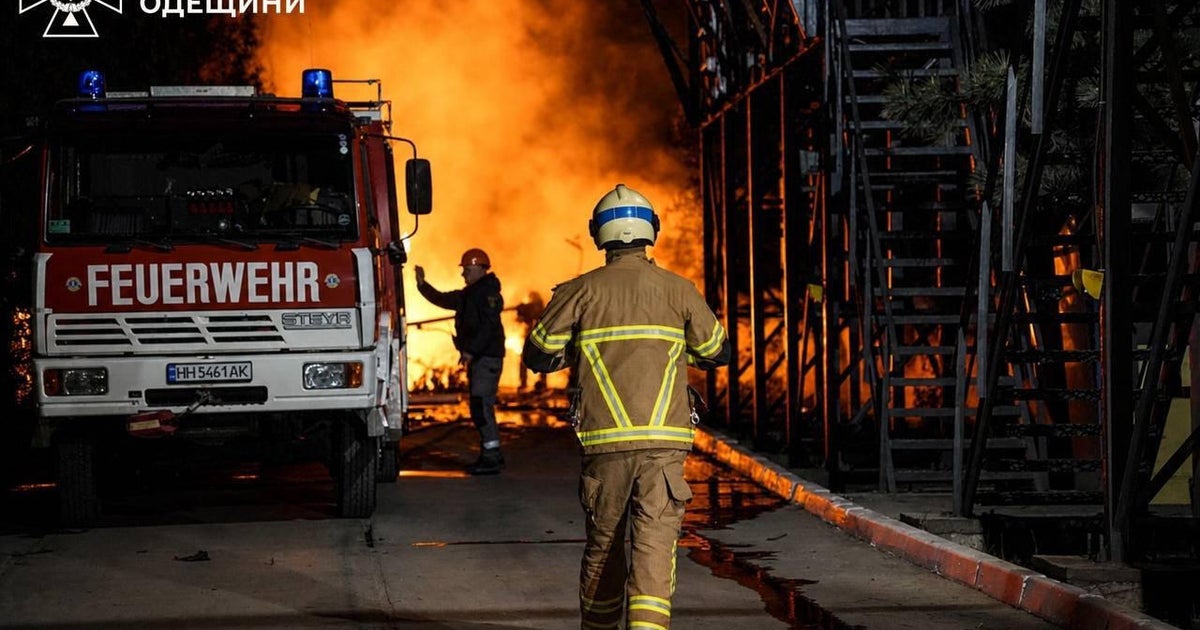
While Ukraine concentrated on strategic economic targets, the conflict continued to exact its toll on civilian populations on both sides. In Ukraine’s southern Odesa region, Russian drone strikes overnight into Sunday killed two people and wounded three others, according to Ukraine’s Emergency Service. The attacks damaged three residential buildings and struck port infrastructure, causing fires that emergency teams eventually extinguished. In the central Ukrainian region of Dnipropetrovsk, nighttime Russian strikes wounded six people, and while a passenger bus carrying forty children sustained damage, fortunately no one aboard was injured. On Russian territory, a Ukrainian drone strike west of Moscow killed a 77-year-old man near the town of Volokolamsk, approximately 75 miles from the capital’s center, as reported by local Governor Andrei Vorobyov. Russian air defenses shot down six drones in the Moscow region and at least five more approaching the capital itself, according to Moscow Mayor Sergei Sobyanin. In Russia’s western Smolensk region, Governor Vasiliy Anokhin reported that a man, woman, and child were injured when Ukrainian drone debris struck an apartment building. These incidents illustrate how the conflict, while increasingly focused on strategic targets, continues to threaten civilians far from the front lines.
Massive Scale of Aerial Warfare
The sheer scale of drone and missile exchanges reveals the extraordinary intensity of the aerial dimension of this conflict. Russia’s Defense Ministry claimed that a total of 334 Ukrainian unmanned aerial vehicles were intercepted and destroyed overnight over Russian territory and occupied Crimea – a figure that, if accurate, represents a massive deployment of drone assets by Ukrainian forces. Conversely, Ukraine’s Air Force reported that Russia launched 269 drones and ballistic missiles against Ukrainian targets during the same period. Ukrainian air defenses successfully shot down or otherwise neutralized 249 of these drones, though ballistic missiles and 19 drones did strike targets in fifteen different locations across the country, according to an Air Force update posted on Facebook. These numbers underscore how drone warfare has become central to both sides’ military strategies, with each nation deploying hundreds of unmanned systems in single operations. The technical capacity to manufacture, launch, coordinate, and defend against such massive drone swarms represents a significant evolution in warfare, with this conflict serving as a proving ground for tactics and technologies that will likely influence military planning worldwide. As both nations continue to develop their drone capabilities and defensive systems, the scale of these aerial exchanges seems likely to increase further, raising concerns about both military effectiveness and the potential for civilian casualties as the boundaries between front lines and rear areas become increasingly blurred in this new form of technological warfare.