
Historic Victory: Cherie DeVaux Becomes First Woman to Train a Kentucky Derby Winner
A Groundbreaking Moment in Horse Racing History
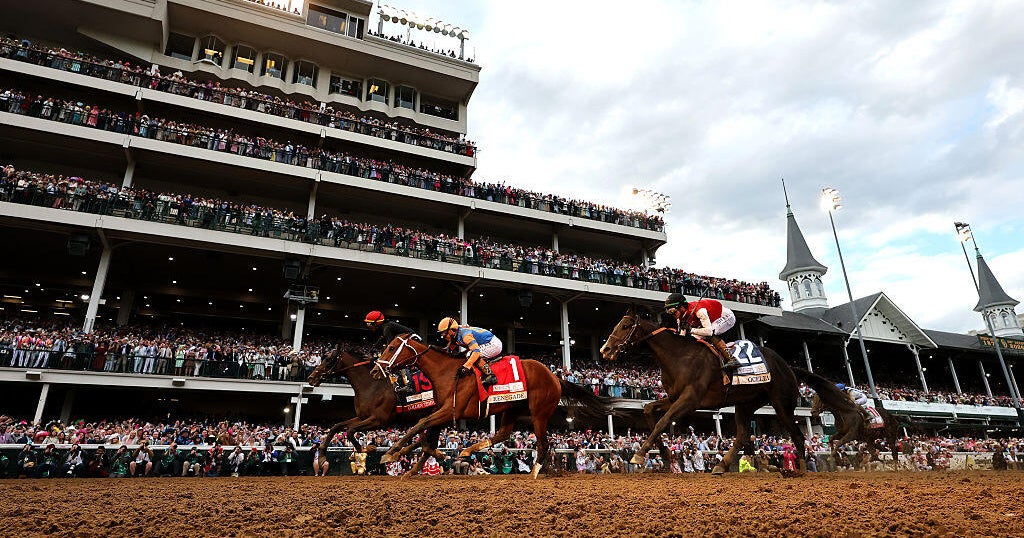
The 152nd running of the Kentucky Derby will forever be remembered as a watershed moment in horse racing. On a spectacular Saturday afternoon at Churchill Downs in Louisville, Kentucky, Cherie DeVaux etched her name into the record books as the first woman ever to train the winner of America’s most prestigious horse race. Her horse, Golden Tempo, delivered a stunning performance that captured the hearts of over 100,000 spectators who packed the legendary track. Starting from well back in the field, Golden Tempo and jockey Jose Ortiz executed a masterful ride, charging down the stretch to overtake the favorite, Renegade, just before the finish line. The victory came with odds of 23-1, making it all the more thrilling for those who believed in the long shot. The winning time of 2:02.27 for the 1 1/4-mile race capped off what can only be described as a fairy-tale ending to DeVaux’s first Kentucky Derby appearance. This historic achievement comes just eight years after she started her own training stable, a relatively short time in the world of horse racing where building a reputation and attracting quality horses can take decades.
Breaking Barriers in a Male-Dominated Sport
Cherie DeVaux’s victory represents more than just a single race win—it symbolizes the breaking of one of the most significant glass ceilings in all of sports. She becomes only the second female trainer to win any Triple Crown race, following Jena Antonucci’s victory with Arcangelo in the 2023 Belmont Stakes. The Kentucky Derby, however, holds a special place in American sporting culture as the “most exciting two minutes in sports,” making DeVaux’s achievement particularly meaningful. She was just the 18th woman ever to saddle a horse in the Kentucky Derby, highlighting how rare opportunities have been for women trainers at this elite level. Throughout Derby week, DeVaux’s perspective on her potential historic achievement evolved. Initially, she downplayed what it would mean to become the first woman to train a Derby winner, perhaps trying to keep the focus on the horse and the race itself. However, as the week progressed, she came to embrace her role as a trailblazer and the significance of what her success could mean for future generations of women in horse racing. Standing in the winner’s circle, emotionally overwhelmed by the magnitude of the moment, DeVaux articulated what her victory represented: “I’m glad I can be a representative of all women everywhere that we can do anything we set our minds to.” Her words resonated far beyond the confines of Churchill Downs, sending a powerful message to young girls who dream of careers in traditionally male-dominated fields.
The Thrilling Race and Jose Ortiz’s Masterful Ride
The race itself was a testament to patience, skill, and perfect timing. Golden Tempo began the race positioned far back in the pack, a strategy that requires nerves of steel from both horse and jockey. Jose Ortiz, riding in his 11th Kentucky Derby, demonstrated exactly why he’s considered one of the finest jockeys in the sport today. His ability to rate Golden Tempo’s speed, conserve energy during the early stages, and then unleash a powerful finishing kick at precisely the right moment was nothing short of masterful. DeVaux herself acknowledged this in the immediate aftermath of the victory, saying, “Jose did a wonderful job, a masterful job of getting him there. He was so far out of it.” The final stretch saw Golden Tempo making up significant ground, threading through traffic and finding room to run when it mattered most. The drama intensified as Golden Tempo drew closer to the favorite, Renegade, who was ridden by Irad Ortiz Jr., Jose’s brother. In a family rivalry that added another layer of intrigue to the race, Jose prevailed over his brother in the final strides before the finish line. Long shot Ocelli finished third, rounding out a top three that defied the expectations of many handicappers and racing enthusiasts. For Jose Ortiz, this victory represented the fulfillment of a lifelong dream, made even more special by the presence of his parents at Churchill Downs to witness their son’s greatest achievement in racing.
A Dream Realized and a Family Legacy
Jose Ortiz’s emotional response to winning the Kentucky Derby revealed the deeply personal significance of this victory. Coming less than 24 hours after he won the Kentucky Oaks—the premier race for three-year-old fillies—Ortiz was experiencing the peak of his professional career. “I get to ride it almost every year, but to get to win it, it’s just special,” he reflected after the race. His thoughts immediately turned to his late grandfather, whom he credited with inspiring his love for horse racing and supporting his journey to becoming a professional jockey. “I just wish my grandpa was here, but I know he’s looking from heaven. Just very happy that I get my goal, my life dream goal achieved,” Ortiz said, his voice thick with emotion. The presence of his parents at Churchill Downs made the moment even more meaningful, allowing him to share his greatest triumph with the people who had sacrificed so much to help him pursue his dreams. The victory also highlighted Ortiz’s recent dominance at Churchill Downs, where his understanding of the unique track and his ability to position horses perfectly has made him one of the most sought-after jockeys for the Spring racing meet. His partnership with DeVaux and Golden Tempo proved to be the perfect combination of talent, preparation, and determination.
Pre-Race Drama and Last-Minute Changes
The path to the starting gate was not without its complications, as the 2026 Kentucky Derby was marked by an unusual number of scratches that kept trainers, owners, and racing fans on edge. The field was reduced to just 18 horses after a series of unfortunate events throughout Derby week. The drama reached its peak on race day when Great White became a late scratch after a frightening incident in which the horse flipped and threw his jockey. Track veterinarians made the difficult but necessary decision to scratch the long shot, prioritizing the safety of both horse and rider. This followed a cascade of scratches earlier in the week: Silent Tactic was ruled out on Wednesday due to a foot injury, Fulleffort was scratched on Thursday, and Right to Party was withdrawn on Friday. Then, less than twelve hours before post time on Derby day, The Puma was scratched because of a swollen leg caused by a skin infection. These late changes created opportunities for horses that had been on the bubble, with Great White, Ocelli, and Robusta getting into the field after initially being left out. The series of scratches served as a reminder of the unpredictable nature of horse racing and the constant vigilance required to ensure the welfare of these magnificent athletes. It also demonstrated the depth of talent in the three-year-old division, as horses that entered the race as replacements still managed to compete at the highest level.
Looking Ahead: Triple Crown Dreams and Lasting Impact
Golden Tempo’s Kentucky Derby victory launches the pursuit of racing’s most elusive prize—the Triple Crown. The Kentucky Derby serves as the first leg of this three-race challenge, followed by the Preakness Stakes and the Belmont Stakes. Only thirteen horses in history have won all three races, with Justify being the most recent Triple Crown winner in 2018. The rarity of this achievement underscores just how difficult it is to win even one of these races, let alone all three. For the connections of Golden Tempo, the financial rewards are substantial, with the Derby’s $5 million total purse awarding $3.1 million to the winner. According to standard practice in horse racing, the owner typically receives 80% of the winnings, while the jockey and trainer split the remaining 20%. However, the monetary reward, while significant, pales in comparison to the historical importance of what Cherie DeVaux accomplished. Her victory will inspire countless young women who dream of careers in horse racing, whether as trainers, jockeys, veterinarians, or in any of the many roles that make up this industry. DeVaux’s journey from starting her own stable just eight years ago to winning the Kentucky Derby in her first attempt demonstrates that dedication, skill, and belief in oneself can overcome even the most entrenched barriers. As Golden Tempo prepares for the Preakness Stakes, racing fans around the world will be watching to see if this remarkable partnership can continue their historic run and perhaps achieve the ultimate goal in horse racing—the Triple Crown.