


Hungary’s High-Stakes Election: A Potential End to Orbán’s Nearly Two-Decade Rule
A Pivotal Moment for Hungarian Democracy
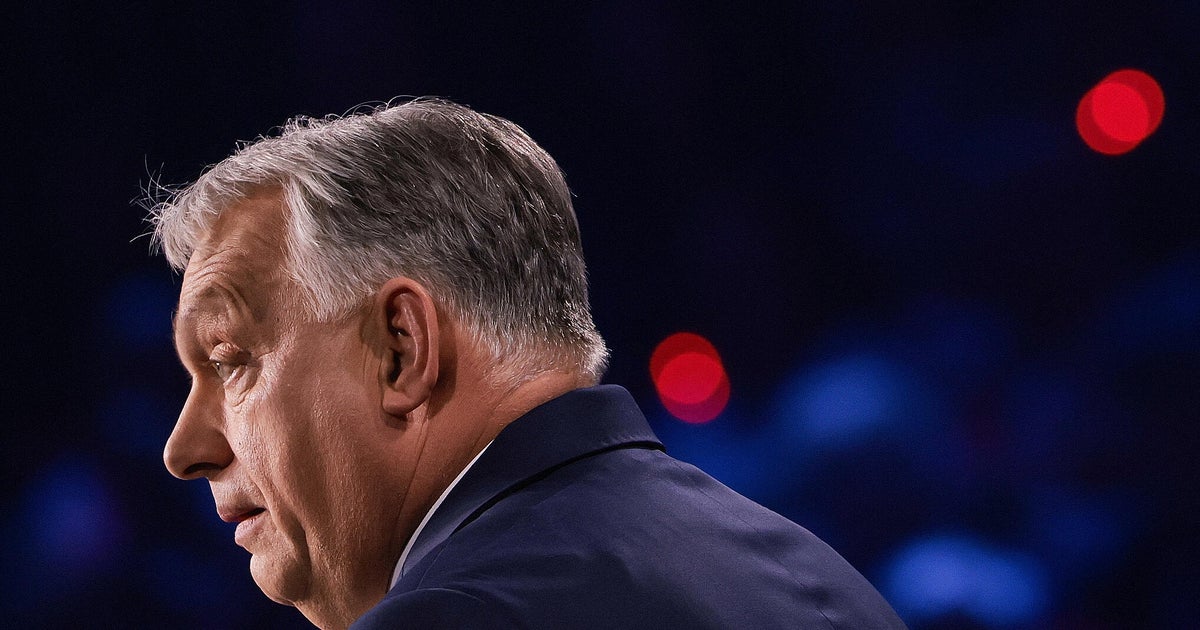
Hungary stands at a critical crossroads as voters prepare to head to the polls on Sunday in what could mark the end of an era. Viktor Orbán, the far-right prime minister who has dominated Hungarian politics for nearly twenty years, faces his most serious electoral challenge yet. Recent polling data suggests that Orbán and his ruling Fidesz party are trailing behind the opposition center-right Tisza Party, led by Péter Magyar. This development has captured the attention of political observers across the globe, particularly in Europe and the United States, where Hungary’s democratic trajectory has become a subject of intense scrutiny and concern. The election represents more than just a changing of the guard—it’s a referendum on the direction of Hungarian democracy itself and could signal a significant shift in the country’s relationship with both the European Union and the United States.
According to the latest polling conducted by the independent IDEA Institute, a pro-democracy research organization, the numbers tell a compelling story. Orbán’s Fidesz party commands the support of just 37% of decided voters, while the challenger Tisza party has secured backing from 50% of those who have made up their minds. These figures suggest a genuine appetite for change among the Hungarian electorate after years of increasingly authoritarian governance. The international community has been watching Hungary’s democratic decline with growing alarm, and this election offers a potential turning point that could either validate or challenge the populist nationalist model that Orbán has championed and exported to conservative movements worldwide.
The Erosion of Democratic Institutions Under Orbán’s Rule
Since Viktor Orbán assumed power in 2010, Hungary has experienced what many international observers describe as a systematic dismantling of democratic norms and institutions. The transformation has been so dramatic that Transparency International, a respected UK-based anti-corruption organization, now ranks Hungary as the most corrupt country in the entire European Union—a shocking distinction for a nation that joined the bloc with hopes of strengthening its democratic credentials. This descent from democratic promise to authoritarian reality didn’t happen overnight but was instead the result of calculated, incremental changes that gradually consolidated power in the hands of Orbán and his inner circle.
Human Rights Watch and other international watchdog organizations have documented how Orbán leveraged his party’s supermajority in the Hungarian parliament to systematically undermine the independence of the judiciary, one of the fundamental pillars of any functioning democracy. The assault on democratic institutions extended to the media landscape, where independent voices have been progressively silenced or marginalized through a combination of legal pressure, economic strangulation, and outright takeover by government-friendly oligarchs. Beyond institutional changes, Orbán’s government has actively promoted discriminatory policies targeting vulnerable populations, particularly LGBTQ individuals and migrants, using them as convenient scapegoats to rally nationalist sentiment and distract from governance failures.
Perhaps most troubling has been Orbán’s increasingly bold embrace of openly xenophobic and racist rhetoric. He has referred to refugees as “Muslim invaders” and publicly declared that Hungarians do not want to become a “mixed race,” statements that would be considered beyond the pale in most Western democracies. These aren’t mere slips of the tongue but rather a deliberate political strategy to position Hungary as a defender of a particular vision of European civilization—one defined by ethnic and religious homogeneity rather than the pluralistic values that the European Union claims to represent. Freedom House, a U.S.-based nonprofit dedicated to promoting democratic values worldwide, has downgraded Hungary’s status to “partly free,” citing concerns about the fairness of elections and the systematic suppression of independent institutions. This designation places Hungary in company with nations that few would consider models of democratic governance, marking a remarkable fall from grace for a country that once symbolized post-Cold War democratic hope.
The Trump-Orbán Alliance: A Transatlantic Partnership of Populism
The relationship between Viktor Orbán and President Donald Trump represents one of the most significant transatlantic political alignments of the past decade, with implications that extend far beyond bilateral relations between the United States and Hungary. Orbán distinguished himself as the only European Union leader to publicly endorse Trump’s first presidential campaign in 2016, a bold move that signaled his willingness to break with European conventional wisdom and align himself with the emerging populist nationalist movement. Since then, the relationship between the two leaders has deepened considerably, evolving from mutual admiration to active collaboration and policy coordination.
President Trump’s support for Orbán has remained unwavering, even as the Hungarian leader’s democratic credentials have deteriorated. Just this past Thursday, Trump issued a passionate defense of Orbán on Truth Social, his preferred social media platform, describing him as a “Highly Respected Prime Minister” who is “a truly strong and powerful Leader, with a proven track record of delivering phenomenal results.” Trump praised Orbán for working to “Protect Hungary, Grow the Economy, Create Jobs, Promote Trade, Stop Illegal Immigration, and Ensure LAW AND ORDER!”—language that mirrors Trump’s own political messaging and reveals the ideological alignment between the two leaders.
The depth of this alliance was dramatically illustrated when Vice President JD Vance traveled to Budapest to personally campaign alongside Orbán just days before the election. Standing beside the Hungarian prime minister at a campaign rally on Tuesday, Vance framed the election in stark, almost apocalyptic terms, asking supporters, “Will you stand for sovereignty and democracy? Will you stand for Western civilization? Will you stand for freedom, for truth and for the God of our fathers?” He then urged attendees to “go to the polls on the weekend, stand with Viktor Orbán because he stands for you and he stands for all these things.” This unprecedented intervention by a sitting American vice president in the domestic election of a European ally demonstrates how central the Orbán model has become to the broader conservative movement’s vision for governance.
Hungary as a Conservative Policy Laboratory
The relationship between Orbán’s Hungary and American conservative institutions extends well beyond personal friendships and public endorsements into the realm of policy development and ideological formation. Influential conservative leaders and organizations in the United States have increasingly looked to Hungary as a kind of policy laboratory—a place where conservative governance principles can be implemented without the constraints imposed by more robust democratic checks and balances. Dr. Kevin Roberts, president of the Heritage Foundation, one of the most influential conservative think tanks in America, explicitly described Orbán’s leadership as a “model for conservative governance” in 2024, signaling that Hungary’s approach is not viewed as a cautionary tale but rather as an aspirational blueprint.
This intellectual exchange has been formalized through institutional partnerships. The Heritage Foundation entered into an agreement with the pro-Orbán Danube Institute in 2023 to host visiting researchers who would study Hungarian policies across various fields. While the agreement involved no direct financial transactions, it represented a significant investment in learning from and potentially replicating aspects of the Hungarian model in the American context. This arrangement raised concerns among those who worry that American conservative institutions are drawing lessons from a country that has been credibly accused of systematic democratic backsliding.
Hungary has also served as a gathering place for the global far-right movement, hosting the international version of the Conservative Political Action Conference (CPAC) for four consecutive years. CPAC Founder Matt Schlapp, who previously served as a White House political director, has defended this choice, arguing that collaboration between American and Hungarian conservatives is beneficial. He specifically praised Hungary’s hardline immigration policies, suggesting that Orbán and Trump together have “normalized this idea that you don’t just have to take an unspecific number of illegal migrants because some global institution tells you that you must.” This framing reveals how immigration restriction has become a central ideological link binding together populist nationalist movements across the Atlantic, with Hungary positioned as proof that such policies can be successfully implemented despite international pressure.
Strategic and Economic Dimensions of the Relationship
The Trump-Orbán partnership has extended beyond rhetoric and ideology into concrete strategic and economic cooperation. Orbán attended the launch of Trump’s “Board of Peace” initiative in Davos and participated in its inaugural meeting in Washington, D.C., signaling Hungary’s involvement in Trump’s foreign policy vision. In February, the two countries signed a civilian nuclear cooperation agreement, representing a tangible expression of the strategic alignment between Washington and Budapest. These developments have raised eyebrows among traditional European allies, who view Hungary’s close relationship with the Trump administration as potentially undermining European unity and creating divisions within NATO and the EU.
The strategic implications of this relationship are particularly significant given Hungary’s position within the European Union and NATO. As a member of both organizations, Hungary theoretically shares commitments to democratic values and collective security. However, Orbán has frequently positioned himself as a disruptor within these institutions, blocking sanctions against Russia, maintaining close ties with Beijing, and generally pursuing a foreign policy that often diverges sharply from the consensus positions of his European and Atlantic partners. The Trump administration’s enthusiastic embrace of Orbán has effectively provided him with political cover for these positions, making it more difficult for European institutions to apply pressure on Budapest to reform its democratic practices or align more closely with Western strategic priorities.
What Hangs in the Balance
As Hungarians prepare to vote, the stakes extend far beyond Hungary’s borders. A victory for the opposition Tisza Party would represent a significant setback for the populist nationalist model that has been gaining ground across Europe and beyond. It would demonstrate that voters can reverse authoritarian drift once they’ve experienced its consequences—a hopeful message for democracies facing similar pressures elsewhere. For the European Union, an opposition victory would remove one of the most consistent obstacles to common action on issues ranging from sanctions policy to rule of law enforcement, potentially strengthening the bloc’s coherence and effectiveness.
For President Trump and the American conservative movement, an Orbán defeat would mean losing what has been described as a living laboratory for conservative governance and a key international validator of their approach. The symbolic impact would be considerable, potentially raising questions about whether the nationalist populist model can maintain power once voters have experienced it in practice. Conversely, an Orbán victory, particularly after such high-profile American support, would reinforce the perception that the Trump-aligned global movement retains strong momentum and that concerns about democratic backsliding are either overstated or simply don’t resonate with voters prioritizing other issues. Whatever the outcome on Sunday, Hungary’s election will send ripples across the Atlantic, influencing debates about democracy, nationalism, and the future of Western political systems for years to come.