


Jamie Dimon’s Vision: How AI Could Transform Our Future While Reshaping the Workforce
A Future of Shorter Work Weeks and Longer Lives
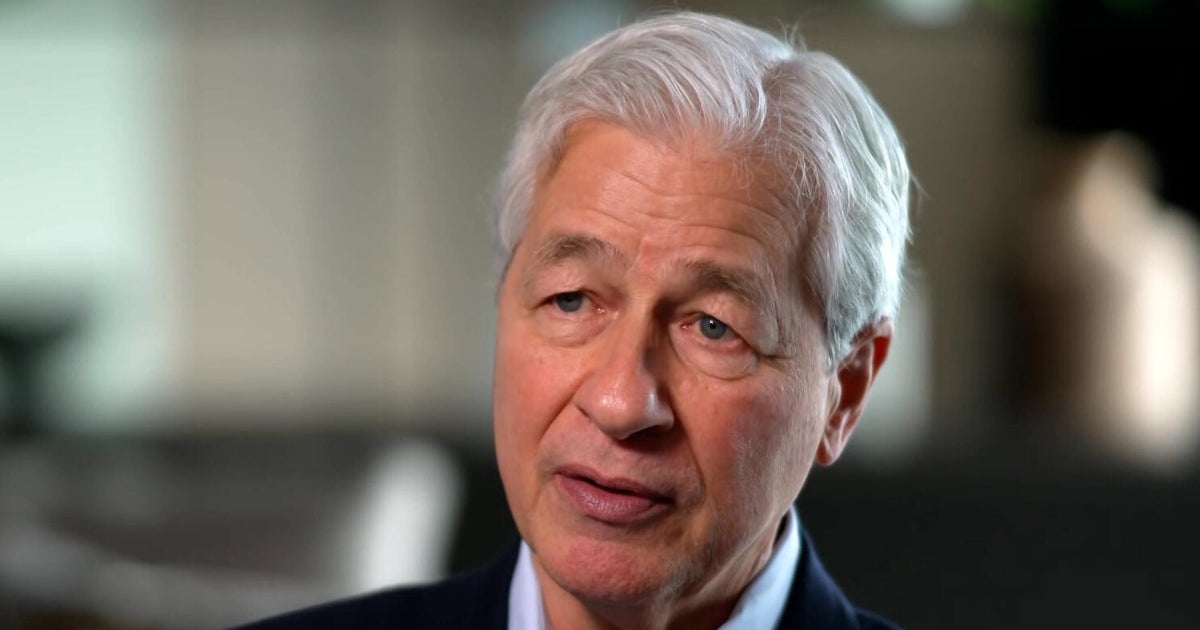
Jamie Dimon, the CEO of JPMorgan and one of the most influential voices in American finance, has painted an optimistic picture of humanity’s future with artificial intelligence. In a recent interview with CBS Evening News, Dimon shared his belief that within the next three decades, the world will look dramatically different thanks to AI’s transformative power. He envisions a future where our children will work only three-and-a-half days per week while living healthier, longer lives—potentially reaching 100 years old. According to Dimon, many of the diseases that currently plague society will become things of the past, as AI accelerates medical research and drug development. This isn’t just wishful thinking from a tech enthusiast; it’s the considered perspective of someone who leads one of the world’s largest financial institutions and has a front-row seat to how technology is reshaping the global economy. Dimon’s prediction reflects a growing consensus among business leaders that AI represents not just an incremental improvement but a fundamental shift in how humans work, live, and thrive.
Revolutionary Breakthroughs in Healthcare and Safety
When Dimon declares that “life will be better,” he’s pointing to concrete areas where AI is already showing promise and could deliver breakthrough results. Perhaps most significantly, he believes AI will play a crucial role in curing cancers—one of humanity’s longest and most challenging battles. The technology’s ability to process vast amounts of medical data, identify patterns invisible to human researchers, and accelerate drug discovery could indeed revolutionize oncology and other medical fields. Beyond healthcare, Dimon sees AI improving everyday safety in ways that will save countless lives. He specifically mentioned that AI will prevent many car crashes, referencing the development of autonomous vehicles and advanced driver-assistance systems that can react faster than humans and don’t suffer from distraction or fatigue. The technology will also contribute to the development of better materials, potentially leading to innovations in construction, manufacturing, and countless other industries. These materials could be stronger, lighter, more sustainable, or possess properties we haven’t even imagined yet. Dimon’s vision encompasses a world where AI serves as a tireless research assistant, constantly working to solve problems and improve the human condition across multiple domains simultaneously.
The Productivity Revolution and Its Discontents
While Dimon is enthusiastic about AI’s potential, he’s not blind to the challenges it presents, particularly regarding employment and economic disruption. He acknowledges that the world is becoming increasingly productive thanks to AI, but warns that “the risk is if it is too fast.” This concern echoes warnings from labor economists, technology experts, and social scientists who fear that AI could displace millions of workers before society has time to adapt. Unlike previous technological revolutions that unfolded over generations, AI’s advancement is happening at unprecedented speed, potentially compressing decades of economic transformation into just a few years. Industries from customer service to legal research, from transportation to accounting, could see dramatic workforce reductions as AI systems prove capable of performing tasks once thought to require human judgment and expertise. The speed of this transformation is particularly concerning because it could overwhelm the social safety nets and retraining programs that helped workers adapt to previous waves of automation. Dimon’s careful phrasing—acknowledging both AI’s productivity gains and the risks of overly rapid implementation—reveals his understanding that managing this transition will be one of the defining challenges for business and political leaders in the coming decades.
Creating More Jobs Than It Destroys
Despite his concerns about the pace of change, Dimon aligns himself with optimistic economists who believe AI will ultimately create more employment opportunities than it eliminates. This perspective is rooted in historical precedent—previous technological revolutions, from the steam engine to the computer, initially displaced workers but eventually generated entirely new industries and categories of employment that couldn’t have been imagined before. The agricultural revolution reduced farm employment from over 90% of the workforce to less than 2% in developed nations, yet unemployment didn’t skyrocket because new sectors emerged to absorb those workers. Similarly, AI advocates argue that while the technology may automate existing jobs, it will create demand for AI trainers, ethics specialists, human-AI interaction designers, and countless other roles we can’t yet fully envision. Additionally, by making businesses more productive and profitable, AI could generate economic growth that funds expansion into new areas, creating employment opportunities across the economy. Dimon’s faith in this positive outcome isn’t naive optimism—it’s based on his observation of how markets and economies adapt and evolve, though he’s clear that this positive outcome isn’t guaranteed and requires proactive management.
Corporate Responsibility and Workforce Retraining
Dimon doesn’t believe companies and workers should simply hope for the best as AI transforms the economy. Instead, he advocates for businesses to take direct responsibility for helping their employees adapt to changing circumstances. He describes JPMorgan’s approach as taking workers and saying, “Hey, there are other jobs for you. We’ll retrain you. We’ll move you,” noting that this approach “works” when implemented properly. However, he acknowledges that such programs need to operate “at more scale” to handle the magnitude of disruption AI may cause. This vision places significant responsibility on corporations to invest in their workforce rather than simply laying off displaced workers and hiring new employees with different skills. For large institutions like JPMorgan, this might be feasible, but smaller businesses may struggle to implement similar programs without external support. Dimon also suggests that workers displaced by AI in one sector could be redeployed into critical industries facing labor shortages, such as advanced manufacturing. This kind of strategic workforce reallocation would require coordination between businesses, educational institutions, and workers themselves, along with a commitment to viewing employees as long-term investments rather than disposable resources. The challenge is ensuring that retraining programs teach relevant skills and that workers can transition without experiencing extended unemployment or significant wage losses.
The Need for Public-Private Partnership
Perhaps most importantly, Dimon calls for collaboration between government and business to manage AI’s integration into the economy. He recognizes that while individual companies can implement internal retraining programs, addressing economy-wide disruption requires coordinated action that goes beyond what any single corporation can accomplish. Government has unique tools at its disposal—from funding educational programs to providing unemployment benefits, from regulating AI deployment in sensitive sectors to creating tax incentives for companies that invest in workforce development. Meanwhile, businesses have direct knowledge of which skills will be needed, what technologies are emerging, and how quickly changes are likely to occur. By combining public resources and regulatory authority with private-sector expertise and adaptability, Dimon believes society can maximize AI’s benefits while minimizing its harms. His statement, “If it causes problems in the short run, let’s be prepared,” is essentially a call to action for proactive policymaking rather than reactive crisis management. This approach would represent a shift from the relatively hands-off attitude that characterized previous technological transitions, acknowledging that AI’s speed and scope demand more deliberate management. Ultimately, Dimon’s message is one of cautious optimism—he genuinely believes AI will dramatically improve human life, but he’s equally clear that realizing this positive future isn’t inevitable and will require careful stewardship from both business and political leaders.