


A Widow’s Gratitude: How Team USA Honored Johnny Gaudreau’s Legacy at the 2026 Olympics
An Unforgettable Moment on the Ice
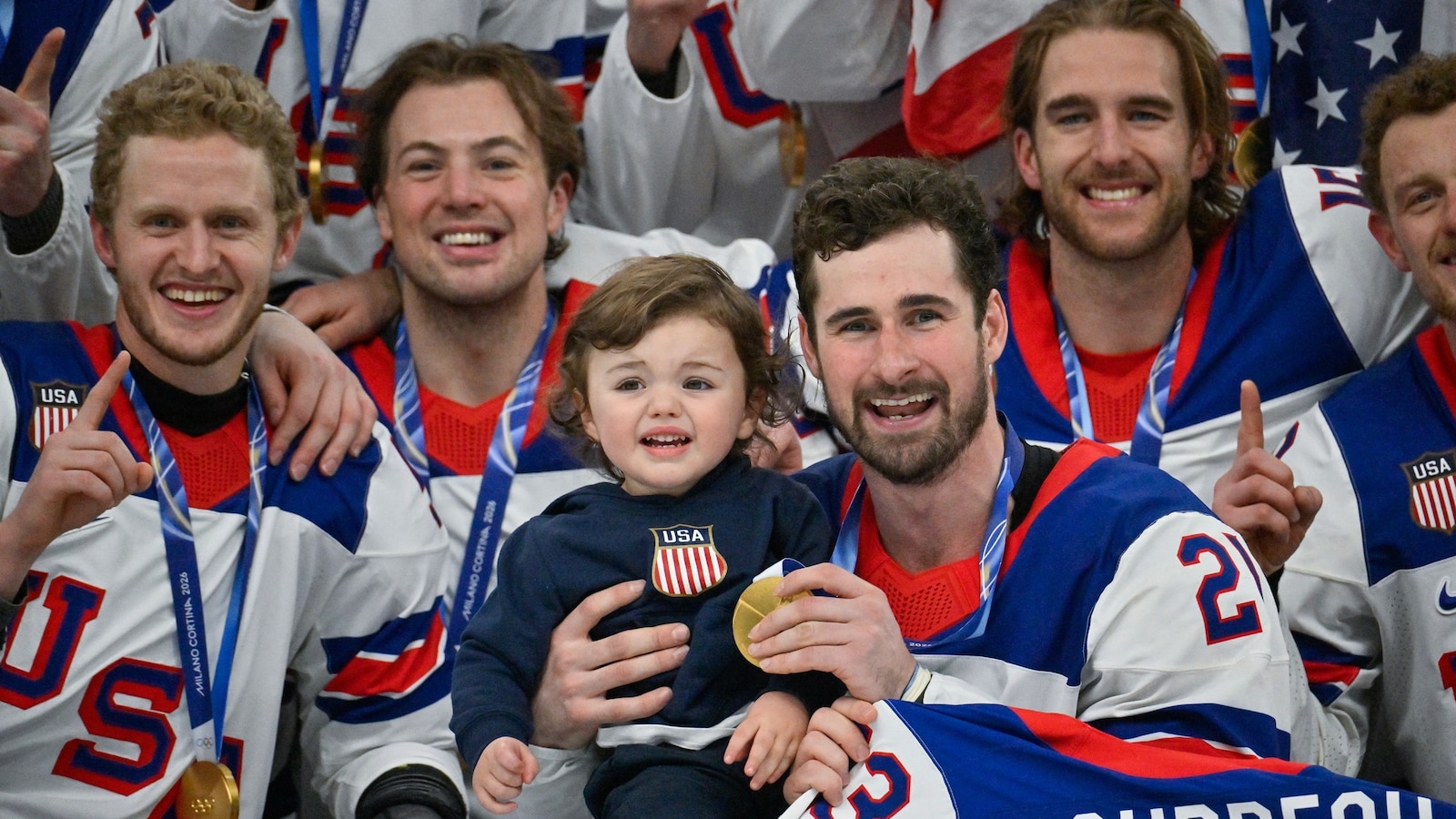
In a deeply moving gesture that transcended sports, the United States men’s hockey team created an unforgettable moment following their dramatic 2-1 victory over Canada in the gold medal game at the 2026 Milan Cortina Olympics. As the final buzzer sounded and celebrations erupted on the ice, the players did something extraordinary—they brought two young children into their circle of victory. These weren’t just any children; they were three-year-old Noa and two-year-old Johnny Jr., the son and daughter of the late Johnny Gaudreau, a beloved professional hockey player who had tragically lost his life in 2024. The touching scene showed the young children being held by Olympic champions, proudly displaying their father’s number 13 jersey as cameras captured what would become one of the most emotional moments in Olympic history. This wasn’t merely a photo opportunity; it was a powerful statement about family, remembrance, and the enduring bonds that connect the hockey community even in the face of devastating loss.
A Mother’s Heartfelt Response
Meredith Gaudreau, Johnny’s widow, spoke with ABC News Live just days after witnessing this remarkable tribute to her late husband. Her words reflected both the ongoing pain of her loss and the deep appreciation she felt for how the hockey community continues to honor Johnny’s memory. “They didn’t have to do that,” she said, her gratitude evident in every word. She described feeling “very, very proud” and expressed sincere thankfulness to the team for including her children in their moment of triumph and for the continuous ways they honor her husband. What struck her most was not just the gesture itself, but the thoughtfulness behind it—the recognition that this is exactly what Johnny would have wanted. She characterized the team’s actions as “the classiest thing,” noting that these athletes consistently go out of their way to perform kind gestures and include her children in everything, keeping Johnny’s presence alive in meaningful ways. For Meredith, these moments represent more than simple remembrance; they’re a connection to the life her husband lived and the community he loved, a bridge between the past they shared and the future her children face without their father.
Helping Young Hearts Understand
One of the most touching aspects of Meredith’s interview was her description of how she explained this special moment to her daughter, Noa. With the careful sensitivity that parents use when helping young children navigate complex emotions, she told her daughter, “Daddy’s friends want to take a picture with you and Johnny. You get to do this because of daddy and they love and they miss him, too.” This simple explanation captured both the honor of the moment and the reason behind it in terms a three-year-old could begin to comprehend. Meredith shared that Noa was genuinely excited about the experience, and more importantly, that she’s beginning to piece together the significance of her father’s legacy. “She’s started to put things together and she’s very, very proud,” Meredith explained, revealing how even at such a young age, Noa is developing an understanding of who her father was and why people continue to celebrate his memory. This growing awareness represents a bittersweet milestone for any parent—the moment when a child begins to truly grasp the magnitude of their loss while simultaneously discovering pride in their parent’s impact on the world. Adding to the emotional weight of the occasion, Johnny’s own parents were present in the crowd, witnessing their grandchildren being honored alongside the memory of their son—a moment that surely brought both joy and heartache in equal measure.
The Tragedy That Changed Everything
To understand the depth of emotion surrounding this Olympic tribute, it’s essential to revisit the devastating events of August 29, 2024. Johnny Gaudreau, affectionately known throughout the hockey world as “Johnny Hockey,” was a 31-year-old star player for the Columbus Blue Jackets at the peak of his career. On what should have been a joyful occasion—the evening before his sister’s wedding—Johnny and his younger brother Matthew, 29, who had also played professional hockey, were riding bicycles together in New Jersey. In a moment that would shatter their family and send shockwaves through the sports community, both brothers were struck by a driver who police suspected was under the influence of alcohol. The tragedy claimed both their lives, leaving behind wives, young children, and a hockey community in mourning. The suspected driver was subsequently arrested and charged with aggravated manslaughter, vehicular homicide, evidence tampering, and leaving the scene of an accident. He has pleaded not guilty to these charges and had not yet gone to trial at the time of the Olympic tribute. The senseless nature of this loss—two brothers taken on the eve of a family celebration—deepened the tragedy and made the subsequent outpouring of support from the hockey community all the more meaningful.
Living with Loss While Finding Meaning
In her conversation with ABC News, Meredith opened up about the ongoing challenge of navigating life after such profound loss. “Still every day is kind of a gut punch,” she admitted with raw honesty, describing the relentless nature of grief that doesn’t diminish simply because time passes. Yet within this daily struggle, the continued recognition from Johnny’s friends and colleagues provides something invaluable. “When the guys do what they can to still include John and our kids, it just means everything to me,” she explained. She spoke warmly about these players, characterizing them as “really good people, really good friends of ours” and emphasizing how she views them as “really great role models” for her children. These relationships represent more than just connections to her late husband; they’re positive male influences for children who will grow up without their father. Meredith also reflected on what these gestures reveal about Johnny himself—the kind of person he was and the impact he had on those around him. “It shows how much they love John and all the respect they have for him,” she said, adding that she feels “really proud of John for having that type of impact.” This perspective offers a window into how families cope with loss—by finding meaning in the ways their loved one touched others’ lives and by recognizing that their influence extends beyond their physical presence.
The Growing Family Johnny Never Met
Perhaps the most poignant aspect of this story is the children who will grow up knowing their father only through stories, photographs, and moments like this Olympic tribute. Meredith shared that while Noa and Johnny Jr. traveled to Italy for the Olympics, their youngest child, Carter, stayed home. Born approximately seven months after his father’s death, Carter is approaching his first birthday—a milestone Johnny never got to witness. “He doesn’t have a passport yet cause he’s only, almost 11 months old. So I felt so bad, but he watched along and he looks pretty good wearing number 13!” Meredith said, finding a note of lightness amid the sadness. Carter will grow up with no direct memories of his father, knowing him only through the stories others tell and the legacy he left behind. The Gaudreau family’s tragedy extends beyond Johnny’s immediate household. Matthew Gaudreau’s wife, Madeline, was also pregnant when her husband died. Their son, Tripp, was born four months after the crash, another child who will know his father only through photographs and memories shared by others. In an interview with ABC News the previous year, Madeline expressed her wish for Matthew to be remembered as “a good soul. He was just a pure, happy, good soul, fearless.” These children—Noa, Johnny Jr., Carter, and Tripp—represent both the heartbreaking cost of this tragedy and the enduring hope that their fathers’ legacies will live on through them. Gestures like the Olympic tribute ensure that these children will grow up knowing their fathers were valued, remembered, and honored by communities that continue to care.