

Legal Battle Over Trump’s 10% Global Tariff Faces Skeptical Court
Judges Question Challenge to President’s Trade Powers
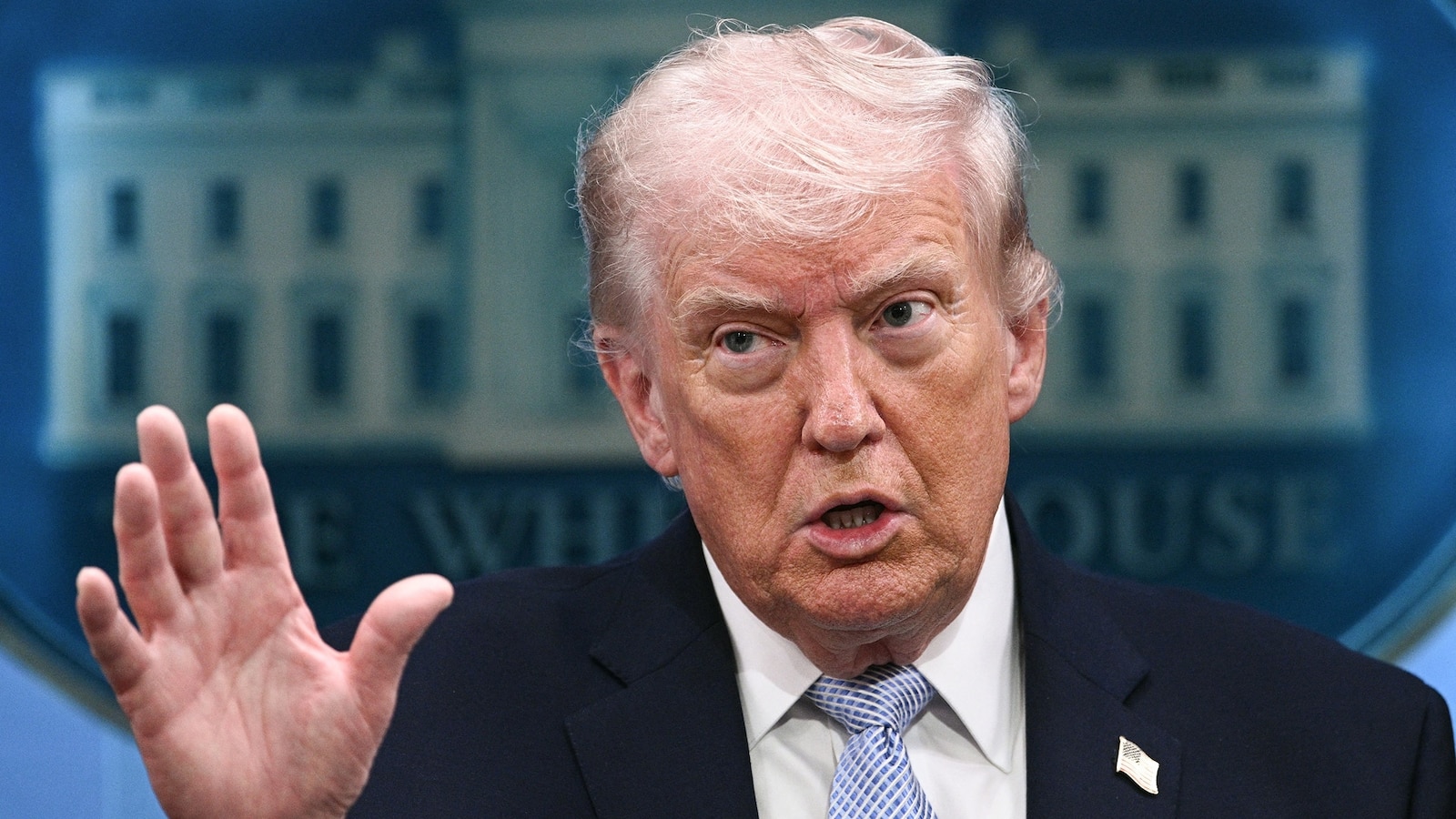
In a marathon three-hour court session on Friday, a panel of judges hearing arguments about President Donald Trump’s 10% global tariff appeared doubtful about the legal challenge brought against it. The case comes after the Supreme Court previously shut down Trump’s initial tariff attempts earlier this year, forcing the administration to find alternative legal grounds for imposing trade restrictions. At the heart of this legal battle is a fundamental question: Does a law passed nearly five decades ago give the president the authority to impose tariffs for up to 150 days without getting the green light from Congress? The administration argues that the country’s trade deficit provides sufficient justification under this older statute. The challenge was mounted by an unusual coalition of plaintiffs, including 24 states spanning the political spectrum, along with some surprising business partners—Basic Fun, the company that makes beloved toys like Care Bears and Lincoln Logs, and Burlap and Barrel, a small business that imports exotic spices from around the world.
The Technical Debate: Trade Deficit vs. Balance of Payments
The legal arguments got into some fairly technical economic territory, focusing on the precise language of the 1974 law in question. Brian Marshall, representing the states and businesses challenging the tariffs, argued that the Trump administration is fundamentally misreading the law. According to Marshall, the statute allows tariffs only to address a “balance of payments deficit,” which he insisted is a completely different animal from a “trade deficit.” He pointed out that economic experts across the board agree these are distinct concepts that shouldn’t be confused or used interchangeably. However, Judge Timothy C. Stanceu didn’t seem entirely convinced by this argument, repeatedly questioning whether the distinction was really as clear-cut as the plaintiffs suggested. The judge proposed that a balance of payments deficit could actually result from trade imbalances, making the two concepts more connected than Marshall was claiming. Judge Stanceu explained his thinking by noting that a fundamental international payments problem doesn’t just mean the United States is paying out too much money—it could also refer to situations where there’s an imbalance caused by large trade surpluses, in which case policymakers might actually want to allow more imports into the country.
Questions About Who Can Sue
Beyond the substantive arguments about trade law, the judges also raised serious questions about whether the states bringing this lawsuit even have the right to be in court in the first place—a legal concept known as “standing.” The panel seemed skeptical that the states could demonstrate they’ve been harmed in a specific, concrete way that gives them the right to challenge the tariffs. However, the judges appeared more sympathetic to the claims brought by the two small businesses involved in the case. Chief Judge Mark A. Barnett highlighted what he saw as an important difference between the various plaintiffs. He noted that the private companies could point to specific, identifiable harm—Basic Fun could say exactly how many shipping containers of toys they had coming into the country and when, giving them a clear picture of how much extra they’d have to pay because of the tariffs. On the other hand, the judge seemed less certain about the states’ claims, characterizing their argument as essentially boiling down to “we buy stuff,” which might not be specific enough to establish legal standing. This distinction could prove crucial, as it might result in a split decision where the businesses are allowed to continue their challenge while the states are shown the courthouse door.
Trump Administration Defends Broad Executive Power
The Trump administration’s legal team pushed back hard against the challenge, with Assistant Attorney General Brett Shumate arguing that the court should recognize that the 1970s law clearly gives presidents temporary authority to impose tariffs. According to Shumate, when Congress passed this legislation, they intentionally gave presidents significant flexibility to respond to the types of economic imbalances the country is facing today. He emphasized that the fundamental economic problems that existed when President Nixon was in office in 1971 are essentially the same issues confronting the country now, and Congress deliberately gave not just Nixon but all future presidents the discretion to address these balance of payments problems as they saw fit. However, the judges didn’t simply accept all of the administration’s arguments without question. They appeared particularly skeptical of the government’s attempt to draw parallels to earlier litigation involving the International Emergency Economic Powers Act (IEEPA), which the Supreme Court had concluded doesn’t give the president authority to impose tariffs. Judge Stanceu pointed out that the current case involves fundamentally different legal territory, noting that unlike the IEEPA, the 1974 statute explicitly and expressly allows for the imposition of tariffs or quotas. He emphasized that the court was dealing with “a whole different universe” and that this case specifically turns on the interpretation of “balance of payments deficits,” a term that wasn’t even relevant in the previous IEEPA case.
What Happens Next and the Ticking Clock
Following the lengthy oral arguments, the court didn’t give any indication of when they might issue their ruling or which way they’re leaning. Legal observers expect a decision sometime in the coming months, though predicting the timing of court rulings is always challenging. Interestingly, there’s a built-in expiration date to all of this legal wrangling—the tariffs are set to automatically expire in July when the 150-day window that the 1974 law allows comes to an end. This time limit adds an unusual dynamic to the case, as the practical impact of the court’s decision may be limited if the tariffs are going to disappear on their own anyway within a few months. However, the legal precedent established by the ruling could have significant implications for future attempts to use this authority, and there’s also the possibility that Congress could vote to extend the tariffs beyond the initial 150-day period if the court rules in the administration’s favor.
The Real-World Impact on American Families
While judges and lawyers debate the finer points of trade law and presidential authority, the tariffs are having concrete effects on everyday Americans’ wallets right now. According to analysis from the Yale Budget Lab, a nonpartisan research organization that studies fiscal policy, the combination of Trump’s various tariff policies—including the broad Section 122 tariffs at the center of this case, as well as separate tariffs on metals and pharmaceuticals imposed under different legal authorities—is estimated to cost the typical American household between $760 and $940, assuming the Section 122 tariffs are allowed to expire after 150 days as currently scheduled. However, if Congress decides to extend these tariffs beyond the initial 150-day window, the financial impact on families would be significantly steeper, potentially reaching between $1,200 and $1,500 per household. These costs come from the increased prices on imported goods that American consumers and businesses purchase, as companies typically pass along the tariff costs to their customers rather than absorbing them. For families already struggling with the cost of living, these additional expenses for everything from children’s toys to kitchen spices to countless other imported products represent a meaningful chunk of their household budgets, which is why the outcome of this legal challenge matters far beyond the courtroom.