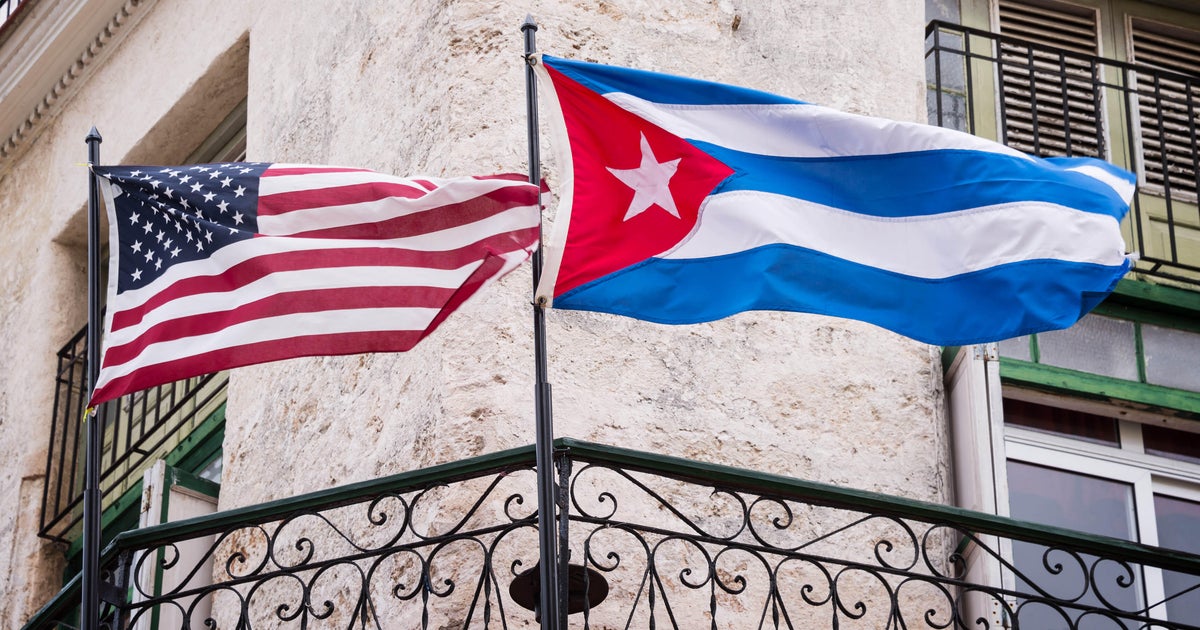

Trump Administration Intensifies Economic Pressure on Cuba with New Sanctions
A Clear Signal to Havana and Its Allies
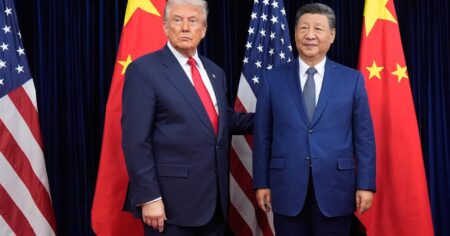
President Trump took decisive action on Friday by signing a sweeping executive order that significantly tightens the economic vise around Cuba, marking yet another chapter in the long and complicated relationship between Washington and Havana. This isn’t just a routine policy update—it represents a substantial escalation in the administration’s approach to the island nation, demonstrating that despite being pulled in multiple directions by conflicts in Iran and other global hotspots, Cuba remains firmly in the crosshairs of U.S. foreign policy. The new measures cast a wide net, targeting Cuban government officials, individuals accused of corruption, and anyone operating in sensitive sectors like energy, defense, or financial services. What makes this order particularly significant is its secondary effect: it puts foreign financial institutions on notice that continuing to do business with Cuban government entities could cost them their precious access to U.S. markets. For experts watching this unfold, the message is clear—this is about more than just Cuba. It’s a geopolitical chess move designed to send a warning to countries like Russia and China to think twice before deepening their involvement with the communist island just ninety miles from American shores.
The Strategic Implications Beyond Cuba’s Borders
According to Andy Gómez, a respected professor of Cuban studies at the University of Miami who has spent years analyzing the intricate dance between the United States and Cuba, this executive order carries weight that extends far beyond the Caribbean. In his view, there’s a hidden message embedded in the technical language of sanctions and penalties—one directed at America’s global competitors. “This is the hidden message behind what has been written, and that’s how I read it,” Gómez explained, suggesting that the order serves as a diplomatic shot across the bow to nations considering closer ties with Cuba. The timing is particularly interesting given the current international landscape, where both Russia and China have been increasingly active in Latin America, seeking to expand their influence in what the United States has historically considered its backyard. The Trump administration appears to be drawing a line in the sand, making it clear that supporting Cuba economically or militarily won’t be tolerated without consequences. This strategy of using economic leverage to achieve broader geopolitical goals has become a hallmark of Trump’s foreign policy approach, and Cuba finds itself once again at the center of this doctrine.
Energy Crisis and the Threat of Military Action
The new sanctions don’t exist in a vacuum—they follow months of relentless pressure that has already created severe hardships for ordinary Cubans. The Trump administration has been particularly aggressive in using the threat of tariffs to discourage foreign countries from shipping oil to Cuba, resulting in crippling energy shortages across the island. Blackouts have become commonplace, affecting everything from hospitals to homes, and the Cuban economy has been struggling under the weight of these restrictions. But the administration hasn’t stopped at economic measures. President Trump himself has refused to rule out military action against Cuba, a possibility that would have seemed almost unthinkable just a few years ago. Secretary of State Marco Rubio, who has deep personal and political connections to the Cuban American community, has been vocal in demanding that Cuba implement substantial economic and political reforms. In a moment that captured both the seriousness and the somewhat cavalier tone of the administration’s approach, Trump joked during a speech on Friday about what might happen after dealing with Iran: “On the way back from Iran, maybe the USS Abraham Lincoln aircraft carrier, the biggest in the world, we’ll have that come in, stop about 100 yards offshore, and they’ll say, ‘thank you very much, we give up.'” While delivered with laughs from his audience, the comment underscored the very real military pressure being applied.
Cuba’s Defiant Response and Show of Strength
The Cuban government has not taken these latest sanctions lying down. President Miguel Díaz-Canel quickly condemned the measures in a post on X (formerly Twitter), characterizing them as “coercive measures” specifically designed to intimidate his nation. For a government that has survived decades of U.S. sanctions and isolation, this latest round is seen as just another chapter in a long struggle. But what made Friday particularly interesting was the rare public appearance of Raúl Castro, the former president and brother of revolutionary leader Fidel Castro, during Cuba’s traditional May Day parade. At nearly 95 years old, Castro’s presence wasn’t accidental—Gómez views it as a carefully calculated move to project strength at a moment when the United States is turning up the heat. “You’re talking about a man who is turning 95 years old,” Gómez noted. “It sends the message that he’s still the one calling the shots.” This display of the old guard serves multiple purposes: it reassures the Cuban population that the revolution’s leadership remains committed, it signals to hardliners within the government that there will be no capitulation to American pressure, and it reminds Washington that the Castro legacy—both symbolic and practical—still holds sway over Cuban politics.
The Migration Warning and Financial Consequences
Beneath the surface of these sanctions lies another crucial element that experts like Gómez have identified: an implicit warning about migration. The specter of mass migration from Cuba to the United States has long been a powerful card in the hands of Cuban leaders, and previous waves of migration have created significant political and humanitarian challenges for American administrations. Gómez believes the Trump administration is sending a clear message to Cuban leaders that any attempt to weaponize migration—to deliberately encourage or allow a large-scale exodus to American shores—will not be tolerated and will be met with even harsher consequences. Meanwhile, the practical impact of these sanctions on foreign banks could be enormous. Financial institutions around the world now face a stark choice: continue doing business with Cuban government entities and risk being cut off from the U.S. financial system, or sever those ties and maintain their access to American markets. For most international banks, this isn’t really a choice at all—the U.S. market is simply too important to risk. This secondary sanction approach has proven effective in other contexts, particularly with Iran, and the administration is betting it will work again with Cuba. The ripple effects could further isolate Cuba economically, making it even more difficult for the government to access the international financial system and conduct basic economic transactions.
The View from South Florida and the Cuban American Community
In South Florida, home to the largest concentration of Cuban Americans in the United States, the announcement of these new sanctions has been met with approval from many quarters, particularly among those who left Cuba or whose families fled the communist government. Representative Carlos Giménez, a Republican who represents a South Florida district, offered enthusiastic praise for the measures. “The newly implemented sanctions against the Cuban regime are necessary to target its security apparatus—the machine that jails political prisoners and oppresses its people,” Giménez stated. “Anyone who props up this tyranny will face serious consequences. We must end this repressive regime that continues to pose a significant threat to our national security. The days of impunity are over. Freedom and our security are not negotiable.” This response reflects the sentiment of a significant portion of the Cuban American community, particularly among older generations and more conservative voters who have long advocated for a harder line against the Cuban government. However, Gómez also points to a growing frustration within the community that had been building as U.S. attention increasingly shifted to conflicts in the Middle East and elsewhere around the globe. There was a concern that Cuba—once a central focus of American foreign policy—was being forgotten or deprioritized as the administration dealt with more pressing international crises. This latest executive order addresses that concern head-on. “This move shows Cuba it hasn’t been forgotten,” Gómez explained. “Even with other international priorities, the issue of Cuba is still on the table.” For a community that has waited decades for meaningful change in their homeland, this reassurance that Cuba remains a priority carries significant political and emotional weight, even as the human cost of these sanctions continues to be debated both within the Cuban American community and beyond.