
The Artemis II Astronauts Get Real About Their Toilet Troubles in Space
When Nature Calls 240,000 Miles from Home
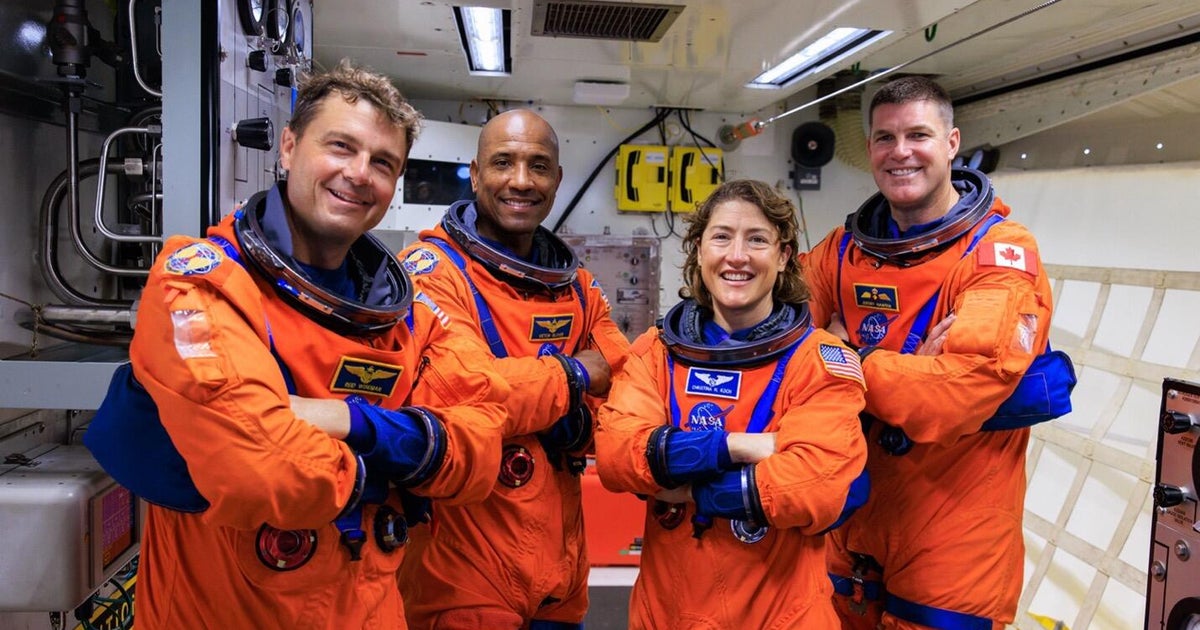
Space exploration has always captured our imagination with images of brave astronauts floating gracefully among the stars, conducting groundbreaking scientific experiments, and pushing the boundaries of human achievement. But what happens when the most basic human needs become the biggest challenge? The crew of Artemis II recently found themselves in headlines not for their historic journey around the moon, but for something far more relatable and decidedly less glamorous: toilet problems. During a candid town hall event on CBS Mornings, the astronauts opened up about their plumbing predicament with surprising humor and honesty, proving that even in the most advanced spacecraft humanity can build, some problems remain universally human. The discussion began when a brave 9-year-old named Bridget asked the question everyone was thinking but few had the courage to voice: “What did you do when the toilet broke? Did you just let it fly around?” Her innocent query sent ripples of laughter through both the astronaut panel and the audience, but it also opened the door to a fascinating conversation about the unglamorous realities of space travel.
The Technical Troubles That Made Headlines
The toilet troubles aboard the Orion capsule weren’t just a minor inconvenience—they became a recurring technical challenge that flight engineers and astronauts had to solve together in real-time. From the very first day of the mission, the crew experienced intermittent issues with their waste management system, a problem that would plague them throughout their historic journey. Initially, the system’s fan malfunctioned, creating the first set of headaches for the crew. However, once engineers on the ground helped resolve that issue, an even more troublesome problem emerged: the vent line responsible for dumping waste into the vacuum of space began to freeze. This frozen line meant that the waste tank couldn’t empty properly, creating a situation that required immediate attention and creative problem-solving. NASA flight controllers, working around the clock from mission control, came up with an ingenious solution. They carefully re-oriented the entire Orion capsule to position it so that direct sunlight would hit the frozen vent line. This solar heating method worked to gradually warm the line and reduce the clog, though it didn’t completely eliminate the ongoing issues. The incident highlights just how many variables space agencies must consider—even the position of the spacecraft relative to the sun can impact something as basic as plumbing.
The Backup Plan: When Plan A Fails at 240,000 Miles
Mission specialist Christina Koch, responding to young Bridget’s question with both professionalism and warmth, explained that NASA’s engineers had thankfully anticipated such problems. “Everything on the spaceship usually has a backup system, so luckily the engineers planned for that and we used our backup system,” Koch told the audience. She admitted with refreshing honesty that “it wasn’t as easy as our fancy, good toilet, but we made do.” This backup system turned out to be what NASA calls “contingency collapsible urinals,” or CCUs—a decidedly low-tech solution to a high-tech problem. These plastic containers are designed to collect urine, which can then be vented into space separately from the main toilet system. Each crew member was equipped with two of these devices, providing a crucial fallback when the primary waste management system failed. According to veteran astronaut Don Pettit, who commented on the situation via social media platform X, these collapsible urinals effectively replace about 25 pounds of diapers that would otherwise need to be carried aboard. This weight savings is significant when every pound launched into space costs thousands of dollars in fuel and resources. The CCUs represent the kind of practical, unglamorous engineering that makes long-duration space missions possible, even if they don’t make it into the inspiring promotional videos.
Keeping Spirits High with Cosmic Bathroom Humor
Despite the challenging situation, the Artemis II crew maintained their sense of humor throughout the ordeal, demonstrating the kind of mental resilience that space agencies value just as highly as technical skills. Pilot Victor Glover showcased this attitude during the town hall when he joked about “the challenges we had” and how the crew was “constantly thinking about the constellation Urion.” This clever play on words referenced both their Orion spacecraft and the frozen urine droplets that remain floating in space after being vented—a phenomenon that creates tiny ice crystals that reflect sunlight. Glover’s joke, while lighthearted, also subtly acknowledged the reality that bathroom waste doesn’t just disappear in space; it becomes part of the environment around the spacecraft, at least temporarily. This kind of humor serves an important purpose on long space missions, where crews are confined in small spaces with limited privacy and must deal with uncomfortable situations together. The ability to laugh about bodily functions and plumbing failures, rather than becoming embarrassed or frustrated, helps maintain crew cohesion and mental health during the stress of spaceflight. It also humanizes these highly trained professionals, reminding audiences back on Earth that astronauts, despite their extraordinary achievements, still face the same basic human needs as everyone else.
The Broader Question of Hygiene in Space
The toilet troubles opened up a wider conversation about personal hygiene in the challenging environment of space, with CBS Mornings anchor Gayle King asking the question many viewers were wondering: “How do you stay clean up there? Showers, birdbaths?” Christina Koch’s response painted an interesting picture of bathing in microgravity. “I think showers in space are great,” she said simply. “Floating, water.” While her brief answer left many details to the imagination, it points to one of the many adaptations astronauts must make to daily routines we take for granted on Earth. In microgravity, water doesn’t flow down a drain—it forms floating spheres that can drift around the cabin. This means that traditional Earth-style showers aren’t practical on most spacecraft. Instead, astronauts typically use no-rinse soap, wet towels, and carefully controlled amounts of water to clean themselves, ensuring that every drop is captured and recycled. The International Space Station has experimented with various bathing methods over the years, and newer spacecraft are incorporating lessons learned from decades of human spaceflight. The discussion of hygiene might seem trivial compared to the scientific objectives of the Artemis program, but it’s actually critical to crew health and mission success. Maintaining cleanliness in space helps prevent skin infections, maintains crew morale, and makes the confined living quarters more tolerable for extended periods.
Why These Uncomfortable Conversations Matter
The candid discussion about toilet troubles and personal hygiene aboard Artemis II serves a purpose far beyond entertainment or shock value—it represents an important shift in how space agencies communicate with the public. For decades, NASA and other space organizations presented a carefully curated image of spaceflight, emphasizing the heroic and inspirational aspects while glossing over the messy, uncomfortable realities. This created an idealized vision of space exploration that, while motivating, didn’t fully prepare the public or future astronauts for the genuine challenges involved. By openly discussing these unglamorous topics, the Artemis II crew helps demystify space travel and makes it more accessible to people who might previously have thought astronauts were somehow superhuman. Young people watching these discussions learn that becoming an astronaut doesn’t mean transcending basic human needs—it means learning to manage those needs in extraordinarily challenging circumstances. This honesty is particularly important as space agencies plan for longer missions to the Moon, Mars, and beyond, where waste management, hygiene, and life support systems become increasingly critical. The engineering challenges of keeping humans alive and healthy in space are just as important as propulsion systems and navigation computers. Furthermore, these conversations highlight the incredible work of the engineers and support teams on the ground who must anticipate every possible failure and design backup systems for even the most basic functions. The story of the Artemis II toilet troubles is really a story about human ingenuity, adaptability, and the ability to maintain dignity and humor in difficult circumstances—qualities that will be essential as humanity pushes further into the solar system in the decades to come.