


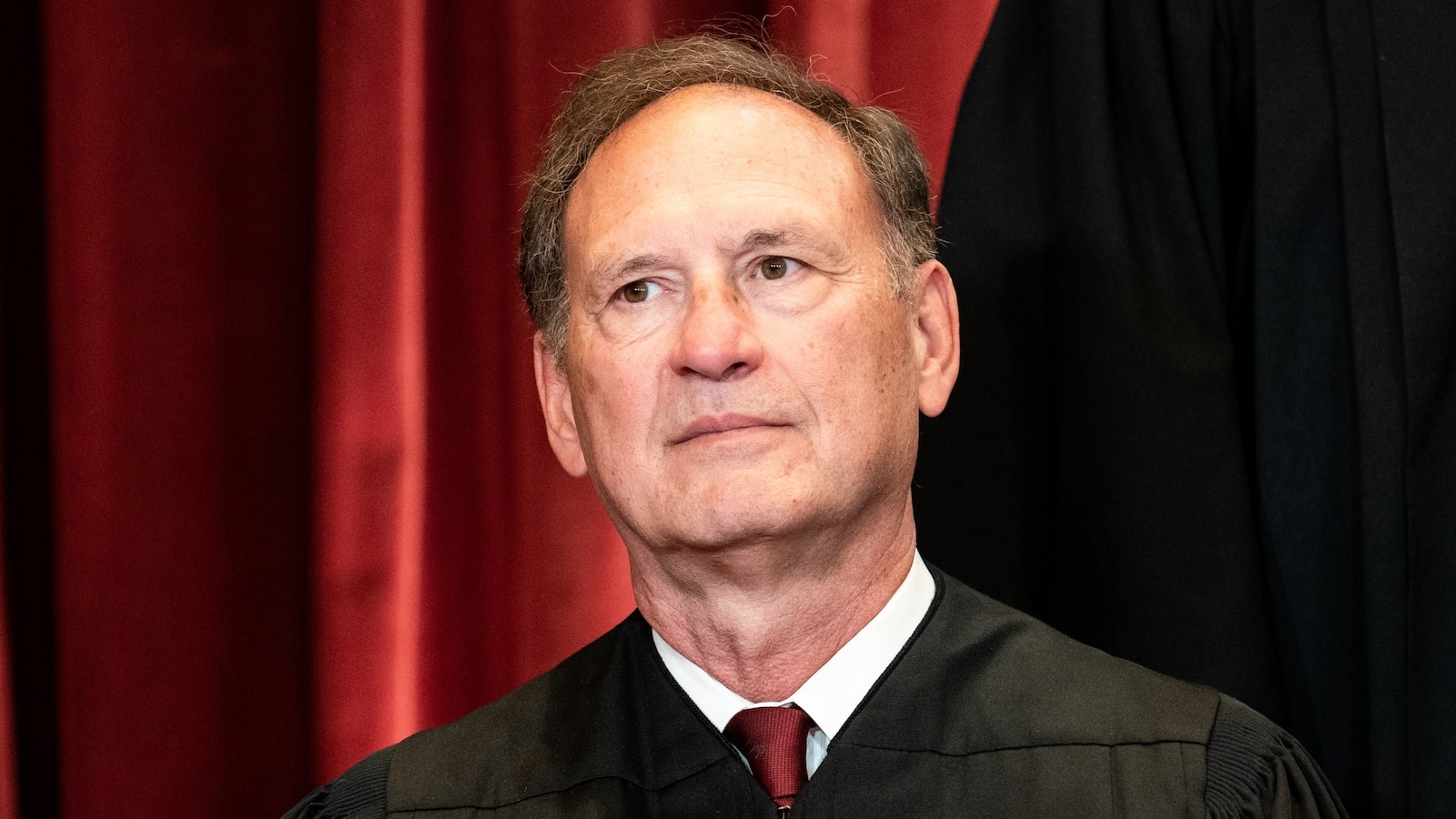

Supreme Court Justice Samuel Alito’s Recent Health Scare: What We Know
An Unexpected Evening at the Federalist Society Dinner
In an incident that has raised questions about the health and future of one of America’s most influential jurists, Supreme Court Justice Samuel Alito experienced a medical episode that required hospital attention following a high-profile event in his honor last month. The 76-year-old justice, who is celebrating his 20th year on the nation’s highest court, was scheduled to deliver the keynote address at a Federalist Society dinner in Philadelphia on March 20th but was unable to do so. Multiple sources who attended the event reported that Alito appeared noticeably different from his usual self that evening, describing him as looking “tired” and less engaged than observers had come to expect from the typically vigorous justice. Rather than standing to greet the many attendees who approached him throughout the dinner, Alito remained seated—a departure from his normal demeanor that didn’t go unnoticed by those in attendance. The event, which was meant to celebrate Alito’s significant contributions to conservative jurisprudence, took an unexpected turn as concerns about his condition grew throughout the evening, ultimately leading to his early departure and subsequent medical evaluation.
The Day’s Activities and Medical Response
Earlier that same day, Justice Alito had appeared publicly at the Supreme Court, participating in the release of a unanimous opinion in the case Olivier v. City of Brandon, which dealt with important questions surrounding a protestor’s free speech rights. Following the public session, Alito joined his fellow justices for their weekly private conference, where the Court discusses pending cases and makes critical decisions about which matters to hear. These activities would constitute a full day’s work for anyone, let alone someone in their mid-70s carrying the immense responsibilities of a Supreme Court justice. After the Philadelphia dinner, where his condition became a concern to those around him, Alito’s security detail recommended that he seek medical attention before attempting the three-hour drive back to his home in Virginia. Demonstrating the caution that one would hope surrounds the health of such an important public figure, Alito agreed to be evaluated at a local hospital. According to Patricia McCabe, a Supreme Court spokesperson, the justice “felt ill during an event in Philadelphia” and, “out of an abundance of caution, he agreed with his security detail’s recommendation to see a physician before the three-hour drive home.”
Medical Treatment and Quick Recovery
The medical examination revealed that Justice Alito was suffering from dehydration, a condition that can affect anyone but is particularly common and potentially more serious in older adults. The treatment was relatively straightforward—the administration of intravenous fluids to address the dehydration. This common medical intervention proved effective, and Alito was able to return to his Virginia home that same evening, as he had originally planned before the medical episode. The Supreme Court spokesperson emphasized that this was not simply a matter of treating the immediate symptoms and sending the justice on his way. “Justice Alito was thoroughly checked by his own physician,” McCabe stated, indicating that proper follow-up care was arranged to ensure there were no underlying issues that required further attention. The comprehensive nature of this follow-up examination suggests that both Alito and the Court are taking his health seriously, particularly given his age and the demanding nature of his position. True to form and demonstrating his characteristic dedication to his judicial duties, Alito returned to work the following Monday for oral arguments, showing no signs that the previous week’s incident would slow him down.
Recent Performance and Public Appearances
In the two weeks following the medical episode, Justice Alito has demonstrated that he remains fully capable of performing his demanding duties. He has participated in six days of oral arguments alongside his colleagues, and observers have noted that he appeared “healthy, energetic and engaged in questioning and debate.” This is significant because the Supreme Court’s oral argument sessions are intellectually rigorous events where justices must quickly process complex legal arguments, engage with skilled attorneys, and probe the implications of various legal theories and positions. Alito’s active participation in these sessions, characterized by his typical sharp questioning and engagement with legal nuances, has reassured many that the March incident was indeed an isolated event rather than a sign of declining health. His performance has been consistent with the intellectual vigor he has displayed throughout his nearly two-decade tenure on the Court, suggesting that the dehydration episode was a temporary condition rather than a symptom of a more serious underlying health problem. For a justice who has been instrumental in shaping American law on issues ranging from abortion rights to gun regulations, the ability to maintain this level of engagement is crucial not only for his own legacy but for the functioning of the Court itself.
Speculation About Retirement and Political Timing
Interest in Justice Alito’s health and future plans has intensified recently, fueled by growing speculation about whether he might be considering retirement. As the second-oldest member of the current Court, Alito’s decisions about his future have significant implications for the ideological balance of the institution and, by extension, American law for decades to come. Some analysts and individuals described as Alito allies have suggested that the current political landscape might represent a strategically opportune moment for retirement, should the justice be so inclined. With President Donald Trump in the White House and Republicans controlling the Senate through at least the end of this year, Alito could be assured that his replacement would be a conservative jurist who might continue his judicial philosophy. This consideration has historical precedent—justices have often timed their retirements to coincide with administrations and Senate majorities that align with their judicial philosophies, ensuring continuity in the Court’s ideological composition. However, it’s important to note that Justice Alito himself has given no indication whatsoever that he intends to step down from his lifetime appointment. In fact, evidence points in the opposite direction—he has a book on his jurisprudence scheduled for publication in October, suggesting he remains engaged with his intellectual legacy and future contributions to legal thought.
Looking Forward: Health, Legacy, and the Court’s Future
The incident in Philadelphia serves as a reminder that the members of the Supreme Court, despite their extraordinary influence and the reverence with which they are regarded, are human beings subject to the same health concerns as anyone else. The fact that Justice Alito experienced dehydration—a relatively common and easily treatable condition—and responded appropriately by seeking medical attention demonstrates good judgment and the proper functioning of the support systems surrounding Supreme Court justices. As Alito marks his 20th year on the bench, his legacy is already substantial, having authored or joined opinions that have fundamentally shaped American law in areas including religious liberty, gun rights, abortion, and the scope of federal regulatory power. His influence on the Court’s conservative majority has been profound, and his departure, whenever it might occur, would represent a significant transition point for the institution. For now, however, all indications are that Justice Alito has recovered fully from his brief medical episode and intends to continue serving on the Court. His robust participation in recent oral arguments and his forthcoming book project suggest a justice who remains intellectually vigorous and committed to his role. As this story continues to develop, observers will undoubtedly watch closely for any further signs of health concerns or hints about retirement plans, but for the moment, Justice Samuel Alito appears ready to continue shaping American constitutional law for the foreseeable future, adding to a judicial legacy that has already left an indelible mark on the nation’s highest court.