


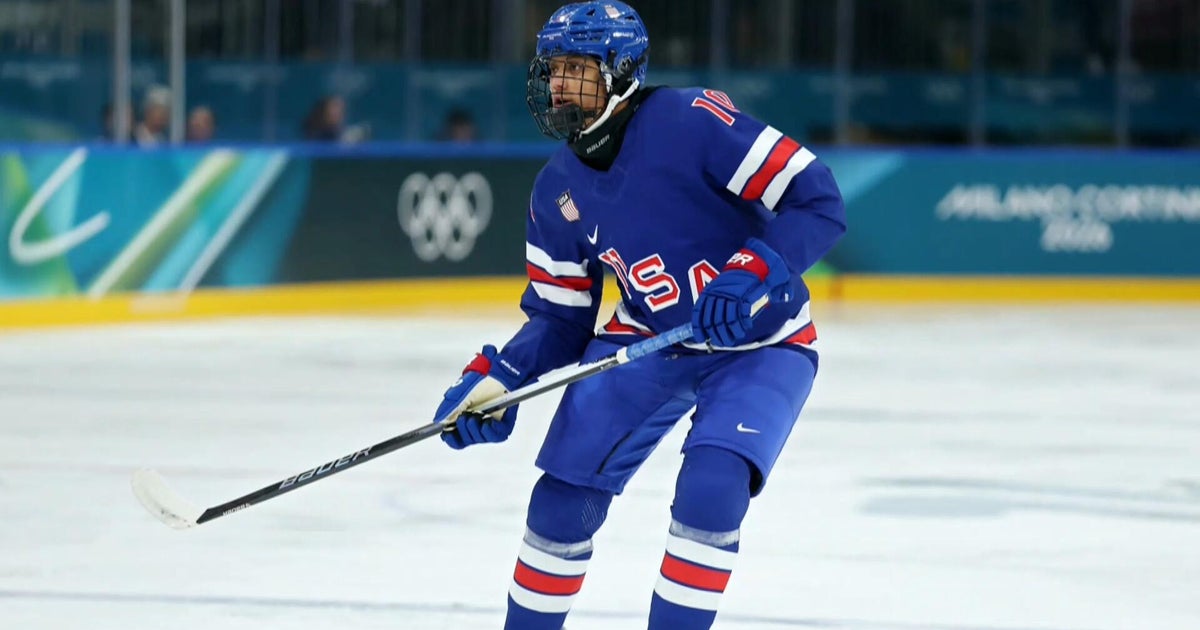

Breaking Barriers on Ice: Laila Edwards Makes Olympic History
A Historic Moment for American Hockey
Laila Edwards has achieved what no Black woman has accomplished before in American sports history, becoming the first to represent the United States on the women’s ice hockey team at the Olympic Winter Games. The 22-year-old athlete made her groundbreaking Olympic debut at the 2026 Winter Games in Italy, where Team USA secured a commanding 5-1 victory over the Czech Republic in their opening preliminary round match. Speaking with “CBS Mornings,” Edwards expressed the weight and wonder of this achievement, describing it as “an incredible honor” to carry this distinction. Her humble yet powerful words resonated beyond the rink: “You know, I get to be the first of something and a role model for others.” This statement captures not just personal achievement but the broader significance of representation in a sport that has historically lacked diversity. For young girls of color who dream of gliding across the ice with a hockey stick in hand, Edwards has transformed from an athlete into a symbol of possibility, proving that the frozen surface of a hockey rink truly belongs to everyone with the passion and dedication to pursue it.
From Tutus to Tough Defense: An Unexpected Journey
Like many great athletes, Edwards’s path to Olympic glory began in an unexpected place. At just three years old, she took her first steps on ice—not as a hockey player, but as a figure skater. This wasn’t accidental but rather part of her father’s strategic plan to develop her skating skills before transitioning her to hockey. Young Laila, unaware of this master plan, participated in figure skating but quickly discovered it wasn’t entirely her style. With characteristic honesty and humor, she reflected on those early days, admitting she liked the sport well enough but “wasn’t the biggest fan of the outfits.” The frilly tutus and puffy costumes that define figure skating aesthetics didn’t resonate with the young athlete’s personality. “The tutus and the puffy. Yeah, no, I wasn’t a fan,” Edwards recalled with a laugh. This early experience, however uncomfortable the wardrobe, laid the technical foundation for her future success. By age five, Edwards made the switch to ice hockey, and the transformation was complete. Now a defensive player for Team USA, she occupies a position that’s the “polar opposite” of her figure skating origins—trading artistic expression for strategic positioning, graceful spins for powerful body checks, and sequined costumes for protective gear and team jerseys.
Finding Her Place as the Only Girl on the Team
Edwards’s early hockey career was marked by both exceptional skill and notable isolation. As a young player in Cleveland Heights, Ohio, she quickly distinguished herself on the ice, but not only for her athletic abilities. She was often the only girl on her team, navigating a male-dominated sport during her formative years. This experience shaped her in profound ways, building resilience and confidence that would serve her throughout her career. “I definitely felt like I belonged, but there were times where there’s a bit of intimidation, just being the only girl on my team,” Edwards candidly shared. Rather than shrinking from this challenge, she embraced it fully, describing herself as “such a tomboy” who was “basically one of them.” This ability to hold her ground, to claim her space without apology, became a defining characteristic of both her playing style and her approach to life. The young girl who refused to let gender barriers keep her from the sport she loved was developing the mental toughness that would eventually carry her to the Olympic stage. Her experience resonates with countless girls who have felt out of place in traditionally male spaces, offering validation and inspiration to persist despite discomfort or doubt.
Rising to National and International Prominence
The Cleveland Heights native’s journey from local rinks to the world stage happened with remarkable speed, testament to her extraordinary talent and unwavering dedication. It didn’t take long for Edwards to establish herself as one of the premier women’s hockey players in the United States. Her skills caught the attention of the University of Wisconsin, where she developed into a formidable defensive player at the collegiate level. Then, in 2023, she achieved another groundbreaking milestone by becoming the first African American player to join the U.S. women’s national hockey team. This historic selection was just the beginning. Now, competing at the 2026 Winter Olympics in Italy, Edwards is writing another chapter in her already remarkable story. For an athlete who has consistently broken barriers throughout her career, the Olympic stage represents both a personal pinnacle and a platform to inspire the next generation. Her presence on Team USA sends a powerful message about the changing face of hockey and winter sports more broadly, challenging outdated assumptions about who belongs in these elite athletic spaces and paving the way for greater diversity and inclusion in years to come.
The Ice as Sanctuary: Finding Peace in the Game
Beyond the historic significance and the pressure of competition, Edwards maintains a deeply personal relationship with the sport that has defined her life. When asked about what hockey means to her, she described the ice as her sanctuary, a place where the weight of expectations and the stress of daily life simply fall away. “It’s cliché, but it’s my safe space where I just feel like I can be myself and do what I love, along a lot of really good athletes and against good athletes,” she explained. This perspective reveals the heart of an athlete—someone who plays not just for records or recognition, but for the pure joy of the game itself. The transformation that happens when Edwards puts on her hockey gear and steps onto the ice is complete; worries dissolve, stress evaporates, and what remains is simply the athlete and the sport she loves. This mental approach, viewing competition as an opportunity rather than a burden, has undoubtedly contributed to her success at the highest levels. It’s a reminder that the greatest athletes often find ways to preserve the childlike joy that first drew them to their sport, even as they compete on the world’s biggest stages. For Edwards, the Olympic ice in Italy is not so different from the rinks of her youth—it’s still a place where she can be authentically herself, doing what she loves most.
Gratitude, Legacy, and Inspiration for the Future
As Edwards reflects on her Olympic journey, she emphasizes gratitude above all else. She recognizes that her achievements are not hers alone but the result of countless sacrifices made by her family and supporters. “I have had so many people help me get here, and especially my family. They sacrificed time, money, you know, experiences,” Edwards acknowledged. The financial burden of youth hockey, the countless hours spent driving to practices and tournaments, the family events missed for the sake of athletic development—she sees all of it clearly and carries it with her onto the Olympic ice. “This is my best way of trying to say thank you…making them proud while representing our country,” she said. This combination of personal gratitude and national pride captures the essence of the Olympic spirit. When asked what advice she would offer to girls hesitant about pursuing ice hockey, Edwards’s response was characteristically direct and empowering: “There’s no rule book that says hockey is for boys. You know, there’s no reason you shouldn’t do it if you love it. I think that’s with everything in life.” This relentless mindset—the refusal to accept arbitrary limitations, the determination to pursue passion regardless of convention—has prepared Edwards not just for Olympic competition but for a legacy that extends far beyond her playing career. As the first Black woman to wear Team USA’s jersey at the Olympic Winter Games, she has opened a door that can never be closed again, and in doing so, she has changed what young girls of all backgrounds can imagine for themselves when they lace up their skates.