


NATO Command Restructuring: Europe Steps Up as America Refocuses Its Strategic Priorities
A Historic Shift in Transatlantic Defense Responsibilities
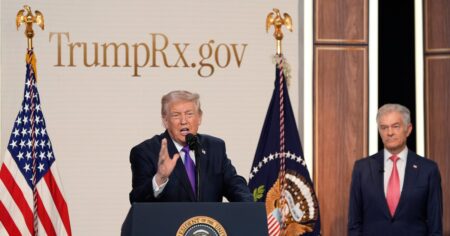
In a significant reorganization of the North Atlantic Treaty Organization’s command structure, NATO has announced that two major Joint Force Commands currently led by the United States will transition to European leadership over the coming years. This development comes at a crucial moment when President Trump has been consistently urging European nations to shoulder more responsibility for their own security and defense needs. The alliance made it clear in their official statement that this change represents “a shift to more fairly sharing responsibility within NATO, with European allies taking on greater leadership roles in NATO’s command structure.” This announcement was strategically timed ahead of an important gathering of NATO defense ministers, signaling the seriousness with which the alliance is addressing American concerns about burden-sharing. Despite this transfer of command responsibilities, NATO was careful to emphasize that the United States would retain the prestigious and strategically vital position of Supreme Allied Commander Europe (SACEUR), underscoring America’s continued commitment to the alliance’s overall command and control framework.
The Strategic Context Behind the Changes
The timing of this announcement is far from coincidental. Just last month, the Trump administration unveiled its National Defense Strategy, a comprehensive document that laid out a fundamentally different vision for American military priorities around the globe. This strategy explicitly stated that NATO allies should assume primary responsibility for defending Europe, allowing the United States to redirect its focus and resources toward two critical objectives: protecting the American homeland and countering the growing threat posed by China in the Indo-Pacific region. This represents a notable shift in American strategic thinking, one that reflects both the changing global security landscape and domestic political pressures to reduce America’s overseas commitments. Underscoring the significance of these changes, Elbridge Colby, the Under Secretary of Defense for Policy and the lead author of the National Defense Strategy, is expected to represent the United States at this week’s NATO Defense Ministerial meeting instead of Defense Secretary Pete Hegseth. This marks the first time Hegseth has skipped a NATO defense ministerial since assuming his position, a decision that has not gone unnoticed among alliance watchers and signals the administration’s priorities and perhaps its approach to these discussions.
Understanding the Command Transitions
The practical implementation of these leadership changes will unfold gradually over several years, allowing for a smooth transition that maintains NATO’s operational readiness throughout the process. Pentagon officials have been at pains to emphasize that this wasn’t a unilateral American decision but rather one that was “made jointly among all allies,” presenting it as a collaborative effort that strengthens rather than weakens the alliance. According to official statements, “The decision strengthens the alliance by showing European leadership in European defense and enhancing European defense capabilities.” The specific changes involve several key commands taking on new leadership arrangements. The command based in Norfolk, Virginia, which is NATO’s newest operational headquarters and focuses on the strategically critical missions of protecting the Atlantic Ocean and Arctic regions, will transition to leadership by a British officer. Interestingly, this command operates within facilities on a larger naval installation that will remain under U.S. Navy control even after the leadership transition, ensuring continued American involvement in the infrastructure supporting NATO operations.
New Leadership Arrangements Across European Commands
The restructuring will see Italy assuming leadership of Joint Force Command Naples, while Germany and Poland will share command of Joint Force Command Brunssum on a rotational basis—a command currently led by Germany. This rotational arrangement between Germany and Poland is particularly significant, representing both nations’ commitment to European defense and acknowledging Poland’s increasingly important role in NATO’s eastern flank defense. Once all these changes are fully implemented, all three Joint Force Commands responsible for leading operations during times of crisis will be under European leadership, marking a historic shift in how the alliance operates. However, this doesn’t mean the United States is stepping back entirely from NATO’s command structure. In what might be seen as a strategic trade, the United States will assume leadership of the Allied Maritime Command, a position currently held by a British vice admiral. This means that following the restructuring, the United States will lead all three of NATO’s functional commands: Allied Maritime Command, Allied Land Command, and Allied Air Command—positions that focus on specific warfare domains rather than geographic regions.
America’s Continued Strategic Role in NATO
Despite the transfer of regional command responsibilities to European allies, the United States will maintain its position at the very top of NATO’s military hierarchy. The position of Supreme Allied Commander Europe, or SACEUR, has been held by an American officer since NATO’s founding, and this tradition will continue unchanged. This role commands all NATO forces and represents the alliance’s unified military leadership, making it the most powerful position in the NATO command structure. Currently, Air Force General Alexus G. Grynkewich holds this prestigious position while simultaneously leading the approximately 80,000 U.S. service members stationed in U.S. European Command. This dual responsibility reflects the integrated nature of American and NATO military operations in Europe and ensures that U.S. strategic interests remain central to alliance decision-making. The retention of SACEUR by an American officer serves as a powerful symbol of continued U.S. commitment to European security, even as day-to-day operational commands shift to European leadership.
Implications for the Future of Transatlantic Security
This restructuring represents more than just a reshuffling of military command assignments—it reflects fundamental questions about the future of the transatlantic alliance and how burden-sharing should work among democracies facing common threats. For decades, European allies have faced criticism, particularly from American politicians and analysts, for under-investing in their own defense while relying on the United States to provide security guarantees. This command transition offers Europeans an opportunity to demonstrate that they can take greater responsibility for their own security, potentially addressing longstanding American concerns while also building European strategic autonomy. At the same time, these changes raise questions about what happens when European and American strategic interests diverge, or when the United States is preoccupied with challenges in other regions, particularly the Indo-Pacific. The gradual implementation timeline suggests that NATO is approaching these changes carefully, aware that maintaining alliance cohesion and operational effectiveness during this transition will require skillful diplomacy and continued cooperation. As the international security environment becomes increasingly complex, with challenges ranging from Russian aggression to cyber warfare to climate-driven instability, how effectively NATO adapts to this new command structure may determine the alliance’s relevance and effectiveness for decades to come. The success of this transition will depend not just on military reorganization but on whether European nations back up their new leadership roles with the defense spending, military capabilities, and political will necessary to genuinely shoulder greater responsibility for continental security.