


Trump’s Pharmaceutical Pricing Initiatives: Promise vs. Reality
The Problem America Faces with Drug Costs
Americans are struggling under the weight of prescription drug prices in ways that few other developed nations can relate to. Recent polling data reveals a troubling picture: roughly 60% of American adults worry constantly about whether they’ll be able to afford medications for themselves and their families. Even more strikingly, over 80% of Americans believe prescription drug prices have reached unreasonable levels and support stronger government regulation to bring costs down. The numbers tell a stark story—Americans typically pay approximately three times more than citizens in other countries for identical prescription medications. This isn’t just an economic issue; it’s a health crisis that forces families to make impossible choices between essential medicines and other necessities. When President Trump began his second term, he promised to tackle this problem head-on, announcing a series of initiatives designed to rein in what many view as the pharmaceutical industry’s excessive pricing practices. The question that remains is whether these highly publicized efforts will deliver meaningful relief to ordinary Americans or simply amount to political theater.
The Administration’s Multi-Pronged Approach
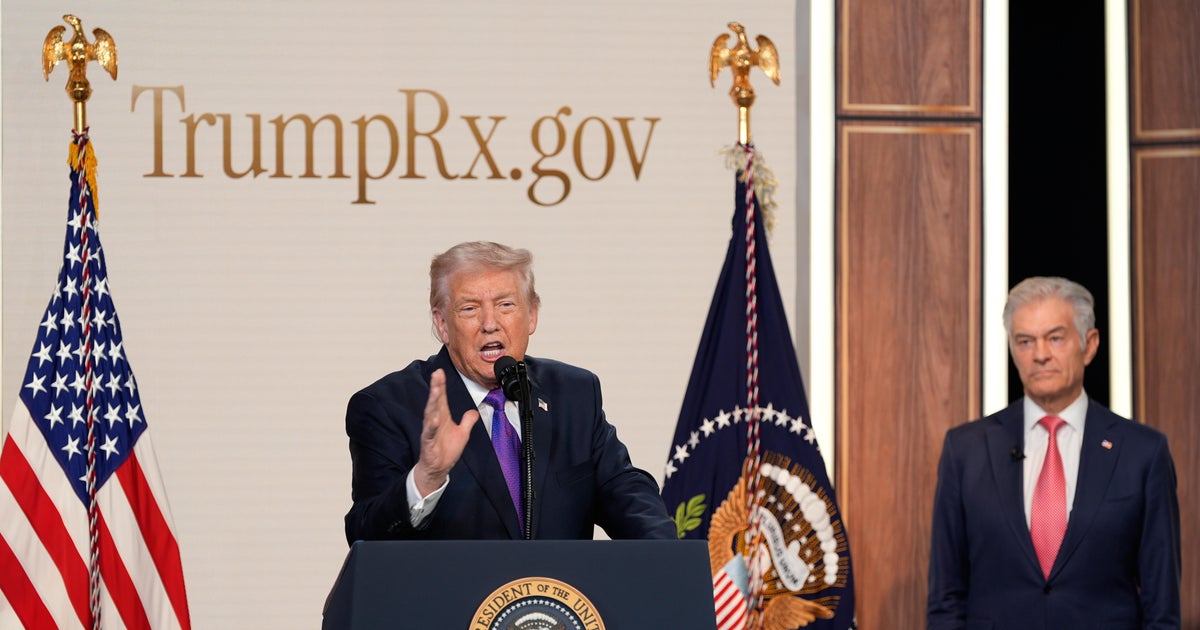
President Trump’s strategy to lower drug prices has unfolded through several distinct initiatives, each announced with considerable fanfare. Last July, the administration sent letters to seventeen major pharmaceutical companies demanding voluntary price reductions—an unusual tactic that blended public pressure with private negotiation. Following this, Trump claimed to have personally negotiated one-on-one with executives from more than a dozen pharmaceutical companies at the White House itself. In December, he announced what he described as a groundbreaking agreement: pharmaceutical companies would provide “most favored nation” pricing for Medicaid, the government insurance program serving low-income Americans. This was followed by the February launch of TrumpRx, a dedicated website promising cash-paying patients access to discounted medicines. The administration also pledged to accelerate the approval process for biosimilars—essentially generic versions of expensive specialty biological drugs—by cutting through what they characterized as unnecessary FDA red tape. On paper, this multi-faceted approach appeared comprehensive, targeting different aspects of the drug pricing problem from multiple angles. The reality, however, has proven considerably more complicated and less transformative than the announcements suggested.
Limited Impact and Unclear Details
When experts and journalists began examining these initiatives closely, significant questions emerged about their actual scope and effectiveness. The details of many negotiations remain frustratingly vague, including basic information about which specific drugs are covered under various agreements. The White House has been notably reluctant to provide clarification, with spokesperson Kush Desai not responding to queries about TrumpRx specifics. Healthcare policy experts point out that Medicaid already receives substantial discounts on pharmaceuticals, meaning the “most favored nation” pricing may not represent a significant change. For other patients, commercial drug discount programs that have existed for years often provide better options, offering far more products than TrumpRx currently lists. Many patients with insurance may find better deals through their existing coverage combined with drug company copayment assistance cards. Mark Cuban, the billionaire investor who launched his own Cost Plus Drug Company in 2022 to sell medications cheaply by eliminating middlemen, acknowledged that while any patient who benefits represents a win, the overall share of Americans likely to see meaningful savings remains disappointingly small. Aaron Kesselheim, a Harvard Medical School professor specializing in drug pricing research, offered a more critical assessment, characterizing the Trump announcements as “one-off agreements made for publicity purposes” that fundamentally don’t change how drugs are priced in America. He emphasized that these agreements are both opaque and essentially unenforceable, lacking the structural reforms necessary to create lasting change in pharmaceutical pricing practices.
Business as Usual for Drug Manufacturers
Despite the administration’s claims of breakthrough agreements, data shows pharmaceutical companies have largely continued their standard pricing practices. The consulting firm 46brooklyn, which tracks brand-name drug prices, discovered that nearly 1,000 brand-name drugs increased in price during January 2026 alone. Moreover, 2025 recorded the highest number of list price increases in history. As Antonio Ciaccia, the company’s co-founder, bluntly stated: “This is not a material change, it’s business as usual.” In the first week of 2026, Pfizer—one of the companies with which Trump claimed to have negotiated significant discounts—raised list prices on 71 drugs by an average of 5% while lowering the price of only a single medication by 9.8%. The TrumpRx portal itself reveals the limitations of these deals. Many featured products are brand-name drugs competing against far cheaper generic alternatives that have been available for years. For example, TrumpRx lists Pfizer’s branded cholesterol drug Colestid at “50% off” for $127.91, while generic versions sell for approximately $17 on Cuban’s Cost Plus site. Other featured drugs are decades old or useful only when combined with additional medications that receive no discount. When Amgen’s Humira was added to TrumpRx at $950 per dose—down from nearly $7,000—it seemed impressive until one considered that Humira lost patent protection in 2023, and biosimilar equivalents are now listed on the same TrumpRx site for as little as $207.60 per dose. Since most TrumpRx products are available only to uninsured, cash-paying customers, even substantial percentage discounts often leave medications unaffordable for ordinary Americans.
The Real Success Story: Medicare Negotiation
Ironically, the Trump administration’s most significant achievement in lowering drug costs has been one they rarely highlight: quietly continuing a Biden administration program that allows Medicare to negotiate prices directly with pharmaceutical manufacturers. The negotiated discounts on an initial ten expensive drugs—including blood thinners, insulins, and medicines for inflammatory disorders—took effect on January 1, 2025. With price reductions exceeding 50% on some products, the program saves an estimated $6 billion annually and enabled Medicare to cap out-of-pocket spending on Part D prescription drugs at $2,000 for 2025 and beyond. An additional fifteen high-priced drugs, including popular weight loss and cancer medications, underwent negotiation in 2025, with discounted prices taking effect this year. Fifteen more expensive drugs are scheduled for negotiation this year. Combined, these forty negotiated drug prices are expected to save Medicare over $20 billion annually—a figure that dwarfs the uncertain savings from TrumpRx and other publicized initiatives. As Kesselheim noted, “This is historic because it’s the first time the United States has negotiated prices, like every other developed country. And guess what? Innovation didn’t stop.” This directly counters the pharmaceutical industry’s longstanding argument that price controls would stifle medical research and development. However, drug industry lobbyists continue working to limit the program’s impact, achieving some success with provisions like the exemption for rare disease drugs in the One Big Beautiful Bill Act. The program’s major limitation is that it benefits only Medicare enrollees, leaving millions of Americans without access to these negotiated prices.
A Mixed Bag of Results
While the Trump administration’s pharmaceutical pricing initiatives have produced a few genuinely helpful deals, the overall impact falls dramatically short of the transformative change suggested by the announcements. TrumpRx does offer some notable discounts, particularly on fertility drugs and GLP-1 medications for weight loss. EMD Serono’s fertility drug Gonal-F, with a list price of $966, costs only $168 per IVF cycle using a TrumpRx coupon—savings that could reduce a single fertility treatment cycle cost by roughly 10%. Similarly, Novo Nordisk’s Wegovy for weight loss is available for as little as $199 monthly, and competitor Zepbound for $299, which helps uninsured individuals or those whose insurance doesn’t cover these increasingly popular medications. However, these deals exist within concerning contexts. EMD Serono received tariff relief on its overseas-produced medications and expedited FDA approval for a fertility drug already marketed heavily in Europe. The pressure on companies like Novo Nordisk and Eli Lilly to lower GLP-1 prices stems partly from impending generic competition—Wegovy generics may sell for as low as $73 monthly in Canada this year—rather than purely from Trump administration negotiations. The administration’s promise to accelerate biosimilar approvals may also prove less impactful than hoped. The real barrier to generic and biosimilar market entry isn’t typically FDA approval but rather the complex patent protections U.S. law allows manufacturers to deploy, creating “patent thickets” that keep competitors at bay long after initial patents expire. For instance, while the FDA approved a generic psoriatic arthritis drug Otezla in 2021, it won’t reach the market until 2028. Dozens of patents should keep Wegovy generics off the U.S. market until 2039, despite patent protection ending in India. The average patient seeking the best deal must now become a sophisticated healthcare shopper, comparing prices across multiple platforms and payment methods with the same scrutiny they might apply to grocery shopping—a burden that falls heaviest on those least equipped to navigate these complex systems.