
Discovery of Illegal Biolabs Raises Serious Questions About Federal Oversight
A Disturbing Pattern Emerges
When authorities raided a seemingly ordinary home in Las Vegas over the weekend, they uncovered a chilling scene that felt like déjà vu for California officials. Inside a locked garage, police discovered multiple refrigerators, freezers, and an array of laboratory equipment alongside countless bottles containing mysterious liquids. What made this discovery particularly alarming wasn’t just what investigators found, but where they’d seen it all before. This Las Vegas biolab bore an uncanny resemblance to an illegal facility discovered in Reedley, a small Fresno County suburb, back in late 2023. Both locations were connected to the same individual, a Chinese citizen named Jia Bei Zhu, who now sits behind bars awaiting his April court appearance. The parallels between these two discoveries have sparked intense criticism from California officials who feel their earlier warnings about the Reedley lab fell on deaf ears at the federal level, potentially allowing this dangerous operation to continue expanding under everyone’s noses.
The Original Discovery in Reedley
The saga began in late 2023 when authorities stumbled upon the illegal biolab operating out of a Reedley home. What they found inside was nothing short of nightmarish. Police discovered containers labeled with some of the world’s most dangerous pathogens, including dengue fever, HIV, and malaria. Perhaps most disturbing were the approximately 1,000 mice that officials believe were being used as living test subjects for whatever experiments were being conducted in this makeshift facility. The discovery led to Zhu’s arrest in October 2023, followed by a formal indictment in November on charges of distributing adulterated and misbranded medical items, which included coronavirus tests. The scope and sophistication of the operation shocked local officials in the small California community, but their attempts to sound the alarm about the broader implications of their discovery were met with what they describe as an inadequate response from federal health authorities. This initial find should have served as a wake-up call, but instead, it appears to have been just the tip of the iceberg.
The Las Vegas Connection Unfolds
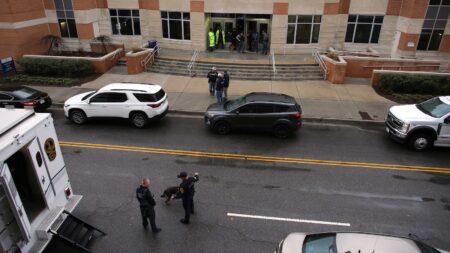
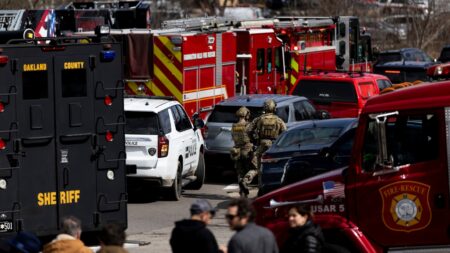
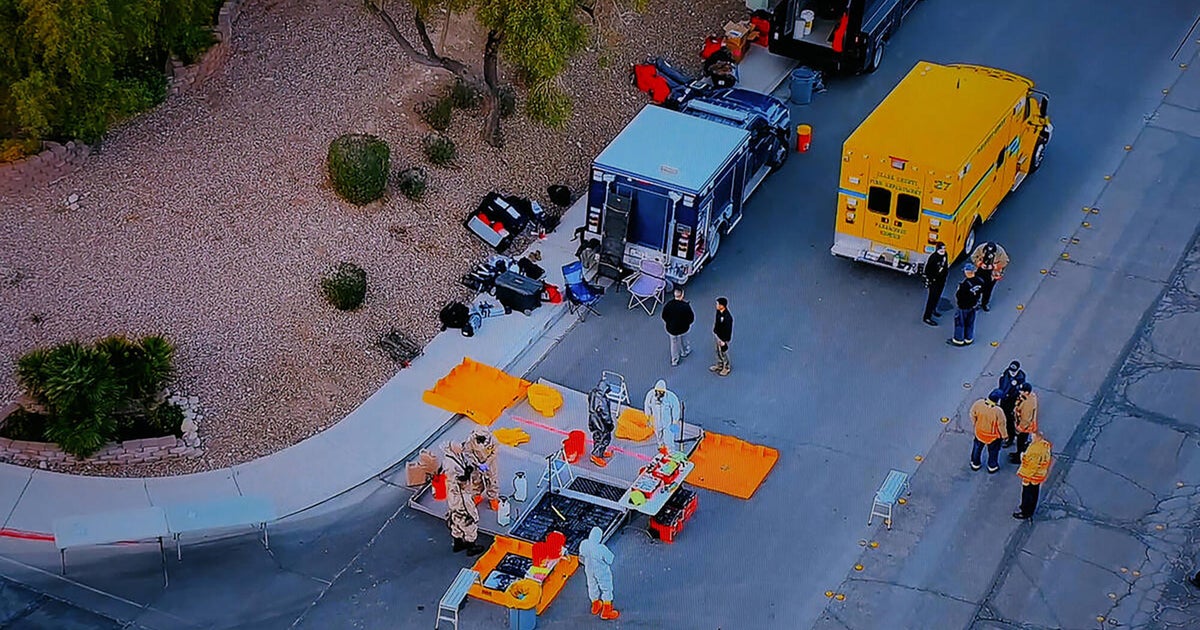
Fast forward to early Saturday morning when Las Vegas Metropolitan Police Department officers executed a search warrant on a property in the eastern part of the city. Sheriff Kevin McMahill reported that authorities had “received limited information that laboratory equipment and potentially hazardous materials” were being stored at the residence. As the investigation unfolded, a crucial connection emerged: this Vegas property was also owned by Zhu, the same person at the center of the Reedley case. This revelation immediately “raised significant concern” about what officers might encounter, according to McMahill. The potential danger was taken so seriously that authorities deployed a robot to clear the house before allowing any human officers to enter. Hazmat teams were brought in to safely remove and catalog the materials found inside. FBI Special Agent in Charge Christopher Delzotto detailed the disturbing inventory, which included a centrifuge, biosafety tools, and “unknown liquids in gallon-sized containers and refrigerated vials.” More than 1,000 samples were carefully collected from the scene and transported across the country to the National Bioforensic Analysis Center in Maryland for analysis. The items found were “consistent in appearance to the items found and described in the Reedley, California lab investigation,” McMahill confirmed, strengthening the connection between the two illegal operations and raising troubling questions about how many similar facilities might exist.
California Officials Sound the Alarm
The discovery in Las Vegas has vindicated California officials who felt their concerns about the Reedley lab were dismissed by federal authorities. Nicole Zieba, the city manager of Reedley, expressed frustration that has been building for over a year. “I hope they are paying attention because when we tried to raise the flag, we received just such a poor response from the CDC,” Zieba said, her disappointment palpable. “It’s almost as if they didn’t want anything to do with it.” Her criticism highlights what local officials perceive as a systemic failure at the federal level to take their warnings seriously and act with appropriate urgency. Fresno County supervisor Nathan Magsig had warned that items discovered in the Reedley lab “pointed to the fact that there may be additional laboratories in other parts” of the United States. His concerns, unfortunately, proved prescient. Zieba wasn’t surprised by the Las Vegas discovery, stating plainly, “I hope they are paying attention.” These local officials had been sounding alarm bells for months, trying to get federal health and law enforcement agencies to understand the gravity of what they’d uncovered and the likelihood that it represented a broader network of illegal operations. Their frustration stems not just from being proven right, but from the knowledge that earlier federal action might have shut down the Las Vegas operation before it could fully develop.
The Legal Proceedings and Ongoing Investigation
As the investigation expands, the legal situation grows more complex. Authorities searched a second property in Las Vegas but fortunately found no suspicious materials there. However, they did arrest Ori Solomon, believed to be the property manager of both Vegas properties owned by Zhu, on an initial charge of disposing and discharging hazardous waste. Meanwhile, Zhu’s attorney, Anthony Capozzi, has firmly stated that his client “is not involved in any kind of biolab being conducted in a home in Las Vegas.” Capozzi pointed out that Zhu has been in federal custody for three years, raising questions about who might have been operating the Las Vegas facility in his absence. “What went on in that residence, we are unaware of,” Capozzi acknowledged. Adding another layer to the ongoing investigation, federal agents were recently seen entering the original Reedley lab again, suggesting that authorities are re-examining evidence in light of the new discoveries. The fact that investigators are returning to the California site indicates they may be looking for connections, patterns, or evidence they might have missed the first time around, now that they understand this wasn’t an isolated incident but potentially part of a larger network.
Looking Ahead: A Long Road of Unanswered Questions
Sheriff McMahill was candid about the challenges ahead, acknowledging that the Las Vegas police department still has “a lot of work” to do. The investigation is just beginning, and the process of analyzing over 1,000 samples will take considerable time and resources. Zieba, drawing on her experience with the Reedley case, offered a sobering assessment of what Las Vegas officials face: “Vegas is in for a long road. If it’s anything like the Reedley case, there was no manual to pull off the shelves.” Her comments reflect the unprecedented nature of these discoveries and the lack of established protocols for handling illegal biolabs of this type operating within residential communities. The broader implications of these discoveries raise troubling questions that extend far beyond these two cities. How many more such facilities might exist across the country? What were these labs actually doing with dangerous pathogens and test animals? Why did the CDC and other federal agencies allegedly fail to respond adequately to warnings from California officials? And perhaps most importantly, what safeguards need to be put in place to prevent similar operations from being established in the future? As Zhu prepares for his April court appearance and investigators continue their painstaking analysis of evidence from both sites, communities across America are left wondering whether dangerous illegal biolabs might be operating in their own neighborhoods, hidden behind the facades of ordinary homes.