


Cardinal Cupich Remembers Pope Francis’ Authenticity
A Personal Reflection on a Transformative Leader
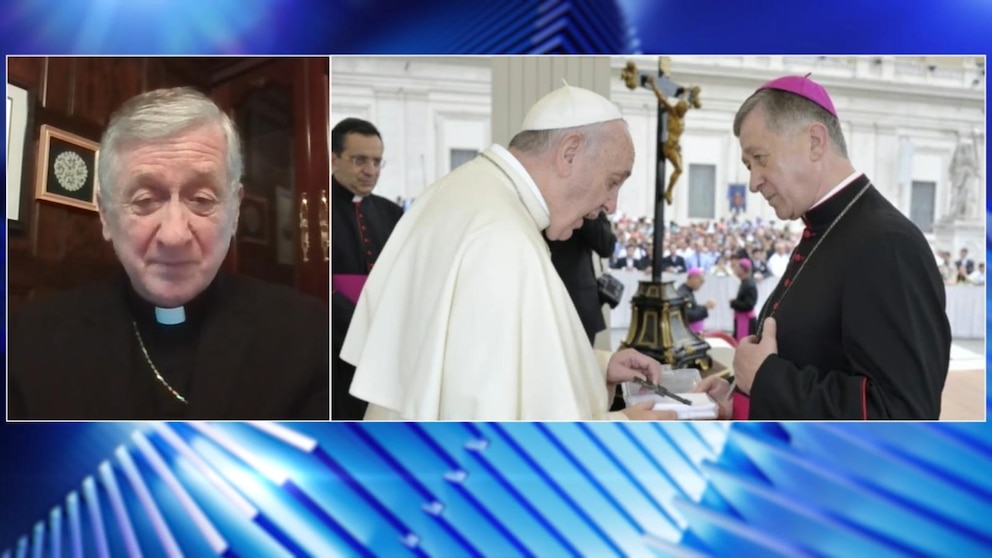
Cardinal Blase Cupich of Chicago has offered a deeply personal and moving tribute to Pope Francis, reflecting on the qualities that made the pontiff such an extraordinary and beloved figure in the Catholic Church and the wider world. In his remembrance, Cupich emphasizes one characteristic above all others: authenticity. This wasn’t a pope who played a role or performed for the cameras; this was a man who remained genuinely himself throughout his papacy, bringing the same compassion, humility, and directness to the highest office in the Catholic Church that he had shown throughout his life as a priest and bishop. Cardinal Cupich’s reflections paint a portrait of a leader who transformed not just the Vatican but also the way millions of people around the world understood what it meant to live a life of faith. The authenticity that Pope Francis embodied wasn’t simply a personality trait—it was a form of ministry, a way of witnessing to the Gospel that made the message of Christ accessible to people who had felt disconnected from institutional religion. Through simple gestures, profound words, and consistent actions, Pope Francis demonstrated that authentic faith meant meeting people where they were, listening with genuine interest, and responding with mercy rather than judgment.
Leading with Humility and Human Connection
What set Pope Francis apart, according to Cardinal Cupich, was his remarkable ability to connect with people from all walks of life in ways that felt genuinely human and unscripted. Unlike the formal, distant image that many associated with papal authority, Francis broke down barriers from the very beginning of his papacy. His choice to live in the Vatican guesthouse rather than the apostolic palace, his impromptu phone calls to ordinary Catholics who had written to him, and his willingness to embrace people with disabilities or those living on society’s margins—these weren’t calculated public relations moves but authentic expressions of who he was as a person. Cardinal Cupich recalls how Pope Francis would often speak off-the-cuff, departing from prepared texts to address the real concerns of the people before him. This spontaneity sometimes created challenges for Vatican communications officials, but it also created moments of genuine connection that no carefully crafted speech could replicate. The pope’s humility wasn’t false modesty; it came from a deep awareness of his own limitations and a profound trust in God’s grace. He didn’t pretend to have all the answers, and he wasn’t afraid to acknowledge the Church’s failures and shortcomings. This honest approach created space for dialogue, growth, and renewal within an institution that sometimes struggled with change. For Cardinal Cupich and countless others, this authentic humility was perhaps Pope Francis’s greatest gift to the Church—a reminder that leadership in the Christian tradition is fundamentally about service rather than status, about walking alongside people rather than standing above them.
A Prophetic Voice for the Marginalized
Cardinal Cupich particularly highlights Pope Francis’s unwavering commitment to the poor and marginalized—a commitment that wasn’t merely rhetorical but shaped concrete decisions and priorities. From the beginning of his papacy, Francis made clear that the Church needed to be “a poor Church for the poor,” and he lived this principle in ways both symbolic and substantive. He repeatedly chose to visit prisons, refugee camps, and impoverished communities, often spending more time in these settings than in the palaces of the powerful. His environmental encyclical “Laudato Si'” connected care for creation with care for the poor, recognizing that environmental degradation disproportionately impacts the world’s most vulnerable communities. His teaching on economic justice challenged the assumption that unfettered capitalism serves the common good, calling instead for economic systems that prioritize human dignity over profit. These weren’t popular positions in all quarters, and Pope Francis faced criticism from those who felt he was straying from the Church’s proper focus. But for Cardinal Cupich, this prophetic witness to Gospel values was essential precisely because it made people uncomfortable. The pope understood that authentic Christianity must always challenge the comfortable and comfort the afflicted. His solidarity with migrants, his calls for more humane immigration policies, and his insistence that wealthy nations have obligations to refugees weren’t political positions but spiritual imperatives rooted in the Gospel command to welcome the stranger. This authentic commitment to the marginalized changed how many people—both within and outside the Church—understood what it meant to be Christian in the contemporary world.
Reforming the Church with Mercy and Dialogue
One of the most significant aspects of Pope Francis’s papacy that Cardinal Cupich reflects upon is his approach to Church reform—an approach characterized by patience, dialogue, and an emphasis on mercy over rigid doctrine. Pope Francis didn’t shy away from addressing difficult issues, from reforming Vatican finances to addressing clerical sexual abuse to opening conversations about pastoral approaches to divorced and remarried Catholics and LGBTQ individuals. What made his approach distinctive was his insistence that the Church’s pastoral practice should be guided by mercy and by attention to the concrete circumstances of people’s lives rather than by abstract application of rules. This didn’t mean abandoning Church teaching, but it did mean recognizing that doctrine serves people rather than the other way around. Cardinal Cupich notes how Pope Francis encouraged bishops and clergy to accompany people in their journeys of faith, creating space for discernment and growth rather than imposing immediate judgment. This approach was perhaps most visible in the synodal process that Pope Francis championed—a method of Church governance that emphasized listening, consultation, and collaboration rather than top-down authority. By convening synods on the family, on young people, on the Amazon, and on synodality itself, Pope Francis tried to model a Church that genuinely listened to the experience and wisdom of all its members. For Cardinal Cupich, this represented an authentic return to the vision of the Second Vatican Council, which emphasized the Church as the “People of God” rather than simply a hierarchical institution. The resistance Pope Francis encountered from some quarters of the Church only underscored how genuinely challenging and transformative his vision was.
A Global Witness to Peace and Human Fraternity
Beyond the internal life of the Catholic Church, Cardinal Cupich emphasizes Pope Francis’s role as a global moral voice, particularly in promoting peace, interfaith dialogue, and what the pope called “human fraternity.” In an era of increasing polarization, nationalism, and religious conflict, Pope Francis consistently called for bridge-building rather than wall-building, for dialogue rather than demonization. His historic meetings with leaders of other Christian denominations, his groundbreaking document on human fraternity co-authored with the Grand Imam of Al-Azhar, and his visits to conflict zones and divided communities all demonstrated his belief that authentic faith leads to solidarity across boundaries rather than tribalism. Cardinal Cupich recalls how Pope Francis repeatedly condemned war and violence, calling arms manufacturing and the arms trade impediments to peace. His criticism of nuclear weapons, his calls for abolishing the death penalty, and his consistent message of nonviolence challenged comfortable assumptions in many countries. The authenticity of these positions came from their consistency—Pope Francis didn’t adjust his message based on his audience but spoke the same truths to the powerful and the powerless alike. His ability to connect with people of different faiths and no faith at all stemmed from his focus on shared human dignity and common challenges rather than on doctrinal differences. For Cardinal Cupich, this witness to universal human fraternity may be one of Pope Francis’s most enduring legacies—a reminder that authentic Christianity is never sectarian or exclusionary but always expansive in its embrace of all people as children of God.
A Lasting Legacy of Authenticity
As Cardinal Cupich reflects on Pope Francis’s papacy and legacy, he returns again and again to that central quality of authenticity—the characteristic that unified all aspects of his ministry and made him such a transformative figure. In an age of carefully curated public images, focus-grouped messages, and calculated political positioning, Pope Francis offered something increasingly rare: genuine humanity. He laughed easily, spoke plainly, acknowledged mistakes, and showed emotion. He wasn’t afraid to appear weak or uncertain because he trusted that God’s strength is made perfect in weakness. This authenticity gave him moral authority that transcended the institutional power of his office; people listened to him not just because he was pope but because they sensed he genuinely cared about them and about the world. Cardinal Cupich suggests that this authenticity was ultimately rooted in Pope Francis’s deep spiritual life—his Jesuit formation, his devotion to prayer, and his daily encounter with Christ in the Eucharist and in the faces of the poor. It wasn’t a technique or a leadership style but the natural expression of a man who had allowed himself to be transformed by the Gospel. As the Church moves forward after Pope Francis, Cardinal Cupich believes this model of authentic, humble, merciful leadership remains the essential path forward. The challenges facing the Church and the world require leaders who can connect with people across differences, who can acknowledge complexity and ambiguity, and who can witness to hope without denying reality. Pope Francis showed that such leadership is possible—not through strategic brilliance or administrative efficiency but through the simple, radical authenticity of living what you believe and believing in the dignity of every person. For Cardinal Cupich and for millions around the world, this legacy of authenticity will continue to inspire and challenge the Church for generations to come.