


A Government Attorney’s Breaking Point: Inside America’s Immigration Court Crisis
When the System Breaks Down
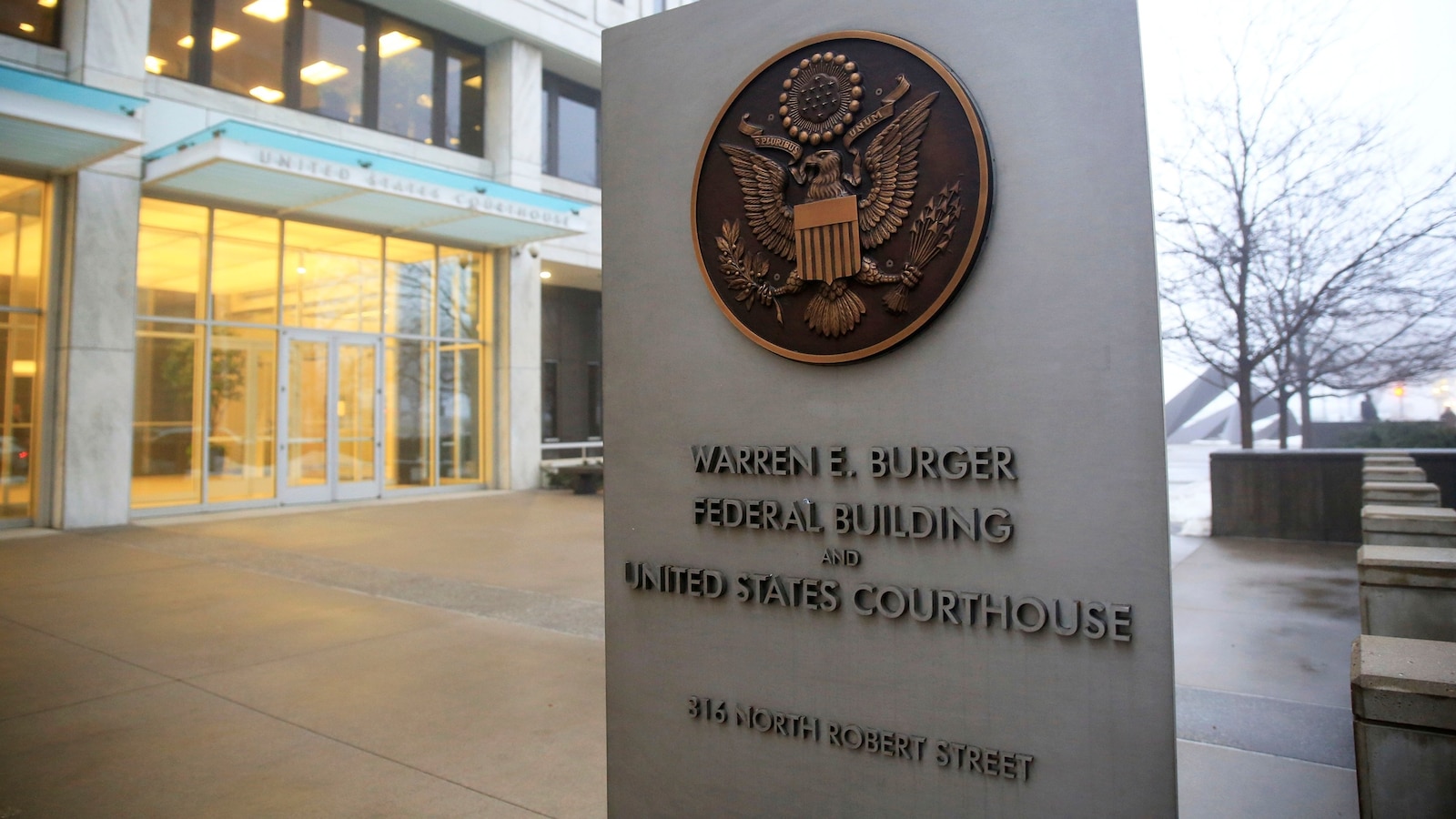
In a remarkable courtroom moment that has drawn national attention, a Department of Homeland Security attorney reached her breaking point while testifying before U.S. District Judge Jerry Blackwell in St. Paul, Minnesota. Julie Le, who had been temporarily assigned from DHS to the U.S. Attorney’s office, made the stunning declaration that her job “sucks,” the legal process “sucks,” and confessed that she sometimes fantasizes about being held in contempt just to get a full day’s sleep. This extraordinary outburst wasn’t the complaint of someone unwilling to work—it was the desperate cry of an attorney drowning in an overwhelming system while trying to uphold constitutional rights. Le’s testimony reveals the human toll behind America’s immigration enforcement surge and exposes serious systemic failures that have resulted in people being unlawfully detained, sometimes for weeks, despite court orders demanding their release. Her words painted a picture of chaos: an attorney assigned to 91 immigration cases in just one month, working around the clock without proper training or guidance, serving as a “bridge” between detainees and a system that seems fundamentally broken.
An Overwhelming Burden on One Person’s Shoulders
The numbers tell a sobering story. Federal court records show that in just the past month, Le had been assigned to 91 immigration cases—88 in Minnesota and three in Texas. Most of these were habeas corpus petitions, legal filings made by immigrants detained by enforcement officials who are challenging the legality of their detention. For context, experienced attorneys typically handle a fraction of this caseload, and these cases involve people’s fundamental liberty—their freedom from imprisonment. Le told Judge Blackwell that she has been working “day and night” because “people are still in there,” referring to detainees awaiting resolution of their cases. Her admission that she sometimes wishes the judge would hold her in contempt “so that I can have a full 24 hours of sleep” speaks volumes about the unsustainable pressure she’s been under. This wasn’t hyperbole or theatrics—it was the raw honesty of someone pushed beyond reasonable limits while trying to serve both the government and the cause of justice. Even more troubling was her revelation that she had “stupidly” volunteered for this assignment because DHS was “overwhelmed and they need help,” and that she’s only been in the position for a month. She had already submitted her resignation, but the department couldn’t find a replacement, so she gave them a deadline to do so or she would walk out regardless.
A System Without Guidance or Accountability
Perhaps the most alarming aspect of Le’s testimony was her description of the complete lack of institutional support and guidance. When Judge Blackwell asked whether she had received proper orientation or training on what she was supposed to do, Le had to answer yes—she received essentially no guidance. “When I started with the job, I have to be honest, we have no guidance on what we need to do,” she told the court. This admission is staggering when you consider what was at stake: the constitutional rights and physical freedom of hundreds of people. Le also described how difficult it was to get responses from Immigration and Customs Enforcement (ICE) regarding judicial orders, saying it was like “pulling teeth.” This breakdown in communication and coordination between federal agencies has had real consequences for real people. Judge Blackwell noted that the Trump administration’s Operation Metro Surge has “generated a volume of arrests and detentions that has taxed existing systems, staffing, and coordination between DOJ and the DHS.” However, he was clear that this was no excuse for ignoring constitutional requirements and court orders.
Constitutional Rights Hanging in the Balance
Judge Blackwell’s response to the government’s failures was measured but firm. He emphasized that “the overwhelming majority of the hundreds [of individuals] seen by this court have been found to be lawfully present as of now in the country.” In other words, hundreds of people who had legal status to be in the United States were arrested and detained anyway, and then kept in custody even after courts ordered their release. “In some instances, it is the continued detention of a person the Constitution does not permit the government to hold and who should have been left alone, that is, not arrested in the first place,” Blackwell stated. He made it clear that volume is not an excuse: “The volume of cases and matters is not a justification for diluting constitutional rights and it never can be. It heightens the need for care.” The judge raised specific concerns about detainees who had been ordered released but were moved to facilities in El Paso or New Mexico before the orders could be executed, and about people who were unlawfully detained but told they had to wear ankle monitors as a condition of release—something the court never ordered “because the person was unlawfully detained in the first place.” These aren’t abstract legal technicalities; they represent people separated from their families and communities, held without lawful authority.
A Personal Stake in Justice
In a particularly poignant moment, Le revealed her personal connection to the issue at hand. “I am not white, as you can see. And my family’s at risk as any other people that might get picked up, too, so I share the same concern, and I took that concern to heart,” she told Judge Blackwell. This statement underscores that Le wasn’t just performing a job—she understood viscerally what was at stake for the people she was supposed to represent to the court. Her family could potentially face the same treatment as the detainees whose cases she was handling. When she said “I share the same concern with you, your honor,” she was speaking not just as an attorney but as a member of a community affected by these enforcement actions. Le’s frustration was palpable when she said, “Fixing a system, a broken system. I don’t have a magic button to do it. I don’t have the power or the voice to do it.” Here was an attorney who clearly cared about doing the right thing, who had volunteered to help during a crisis, and who was working herself to exhaustion trying to serve as a liaison between detainees and the system holding them. Yet she found herself powerless to fix the fundamental problems that were resulting in constitutional violations. After her testimony became public, DHS distanced itself from Le. An official confirmed she is no longer detailed to the U.S. attorney’s office, and DHS Assistant Secretary Tricia McLaughlin issued a statement calling Le “a probationary attorney” and describing her conduct as “unprofessional and unbecoming of an ICE attorney in abandoning her obligation to act with commitment, dedication, and zeal to the interests of the United States Government.”
The Larger Questions This Crisis Raises
Judge Blackwell’s opening statement framed the fundamental issues at stake: “A court order is not advisory, and it is not conditional, and it is not something that any agency can treat as optional while it decides how or whether to comply with the court order.” He emphasized that “detention without lawful authority is not just a technical defect, it is a constitutional injury that unfairly falls on the heads of those who have done nothing wrong to justify it.” His words highlighted the human dimension: “The individuals affected are people. The overwhelming majority of the hundreds seen by this court have been found to be lawfully present as of now in the country. They live in their communities. Some are separated from their families.” The judge made clear that “the DOJ, the DHS, and ICE are not above the law” and that “when court orders are not followed, it’s not just the court’s authority that’s at issue. It is the rights of individuals in custody and the integrity of the constitutional system itself.”
Julie Le’s courtroom breakdown exposed more than one attorney’s frustration—it revealed a system under strain to the breaking point, where constitutional rights are being sacrificed to enforcement volume, where coordination between agencies has collapsed, and where dedicated professionals are being set up to fail without proper training, guidance, or resources. The question now is whether this moment of raw honesty will serve as a wake-up call for necessary reforms, or whether it will be dismissed as one person’s inability to handle the pressure. What’s certain is that the constitutional injuries Judge Blackwell described continue to accumulate, affecting real people and families while the system that’s supposed to protect their rights struggles to function. Judge Blackwell adjourned the hearing saying he would take everything he heard under advisement, leaving open the possibility of contempt findings or other remedies to ensure compliance with court orders and protection of constitutional rights.